
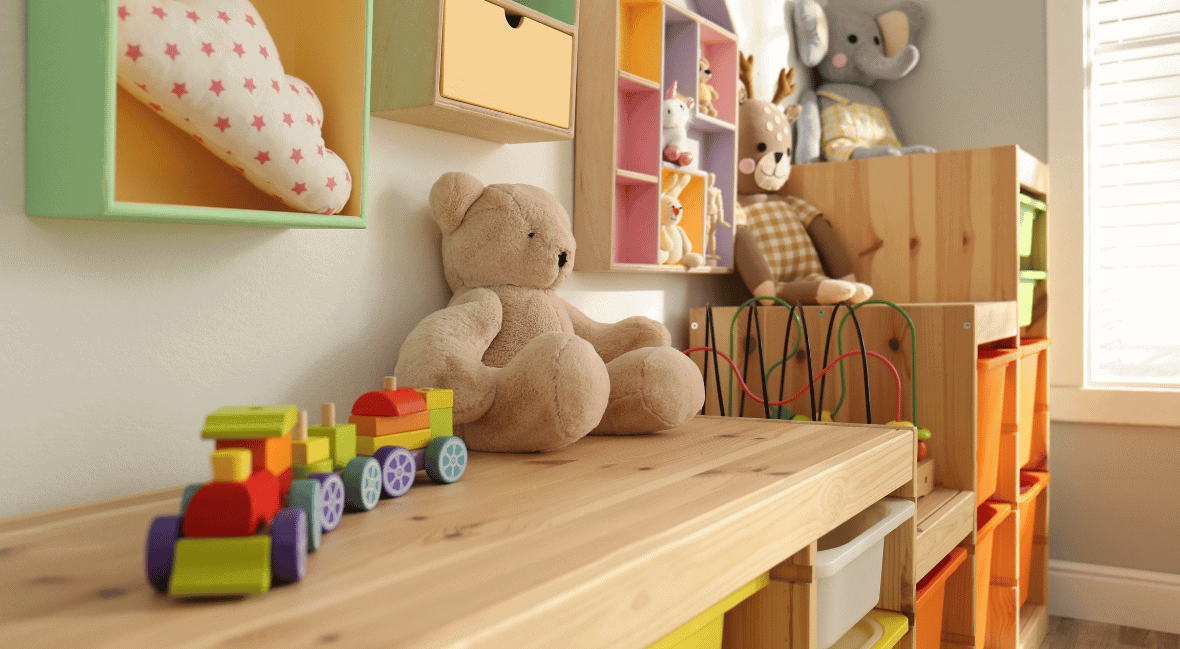
A toy rotation system can make toys feel new again, reduce clutter, and help kids spend more time meaningfully engaged in play. But rotating toys doesn’t have to mean completely reorganizing your playroom every few weeks.
I’ve found that switching everything at once is overwhelming, and honestly, I’m just not organized enough to keep up with an elaborate rotation schedule.
Instead, I rotate toys by category. I make sure kids continue to have access to a balanced selection of toys, much like a preschool teacher keeps different learning and play areas available in a classroom. Then, when one category starts to feel stale, I switch out a few items from it.
This creates a flexible toy rotation system that’s easier to maintain while still giving kids plenty of variety.
In this post:
- What is a Toy Rotation System?
- Why I Rotate Toys by Category
- Toy Rotation Categories
- How Often Should You Rotate Toys?
- What If Kids Lose Interest in Every Toy Quickly?
- Organizing Toys for Rotation
What is a Toy Rotation System?
A toy rotation system involves putting some toys away while leaving a smaller selection available for kids to use. After a while, you put away some of the available toys and bring out different ones.
Having fewer toys available can make a play space feel calmer and help kids see what they have. Toys that have been stored away for a while may also feel new and exciting when they return.
However, you don’t need to rotate toys according to a strict schedule. You also don’t need a perfectly organized storage room filled with matching bins. Your toy rotation system should work with your space, your kids, and the amount of time and energy you have.
Why I Rotate Toys by Category
Rather than replacing every available toy at once, I like to make sure kids have access to toys from several different play categories!
This is similar to how a preschool classroom might always include blocks, art materials, books, sensory experiences, and dramatic play materials.
My main toy rotation categories are:
- Building toys
- Art materials
- Dramatic and imaginary play
- Sensory play
- Library
- Fine-motor toys
- Gross-motor toys
- Loose parts
- Favorite items
I don’t rotate every category at the same time. If the building toys are still inspiring elaborate creations, I leave them alone. If the dramatic-play area hasn’t been touched lately, I might change that category by putting away the play food and bringing out baby dolls, animal-care supplies, or dress-up clothes.
Rotating only the categories that need attention makes the entire system much more manageable.
Toy Rotation Categories
I like to make sure that there’s always at least one toy available from each category! That’s it.
I find this makes it simple to know what to put out and what to pack up for a while. I then also observe and make adjustments as needed.
Note: I’m NOT listing these categories to make you think you need to buy more stuff, just to help you categorize the toys you do have.
1. Building Toys
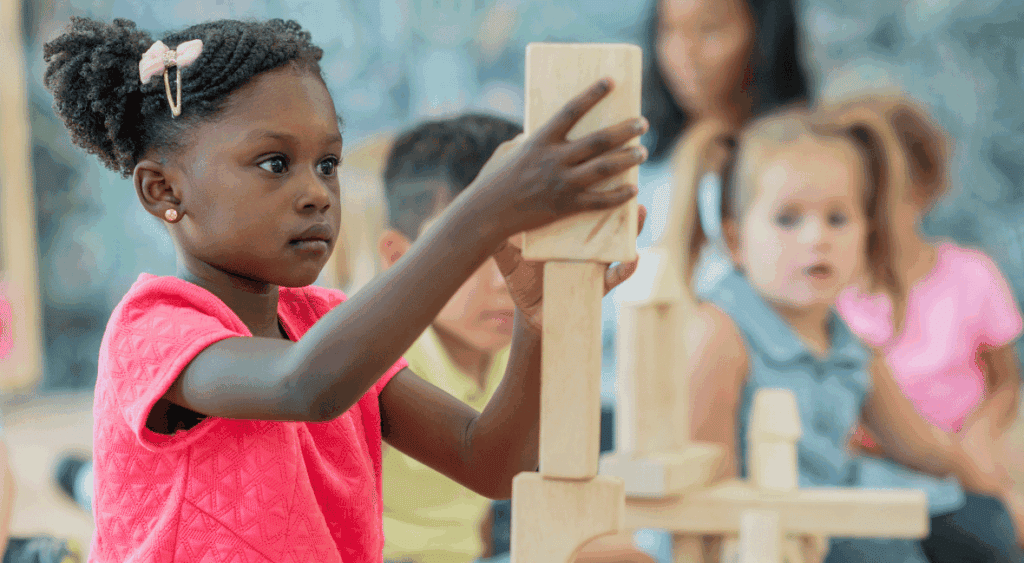
Building toys allow kids to design, experiment, solve problems, and turn their ideas into something they can see and touch. They’re one of the most important categories in my toy rotation system!
Building toys might include:
- Wooden unit blocks (one of my ABSOLUTE favorite toys for kids of all ages!)
- Magna-Tiles (yes, the name brand is worth the extra cost!)
- LEGO or DUPLO bricks
- Guidecraft Notch Blocks
- Cardboard bricks
- Marble runs
- Fort-building materials
You don’t always need to replace one building toy with another. Sometimes adding a few animals, vehicles, people, or loose parts to a familiar block set is enough to inspire new ideas.
- Check out all my favorite block sets for kids!
2. Art Materials
Art materials give kids opportunities to experiment, make choices, and communicate their ideas. I love process art where kids don’t need to follow a specific model or create a predetermined product.
Art supplies in a rotation might include:
- Crayons
- Markers
- Colored pencils
- Watercolor paints
- Tempera paint
- Chalk
- Stickers
- Glue and collage materials
- Playdough tools
- Large rolls of paper
- Easel materials
Not every art material needs to be available at the same time. You might keep basic drawing supplies accessible and occasionally rotate in paint, collage materials, stamps, or another special option.
Know your kids and know how much they can handle at once without it turning into a giant mess. Give kids access to as much as they can handle to allow for lots of creativity!
- Check out all my favorite art supplies!
3. Dramatic and Imaginary Play
Dramatic play lets kids act out real experiences, explore different roles, and create their own imaginary worlds. This category can be as simple or as elaborate as you want and often leads to great social play among kids!
Dramatic and imaginary-play materials could include:
- Dolls and doll-care items
- Play food and dishes
- Dress-up clothes
- Toy animals
- Vehicles
- Puppets
- Doctor supplies
- Tool sets
- Small-world figures
- Scarves and fabric
- Old phones, keyboards, notebooks, or other safe household items
You don’t need a fully themed dramatic-play center. A basket containing a few dolls, blankets, bottles, and baby clothes is enough to support all kinds of play.
4. Sensory Play
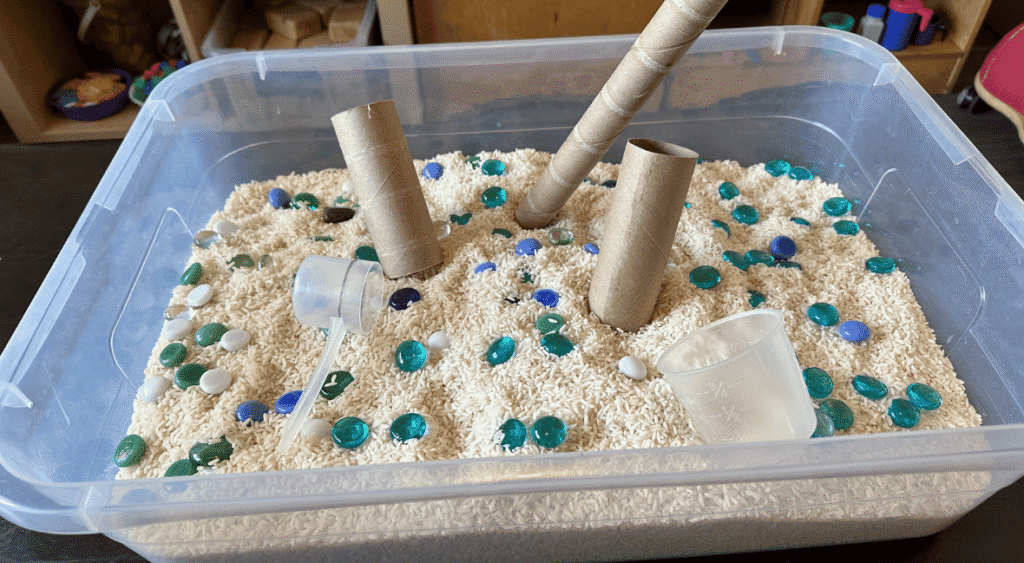
Sensory play gives kids opportunities to pour, scoop, squeeze, dig, mix, and explore. Some sensory materials require supervision, so they may not remain freely accessible throughout the day.
Sensory-play ideas include:
- Playdough
- Water
- Sand
- Kinetic sand
- Dyed rice
- Dried beans (note: supervise carefully so beans don’t end up stuck in noses/ears!)
- Scoops, funnels, bowls, and containers
You can rotate both the sensory base and the tools that go with it. A familiar bin of rice, for example, may become interesting again when you replace the measuring cups with funnels, small containers, or construction vehicles.
Always choose sensory materials that are appropriate for your kids’ ages and developmental stages, especially if they still put objects in their mouths.
5. Library
Having access to books is so important for kids! Kids can enjoy flipping through and exploring books long before they can even read.
Books are an important part of a toy rotation system, even though they aren’t technically toys. Kids benefit from having books they can see and reach, but an overflowing bookshelf can make it difficult for them to notice individual titles. More does not equal better!
I like to include a mixture of new books and well-loved ones. You don’t have to put away your child’s favorite book just because it has been available for a long time.
In addition to books, you can set up a cozy reading nook with pillows, blankets, and stuffies. An area like this invites kids to slow down.
6. Fine-Motor Toys
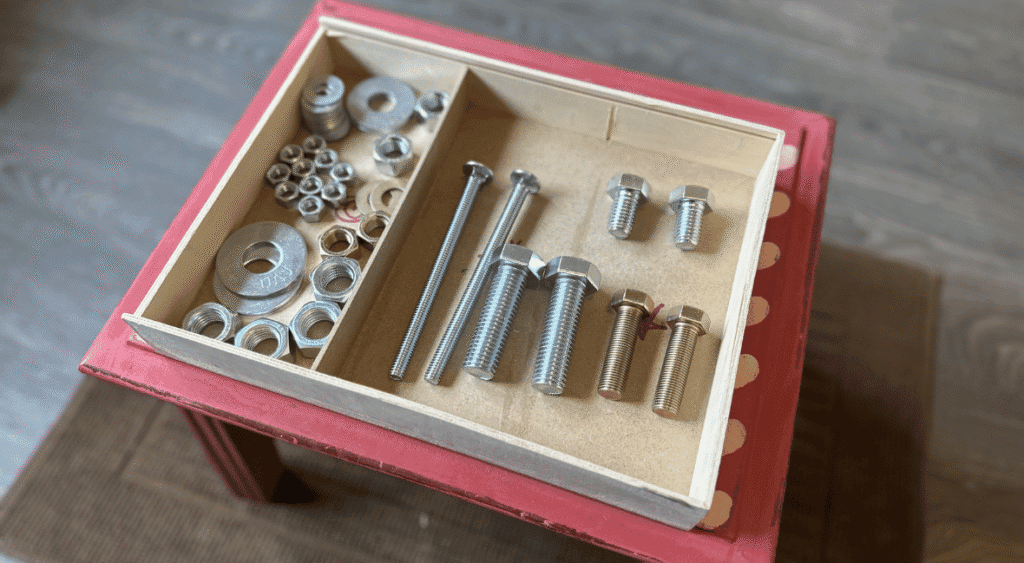
Fine-motor toys help kids practice using the smaller muscles in their hands and fingers. These skills develop naturally through play and everyday activities.
Fine-motor materials might include:
- Beads and string
- Pegboards
- Puzzles
- Lacing cards
- Tongs and tweezers
- Nuts and bolts
- Locks and latches
- Stickers
Choose activities that are interesting enough to invite kids to use their hands without making the experience feel like an assignment.
7. Gross-Motor Toys
Gross-motor toys encourage kids to move their whole bodies. Depending on your space, some of these toys may be used indoors, while others are better suited for outside.
Gross-motor toys might include:
- Balls
- Balance bikes
- Scooters
- Stepping stones
- Bilibo seats
- Balance beams
- Tunnels
- Ride-on toys
- Beanbags
- Hula hoops
- Jump ropes
- Pikler triangle
- Large cardboard boxes
If you don’t have room to store several large toys, rotate smaller movement materials or change how you arrange the equipment you already have.
8. Loose Parts
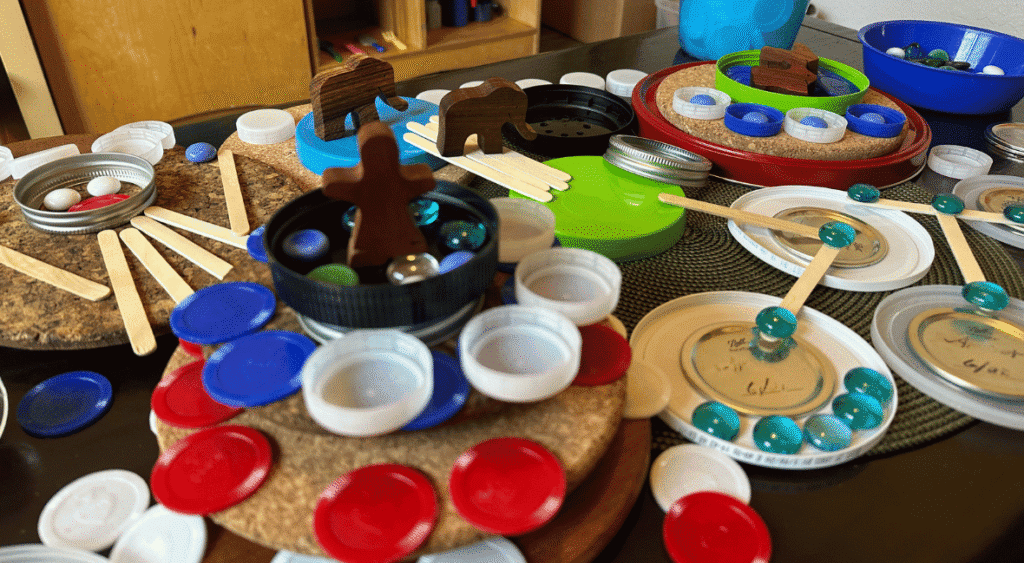
If you’ve been here long, you know I LOVE loose parts play!
Loose parts are open-ended materials that kids can move, combine, arrange, carry, stack, and use in many different ways. They’re especially useful in a toy rotation system because the same objects can become something different every time kids play.
Loose parts could include:
- Wood slices
- Stones
- Pinecones
- Shells
- Corks
- Lids
- Glass gems
- Rings
- Buckets and baskets
- Sticks
- Recycled materials
Make sure every loose part is safe and appropriately sized for the kids who will use it!
- Check out my ultimate list of loose parts for more ideas!
9. Favorite Items
Not everything needs to be rotated. If a child plays with a particular toy every day, I generally leave it available.
The goal of a toy rotation system isn’t to take away toys kids are actively enjoying. Rotation should support play, not interrupt it. If kids are deeply involved in building a block city, caring for dolls, or continuing another long-term play idea, there’s no need to pack those materials away just because a certain amount of time has passed.
How Often Should You Rotate Toys?
There’s no perfect toy rotation schedule. I don’t rotate toys every Monday, every two weeks, or according to any other predetermined timeline. I simply pay attention to how kids are using the play space.
It might be time to rotate something if:
- A category has been ignored for a while
- Kids seem to wander without settling into play
- Toys are being dumped but not meaningfully used
- The available materials no longer match kids’ interests
- Kids could benefit from a new challenge
When I notice one of these things, I might switch out a single category or even just one or two toys. That small change is often enough to bring fresh energy into the room.
What If Kids Lose Interest in Every Toy Quickly?
Toy rotation can be wonderful for recapturing kids’ interest, but it can’t compensate for toys with limited play possibilities.
If kids lose interest in toys almost as soon as they’re introduced, you may not need a faster rotation schedule. You may need more open-ended toys.
An open-ended toy can be used in many ways. Blocks can become a house, a road, a zoo, a tower, a spaceship, or a store. Scarves can become capes, blankets, picnic cloths, rivers, costumes, or decorations. A cardboard box can be a car one day and an animal shelter the next.
Toys that perform a single function or direct kids toward a single outcome may be exciting at first but can quickly lose their appeal. Before creating a complicated toy rotation system, consider whether the toys themselves provide enough room for kids to experiment, create, and return with new ideas.
- Check out my favorite open-ended toys for toddlers!
Organizing Toys for Rotation
Organization is an important part of any toy rotation system. If stored toys are difficult to find or access, you’re much less likely to rotate them regularly.
I organize extra toys in bins and keep them out of sight of the kids. This prevents kids from pulling everything out at once and helps the available play space remain manageable.
I especially like clear storage bins because I can easily see what’s inside without opening every container. I also prefer bins over bags because bins stack neatly and make better use of vertical storage space.
You could organize bins by:
- Toy category
- Type of material
- Age or developmental stage
- Indoor and outdoor use
- Items that are commonly used together
Your system doesn’t have to look beautiful. It just needs to make sense to you.
Keep in mind that storing toys out of sight doesn’t mean kids can never use them. If a child remembers a specific toy and asks for it, I’m generally happy to get it out. The rotation system is there to make play and cleanup easier—not to create arbitrary rules about which toys kids are allowed to use.
Start With the Space You Have
Your toy rotation system will depend on your available storage space. Some families have an entire closet or storage room, while others may only have room for a few bins on a high shelf.
Experiment with what works for you. You might keep half the toys available, and the other half stored, or store only a few overflow items. You may decide to rotate books frequently but leave the same blocks available for years. There’s no single correct method.
Start small. Choose one overcrowded category, leave out a manageable selection, and put the rest into a clear bin. Watch how your kids respond before changing anything else.
If you find that you don’t have enough space to store all of your extra toys, it might be time for a toy declutter! You can’t organize yourself out of too much stuff.
Final Thoughts on Toy Rotation Systems
A toy rotation system doesn’t need to involve spreadsheets, labels, or a strict schedule. I’ve found that rotating toys by category gives kids a balanced play environment without requiring me to switch out the entire room at once.
Make sure kids have access to different kinds of play, pay attention to what they’re actually using, and rotate a category when it seems like they could use something new. Keep favorite toys available, choose plenty of open-ended materials, and organize the extras in a way that works with your storage space.
The best toy rotation system isn’t necessarily the most organized one. It’s the one you can realistically maintain, which helps your kids settle into creative, meaningful play.
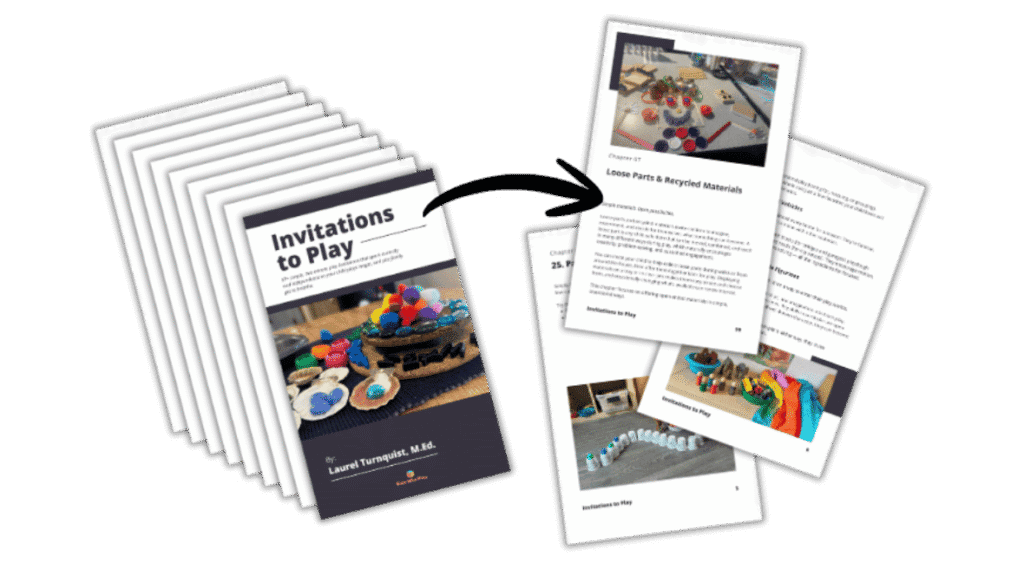
- Looking for additional ways to support play? Check out my book! 👇



1 Comment
4–8 Toys: Montessori, Behavior Led Toy Rotation for Toddlers
September 8, 2026 at 5:00 am[…] system, because it ignores what your child is actually doing with the toys in front of them. A category-based, cue-led system stays more manageable and keeps engagement higher than a fixed weekly overhaul ever […]