
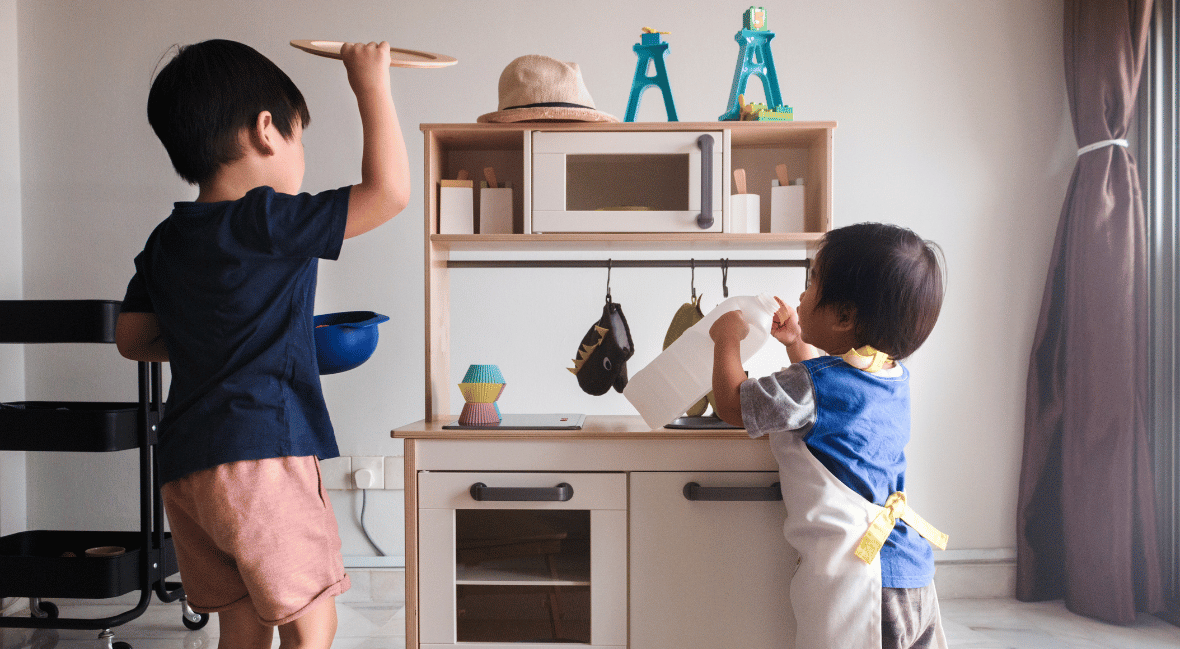
The best toys for social play aren’t necessarily the toys labeled “social-emotional” or designed to teach a specific social skill. They’re usually toys that naturally give kids a reason to talk, cooperate, negotiate, imitate one another, and build on each other’s ideas.
As a former preschool teacher, I’ve found that open-ended toys are especially good at encouraging social play. There isn’t one correct way to use them, so kids have to decide together what they’re making and how their play will unfold. This creates plenty of opportunities to practice sharing ideas, solving problems, taking turns, and navigating disagreements.
Of course, putting a group of kids around the same toy doesn’t guarantee peaceful cooperation. Social play can be noisy, complicated, and full of negotiations, and that’s part of how kids learn!
In this post:
- What Makes a Toy Good for Social Play?
- 29 Best Toys for Social Play
- When Do Kids Start Playing Together?
- Do Kids Need Adults to Teach Them How to Play Together?
We get commissions for purchases made through links in this post. As an Amazon Associate, we earn from qualifying purchases.
What Makes a Toy Good for Social Play?
It’s pretty simple: it’s all about offering toys and designing spaces in ways that create room for kids to play together!
The best toys for social play generally:
- Encourage communication or cooperation
- Leave room for different ideas
- Don’t require one person to control the entire experience
- Can be used in new ways each time
- Include enough pieces or materials for several kids to participate
You also don’t need a separate “social play toy” if you already have basic blocks, pretend-play materials, art supplies, or outdoor equipment. Many of the simplest toys are the ones that bring kids together most naturally.
29 Best Toys for Social Play
The best toys for social play can be divided into several broad categories. You certainly don’t need something from every category, and many toys could easily fit into more than one.
Focus on toys that give several kids enough room and materials to contribute to the play. When buying sets of things like blocks, make sure to get enough pieces for multiple kids to all build together.
Building Toys for Social Play
Building toys give kids a shared project to work on. They have to communicate their plans, divide materials, solve structural problems, and decide how their different ideas can fit together.
I always love watching kids chat, plan, negotiate, and yes, sometimes argue as they create with blocks.
Most of my favorite building toys come from Guidecraft. Yes, they are expensive but so worth it! Kids will use them for YEARS. You can save up or ask for sets as group gifts.
1. Guidecraft Mini Bricks

These little bricks from Guidecraft are just novel enough that kids flock to them whenever I put them out!
Their realistic brick shape makes them especially fun for constructing walls, houses, towers, roads, and enclosures. Kids naturally gather around the collection, share ideas, and work together to create bigger and more elaborate structures.
The finished buildings often become part of imaginative and small-world play. Kids might build a house for wooden people, an animal enclosure, a castle, a construction site, or an entire miniature community. I love toys like these that begin as a building activity and then develop into a much longer social play experience.
Pro tip: Add these mini bricks to the playdough table for even more building fun! Kids can use the playdough as mortar, create a foundation, or combine it with the bricks to make new shapes and structures.
2. Guidecraft Unit Blocks

Everyone needs a good set of unit blocks!
But really, if you only ever buy one toy for your kids, make it a large set of unit blocks. Kids explore weight, balance, gravity, proportionality, engineering, and design all while testing and trying their own ideas! This is learning through play at its finest.
Unit blocks are one of my favorite toys for social play. Kids can build roads, houses, zoos, bridges, parking garages, or entire communities together. It takes a lot of negotiating to work together on a block build, making these one of the BEST toys for social play!
A block structure often then becomes the setting for even more collaborative pretend play.
Guidecraft makes some of my favorite unit blocks. The cuts for each size block are super precise, and they’re just overall of great quality. Yes, they’re expensive, but they’re a toy that will be played with for 10+ years!
3. Guidecraft Notch Blocks

If you haven’t seen these notch blocks from Guidecraft yet, let me just tell you, they’re super cool! I would’ve loved these as a kid. I have them for my preschool students, and they LOVE them!
The large wooden pieces naturally bring kids together because building a big structure is often easier and more fun with friends. They’re also easy for kids to notch together, so they can create impressive structures without needing complicated instructions or constant adult help.
Kids can build all kinds of creative structures that are big enough to play inside. Once the building is complete, it often becomes the setting for social dramatic play. Kids work together to plan and build, then create characters and stories around what they’ve made.
These blocks are a wonderful combination of collaborative building, problem-solving, creativity, and imaginative group play.
4. Magna-tiles

I’m sure you’ve seen Magna-tiles around! They’re popular for a reason: they’re easy and fun to build with, and just about every kid loves them.
Like all great building toys, they naturally bring kids together as they create houses, towers, castles, vehicles, and entire imaginary worlds. Kids can work on one big structure or connect their individual creations, practicing cooperation, communication, and problem-solving along the way.
Pro tip: Make sure you have enough pieces for kids to actually build without constantly competing for the shapes they need. I recommend starting with at least a 100-piece set and adding more over time if your kids love Magna-tiles.
5. Cardboard Boxes
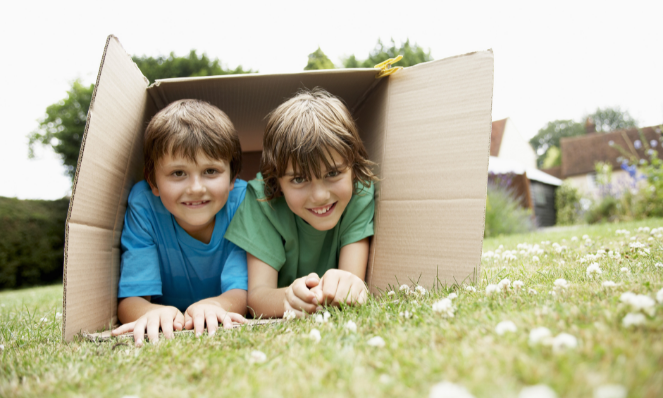
Okay, okay, I know cardboard boxes aren’t technically a “toy,” but that certainly doesn’t stop kids from playing with them! My preschool students love arriving to find cardboard boxes out.
Boxes are fun, novel, and open-ended enough to become just about anything. Kids often gather around them to build houses, forts, stores, boats, rockets, vehicles, and whatever else they dream up. Because larger creations take more than one set of hands, cardboard boxes naturally encourage kids to build, problem-solve, and engage in imaginative play together.
Pro tip: Add some blue painter’s tape and extra pieces of cardboard. Kids can connect boxes, add doors and windows, make signs, and keep modifying their creation as their play develops.
Dramatic Play Toys for Social Play
Pretend play is naturally social because bringing an imaginary story to life often takes more than one kid. Kids create characters, assign roles, respond to one another’s ideas, and decide together what will happen next. One child’s idea inspires another, and the storyline grows as everyone contributes.
The best dramatic play toys provide a flexible starting point without dictating the characters, roles, or direction the story must take.
6. Play Kitchen

A play kitchen is a classic dramatic play toy for a reason! It’s so much fun to watch kids take on different roles as they play house, run a restaurant, prepare meals, or host a birthday party. One child might cook while another takes orders, cares for a baby, or serves the food.
These familiar play scenarios naturally encourage kids to communicate, cooperate, and build a shared story.
There are many great play kitchen options out there. Make sure to check dimensions so you’re getting one that isn’t too small or too big for the height of your kids.
Pro tip: You don’t need tons of cheap plastic play kitchen accessories. Kids can use real, secondhand kitchen items instead! I love finding small pots, pans, wooden spoons, bowls, and other child-sized items at the thrift store.
Keep the selection limited. Too much stuff usually just gets dumped out and walked on rather than meaningfully played with.
7. Little Tikes Playhouse

An indoor playhouse is so much fun if you have the space for one!
I actually love using a Little Tikes playhouse indoors. It’s tall enough for young kids to stand up and move around inside, which makes it feel like a real little house.
Kids are immediately drawn to it and use it to play house, run a restaurant, welcome visitors, and create all kinds of shared stories. The durable plastic is easy to clean and stands up to years of enthusiastic play.
You can also choose a canvas-style indoor playhouse, although I’ve found that kids tend to use these more for a cozy reading nook or relaxing than for dramatic play. Another option is a Waldorf playstand, which offers a more open-ended setup that can become a house, store, stage, kitchen, or anything else kids imagine.
8. Baby Dolls

I see my preschool students playing together with baby dolls nearly every day, making them a great social toy for kids!
Kids love acting out familiar scenarios and trying on different roles, and dolls give them the perfect opportunity to do that. They’ll play parents, siblings, doctors, babysitters, or childcare teachers as they feed their babies, put them to bed, take them on outings, and work together to care for them.
I love watching one child introduce an idea and seeing the other kids add to it as the story grows.
I really like these 15-inch baby dolls from Melissa & Doug. They’re large enough to feel like a real baby in a preschooler’s arms but still easy for kids to carry, dress, and care for independently.
I recommend having more than one doll available so several kids can join the play and create their stories together.
9. Stuffed Animals

Like baby dolls, stuffed animals invite kids to care for someone and create stories together.
I often see my preschool students feeding them, putting them to bed, taking them to the doctor, or bringing them along on elaborate adventures. One child introduces an idea, others take on roles, and before long, a simple stuffed animal becomes the center of an entire shared story.
You don’t need a huge collection. A small assortment of familiar animals gives kids plenty of possibilities without creating clutter or overwhelming the play space.
10. Melissa and Doug Puppets

Puppets give kids a fun way to create characters, act out stories, and experiment with different voices and roles. They’re naturally social: one puppet needs another character to talk to!
I love watching kids use puppets to make each other laugh, recreate familiar experiences, or invent completely imaginative adventures together. Kids who are hesitant to speak up during other types of group play may also feel more comfortable expressing themselves through a puppet.
You don’t need a formal puppet theater to get started. A table, couch, cardboard box, or blanket can easily become a puppet theater.
11. Dress-Up Materials
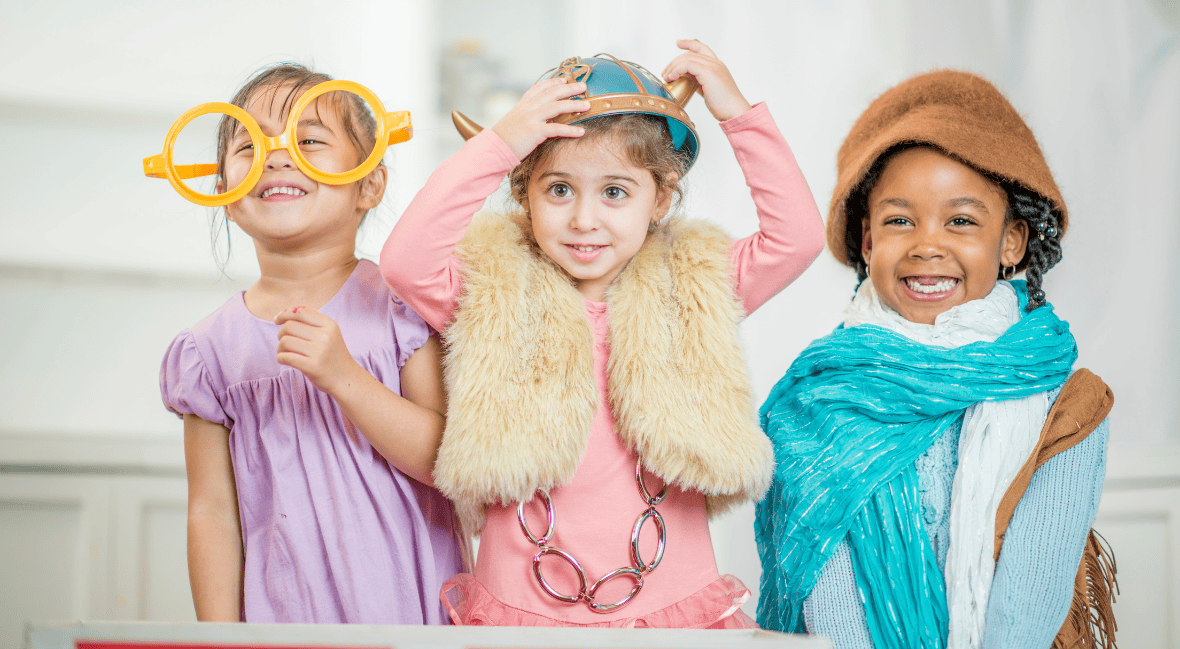
Dress-up clothes and accessories make it easy for kids to take on new roles and build pretend-play stories together.
Rather than buying highly specific costumes, I like offering more general items such as oversized shirts, scarves, feather boas, hats, glasses, purses, and pieces of fabric. These open-ended materials can represent something completely different every time kids play. A scarf might become a cape, skirt, baby blanket, animal tail, or picnic blanket.
Pro tip: Display dress-up clothes on low hooks rather than piling everything into a basket. Kids can easily see what’s available, independently choose what they need, and put everything away when they’re finished.
Small-World Play Toys
Small-world play involves creating miniature settings and stories with figures, vehicles, blocks, and loose parts. It allows several kids to contribute characters, structures, and new events to the same imaginary world.
12. PlanToys Wooden People

Wooden people are a simple addition that can bring block building and small-world play to life.
Kids use them to create families, act out familiar routines, visit one another’s homes, go on adventures, and tell all kinds of stories together. They pair especially well with blocks, dollhouses, toy vehicles, and other open-ended materials.
I really like these wooden family sets from PlanToys. The simple figures give kids a starting point without determining exactly who each character must be or how the story should unfold. You can also opt for something even simpler like wooden peg dolls.
I recommend having several people available so kids can create different families, communities, and shared stories.
13. Schleich Animal Figures

Animal figurines are wonderful for imaginative and small-world play.
Kids create habitats, zoos, farms, animal rescues, and elaborate adventures together. They can combine the animals with blocks, natural materials, toy vehicles, or wooden people, allowing one simple setup to inspire all kinds of shared stories.
I prefer high-quality, realistic-looking plastic animals from Schleich. Kids seem to really notice and appreciate the lifelike details. They’re especially drawn to the animals in this five-piece wildlife set because it includes such a fun collection of interesting animals.
Schleich also makes many other sets, including farm animals, dinosaurs, and sea creatures, so you can choose the animals that best match your kid’s interests.
- Check out more of my favorite animal figurines for kids!
14. Toy Vehicles

I see kids use cars in their small-world play all the time! They build roads and garages, drive wooden people around, transport animals, and create all kinds of stories together.
Cars are one of those simple toys that almost always bring kids together, especially when they’re paired with blocks, ramps, or other small-world materials.
I have this bright set of six cars and have been really pleased with them. They’re simple, colorful, and fun to drive without unnecessary lights or sounds taking over the play. The six different vehicles also make it easy for several kids to choose a favorite and join the same story.
15. Tiny Land Trainset
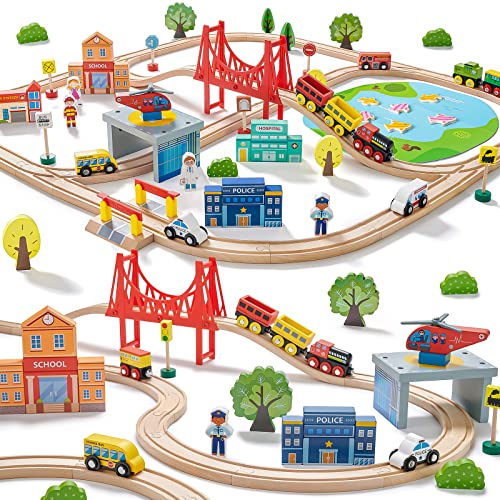
A train set is one of those classic toys that naturally invites social play.
I love watching my preschool students work as a team to connect the tracks, decide where the route should go, and build an entire little world around it. They add stations, bridges, buildings, animals, and wooden people, and soon a simple train becomes part of a much bigger shared story.
Train sets also create many opportunities for communication and problem-solving as kids plan layouts, take turns with the trains, and figure out how to connect different sections.
Look for a sturdy wooden set with plenty of track pieces so several kids can build and play together without constantly waiting for the same few pieces.
15. Natural and Recycled Loose Parts
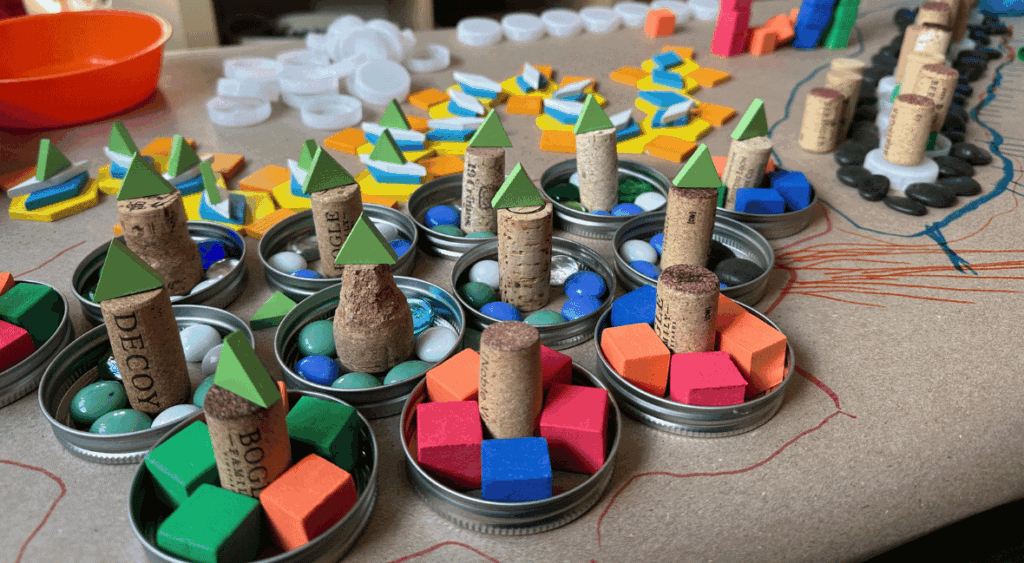
I love loose parts! They may look more like random junk than toys, but kids find endless ways to incorporate them into their play.
Wood rounds become plates, cardboard tubes become tunnels, and fabric scraps become blankets, rivers, or capes. Because loose parts don’t have one predetermined purpose, kids have to share their ideas, decide what each material represents, and build their play story together.
- Check out my loose parts list for lots of fun ideas!
Loose parts are especially fun to combine with blocks, wooden people, animal figurines, and toy vehicles.
Just make sure the materials are appropriate for the ages and abilities of the kids using them. Avoid anything that could be a choking hazard for young kids, and supervise loose-parts play closely.
Cooperative Games and Group Toys
Cooperative games give kids a shared goal. Instead of each child working separately, everyone’s actions contribute to what happens next.
16. Outfoxed
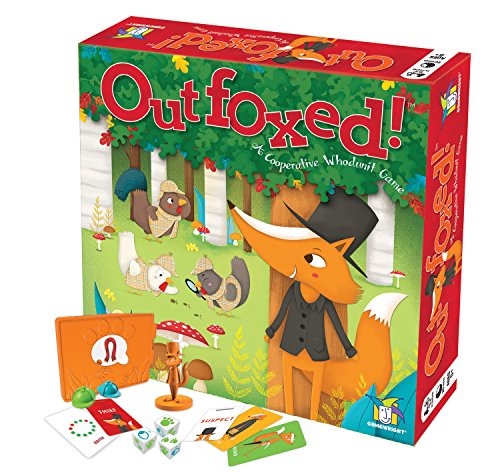
Outfoxed! is such a fun cooperative board game for preschool-age kids!
Instead of competing against one another, everyone works together to gather clues and figure out which fox stole the pot pie. Kids get to practice taking turns, communicating, and making decisions as a team while enjoying the excitement of solving a mystery.
I especially like that it feels like a real game rather than a lesson disguised as one. The clue decoder adds a hands-on element that preschoolers love, and because everyone wins or loses together, kids stay engaged and cheer one another on.
17. Cauldron Quest

Cauldron Quest is another super-fun cooperative game for kids from Peaceable Kingdom! I love Peaceable Kingdom games; they have so many great cooperative options for kids!
Players work together to find the correct ingredients and get them into the cauldron before the wizard blocks all the paths. It encourages kids to take turns, make decisions as a group, and celebrate their progress together.
Cauldron Quest is especially fun for kids who enjoy magic, potions, and a little suspense, and the shared goal helps keep everyone involved in the game.
18. Castle Panic

Castle Panic is another cooperative game I love!
Players work together to defend the castle as monsters move closer with every turn. Kids have to share cards, discuss their options, and decide as a team how to stop the monsters before they knock down the castle.
It’s a great choice for kids who are ready for a little more strategy and challenge than many preschool cooperative games offer. Everyone has an important role in protecting the castle, and the shared suspense keeps kids engaged and cheering each other on.
19. Zombie Kidz
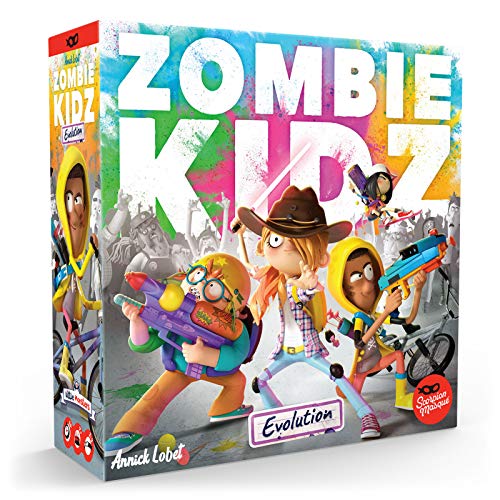
Zombie Kidz Evolution is another cooperative game I love!
Players work together to keep zombies out of the school, moving around the board and locking the gates as a team. Kids have to communicate, plan ahead, and decide together where their help is needed most.
What makes this game especially fun is that it changes as you play. Kids complete missions, add stickers, open mystery envelopes, and gradually unlock new rules and abilities. That ongoing sense of discovery keeps them excited to play again and gives them plenty of chances to practice working together.
20. 50 Piece Puzzle

Floor puzzles are great for social play because their large size naturally gives several kids room to work together.
I love watching kids spread the pieces out, search for matching colors and details, and help one another figure out where everything belongs. Even kids who aren’t usually drawn to traditional board games often enjoy gathering around a big puzzle with friends.
Look for a floor puzzle with an engaging picture and a manageable number of pieces for your kids’ ages. The goal is for it to be challenging enough that they need to work together without becoming so difficult that everyone loses interest.
Outdoor Toys for Social Play
Outdoor spaces give kids room to take their shared ideas further. Large-scale building, transporting, digging, and active games can include many children without making the play feel crowded.
21. Guidecraft Mud Kitchen

I love a good mud kitchen! It gives kids a space where they can actually get as messy as they want, experiment freely, and take their play in whatever direction interests them. It’s a truly child-led play space without a right way to use it or a finished product they’re expected to create.
Mud kitchens naturally lead to all kinds of creative dramatic play and storytelling among kids. They might open a restaurant, bake mud pies, create potions, host a party, or invent elaborate recipes using dirt, water, leaves, rocks, and flowers. Kids take on different roles, share materials, exchange ideas, and build the story together as they play.
One of my favorite mud kitchens is from—oh, you guessed it—Guidecraft!
- Check out my full mud kitchen guide for more of my favorite mud kitchens!
Pro tip: Head to the thrift store for mud kitchen accessories! Look for inexpensive pots, pans, muffin tins, wooden spoons, scoops, strainers, and sturdy bowls. There’s no need to buy a matching play set, especially when these items are going to be covered in mud!
22. Playground Balls

I always keep several smaller playground balls available for my preschool students. They’re one of those simple outdoor toys that kids reach for again and again. I see kids rolling them to friends, playing catch, kicking them around the yard, and inventing their own games together.
I especially like smaller playground balls because they’re a good size for little hands and bodies to manage. They’re sturdy, bounce well, and stand up to lots of enthusiastic outdoor play.
They may be simple, but they’re absolutely one of my favorite toys for bringing kids together and getting them moving.
23. Play Parachute

A play parachute is made for group play—you simply can’t use one without working together! It’s a little more adult-directed than most of the toys on this list, but kids still absolutely love it!
I love bringing out a parachute with my preschool students because everyone can grab a handle and immediately be part of the fun. Kids have to watch one another, coordinate their movements, and listen as a group to make the parachute rise, fall, ripple, and wave.
There are so many ways to play with one. Kids can bounce lightweight balls on top, run underneath, make big waves, or lift it high and sit beneath it together.
24. Sandbox and Sand Toys

A sandbox is one of the best toys for social play because it gives several kids room to dig, build, and create together.
I love to see kids hop in together and play and play. It often turns into pretend play as kids make roads, bake pretend food, bury treasures, construct towns, and work together on elaborate rivers and tunnels.
Add a simple collection of sturdy buckets, shovels, scoops, and containers, and kids will find endless ways to incorporate them into their shared play.
Pro tip: If you live along the East or West Coast of the United States, you may be able to buy beach sand from a local nursery. That’s where I got ours, and it’s great for digging and building!
25. Sidewalk Chalk

Sidewalk chalk is such a simple, affordable way to bring kids together outdoors.
Kids chat and collaborate as they scribble away. One child starts an idea, another adds to it, and before long, the entire space becomes part of their shared play.
Choose thick pieces of chalk that are easy for little hands to hold, and offer plenty of colors so several kids can draw at once. Chalk washes away, so kids are free to experiment, create something huge, and start all over again another day.
26. Outdoor Loose Parts
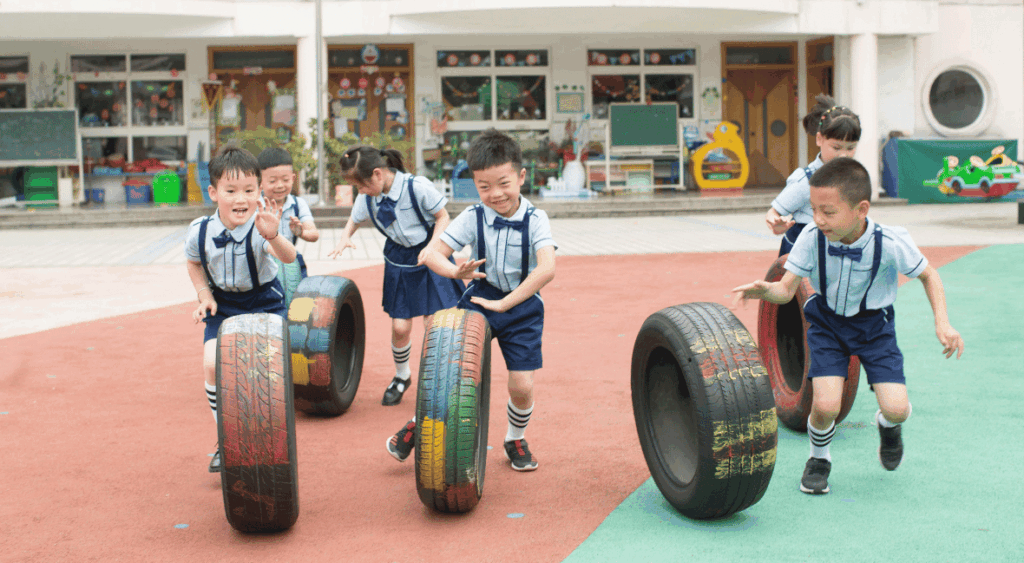
I love outdoor loose parts because they give kids the freedom to build and play on a much bigger scale!
Milk crates, buckets, boards, gutters, tubes, tires, tree stumps, and pieces of fabric can become forts, obstacle courses, stores, vehicles, ramps, stages, or anything else kids imagine.
Will a collection of outdoor loose parts make your play space look a little junky? YES and that’s okay! Kids don’t care what the materials look like. They care about what they can do with them. The large pieces also naturally bring kids together as they move materials, share ideas, solve problems, and build things that would be difficult to create alone.
Choose sturdy, age-appropriate materials, check them regularly for damage, and supervise closely, especially when kids are lifting, stacking, or climbing.
- Check out all my favorite outdoor toys for kids!
Collaborative Art Materials
Art can also be a form of social play when kids are given enough room to create together without being expected to produce identical finished projects.
27. Roll of Craft Paper

A roll of craft paper is perfect for collaborative process art!
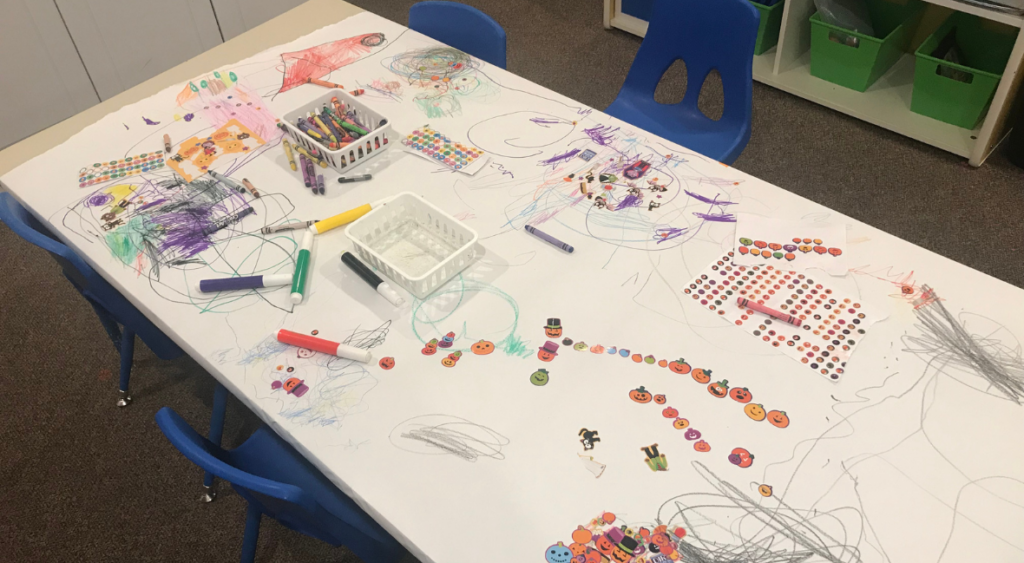
I love using it to cover an entire table or taping a long piece directly to the floor. The large area naturally invites kids to gather and create together while still giving everyone room to contribute.
Working on one shared surface also requires plenty of communication. Kids have to work around one another, decide when to add to someone else’s section, and speak up when they’d prefer their own drawing to be left alone.
Pair the paper with crayons, markers, stickers, glue, paint, or collage materials and let the artwork develop without requiring a specific finished product.
28. Playdough
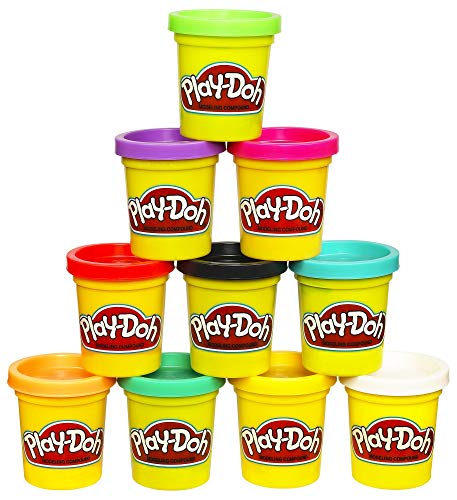
Playdough may seem like a solo activity, but I often see several kids gather around the playdough table at the same time. They chat away as they roll, mash, cut, and create. Sometimes working on their own ideas and sometimes joining together to make pretend food, build a scene, or create a shared story.
Kids don’t have to collaborate on the same creation for play to be social. Simply working alongside one another, watching what friends are doing, exchanging ideas, and enjoying a conversation are all meaningful forms of social play.
Add simple tools, loose parts, or small figures to inspire even more possibilities. Make sure to put out enough for everyone.
29. Plexiglass Easel

A Plexiglass easel makes painting feel especially social because two kids can create at the same time, one on each side. My preschoolers really love when we have this one out!
They can look through the clear surface at each other as they paint, watch new colors and marks appear, and respond to what their friend is creating. Sometimes they work on separate pictures, while other times their paintings overlap and become one collaborative creation.
I love that it encourages conversation and connection without requiring kids to make the exact same thing.
While it can be a fun outdoor activity, the easel must be stored inside.
- Check out all my favorite art supplies for kids!
When Do Kids Start Playing Together?
Babies and young toddlers are interested in other kids, but they don’t usually jump straight into cooperative play. At first, they may watch another child or play beside them without directly joining in. This is often called parallel play.
As toddlers grow, they begin exchanging toys, copying one another, and briefly joining the same activity. By around ages three and four, many kids begin creating shared storylines, building together, assigning roles, and working toward a common goal. These social skills continue developing throughout childhood.
Of course, the stages of play don’t follow a strict schedule. A child might cooperate with friends during one activity and prefer parallel play during another. Kids may also move between playing alone, beside others, and with a group throughout the same day. Temperament, familiarity, language skills, group size, and the play environment can all affect how kids participate.
You don’t need to rush kids into playing together. Simply give them regular opportunities to be near other kids with plenty of time, space, and open-ended materials. Social play usually develops gradually through these everyday experiences.
Do Kids Need Adults to Teach Them How to Play Together?
Kids learn an enormous amount about social interaction simply by having regular opportunities to play with other kids. They don’t need an adult directing every conversation or resolving every small disagreement.
One of the first and many ways that adults can support social play is to just allow lots and lots and lots of time for kids to play! Kids need time for their play to develop and grow and time to join in with one another.
Adults can then support social play by:
- Offering open-ended materials
- Making sure there are enough popular pieces
- Helping kids communicate when they’re truly stuck
- Allowing manageable disagreements to unfold
- Avoiding the urge to control the storyline
Social play won’t always look calm or perfectly cooperative. Kids may disagree about who gets a particular block, what the fort should become, or whether the stuffed animal is a dog or a wolf. Working through these differences is part of the learning, not proof that the play has failed.
Final Thoughts on the Best Toys for Social Play
You don’t need shelves full of special toys to help kids develop social skills. Start with versatile materials that multiple kids can use together: blocks, fabric, figures, vehicles, balls, art supplies, and outdoor loose parts.
Ultimately, the best toys for social play are the ones that leave space for kids to contribute their own ideas. When toys do less, kids have more reasons to communicate, cooperate, negotiate, imagine, and create together.

No Comments