
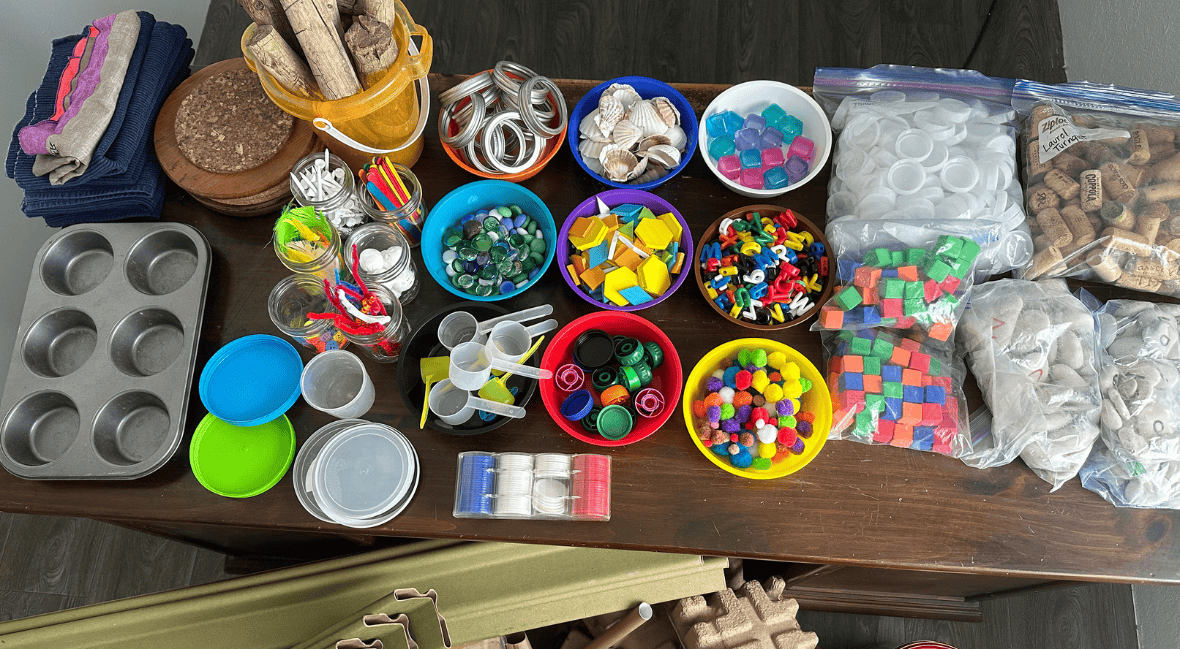
Looking for a loose parts list filled with simple materials kids can move, combine, stack, sort, carry, build with, and completely reinvent? You are in the right place.
Loose parts are one of my favorite ways to support open-ended play because they do not have a single specific purpose. The possibilities come from the child, not from instructions printed on a box.
- Check out my full loose parts play guide for more on all things loose parts!
You also do not need to buy a huge collection all at once. Many of the best loose parts are already sitting in your kitchen, recycling bin, backyard, garage, or linen closet. Start with a few materials, place them somewhere accessible, and see what your child does with them.
Below is a giant loose parts list divided into categories to make it easier to find materials that work for your space.
In this post:
- Small Loose Parts
- Oversized Loose Parts
- Nature Loose Parts
- Kitchen Loose Parts
- Household Loose Parts
- Recycling Loose Parts
The Ultimate Loose Parts List
Small Loose Parts
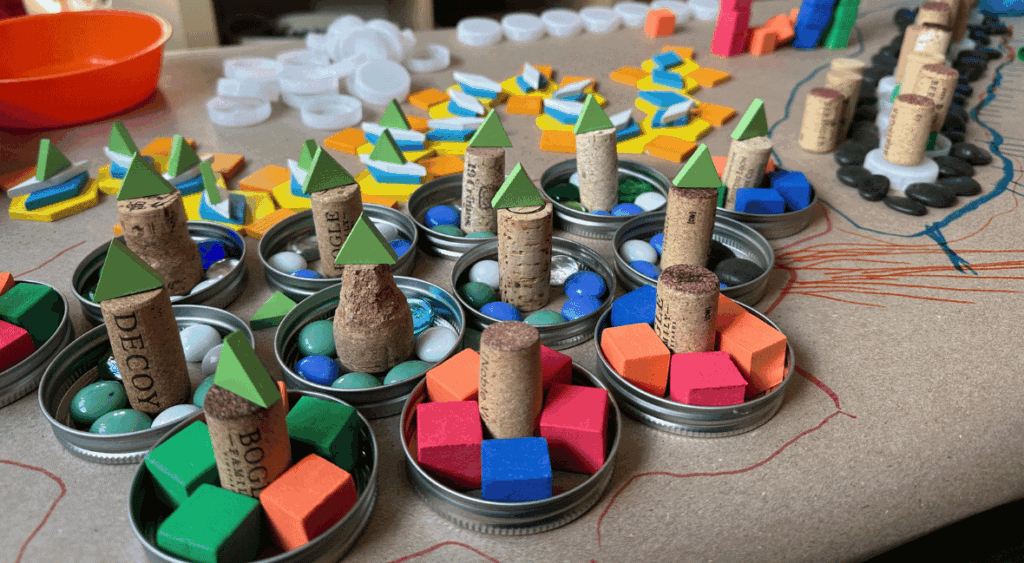
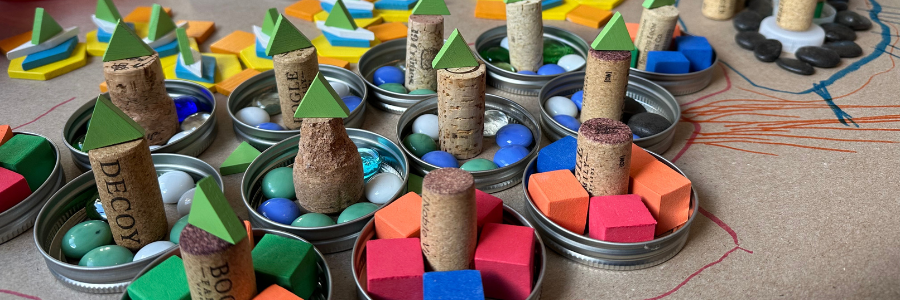
Small loose parts are wonderful for sorting, counting, patterning, designing, pretend play, and building tiny worlds. They can be added to trays, playdough, sensory bins, blocks, or simply placed in baskets for children to explore.
- Buttons
- Pompoms
- Bottle caps
- Beads
- Corks
- Soda can tabs
- Pipe cleaners
- Math counters
- Marbles
- Dice
- Glass gems
- Cotton balls
- Washers
- Nuts and bolts
- Curtain rings
- Beans
- Clothespins
- Craft sticks
- Ribbon pieces
- Scraps of yarn
- Bread tags
- Key rings
- Golf tees
- Poker chips
- Wooden pegs
- Tile samples
- Small lids
- Seashells
- Mini erasers
- Bells
- Dominoes
- Magnets
- Resin gems
- Empty pill bottles
- Colorful acrylic blocks
- Small battery-powered lights (ensure that the lights have a screw securing the battery cover!)
- Reusable ice cubes
- Foam cubes
- Wooden cubes
- LEGOs
- Pattern blocks
- Scrabble tiles
- Puzzle pieces
- Rubber bands
- Coins
- Hair ties
- Straws
- Plastic chains
- Foam Curlers
- Plastic Eggs
- Wooden Beads
- Shaker Eggs
- Paper clips
- Cabinet knobs
Small items should only be offered to children who are developmentally ready and no longer putting objects in their mouths. Always supervise when choking hazards are present.
Oversized Loose Parts
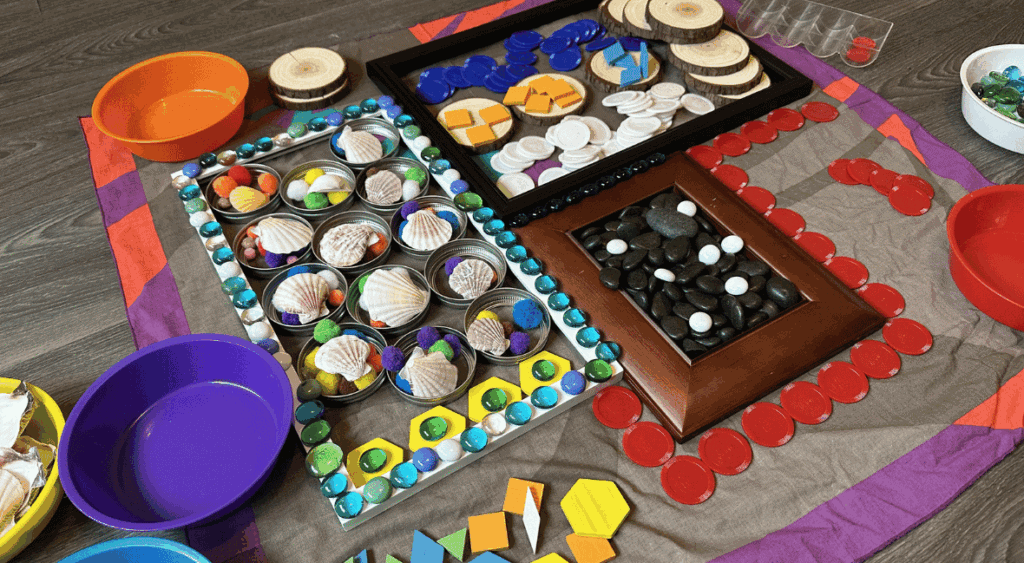
Oversized loose parts are especially fun outdoors, although many can also be used in a large indoor play space. These materials encourage kids to lift, carry, balance, build, problem-solve, collaborate, and test their ideas on a much bigger scale.
- Pallets
- Tires
- Tree stumps
- Wood scraps
- Wooden planks
- Plastic gutters
- Large wire spools
- Milk crates
- Cardboard tubes
- Large cardboard boxes
- Buckets
- Traffic cones
- PVC pipes
- Drainage pipes
- Large fabric pieces
- Tarps
- Ropes
- Bungee cords
- Stepping stones
- Large blocks
- Foam pieces
- Cable reels
- Laundry baskets
- Plastic barrels
- Hoses
- Plastic tubing
- Sawhorses
- Large baskets
- Plunger
- PVC dust collecting hose
- Hula hoops
- Bamboo poles
Kids may turn oversized loose parts into obstacle courses, forts, ramps, bridges, vehicles, stores, houses, or inventions that adults would never think to create.
Check materials regularly for sharp edges, splinters, exposed nails, broken pieces, or other hazards. Heavy materials should be introduced thoughtfully and used with appropriate supervision.
Nature Loose Parts
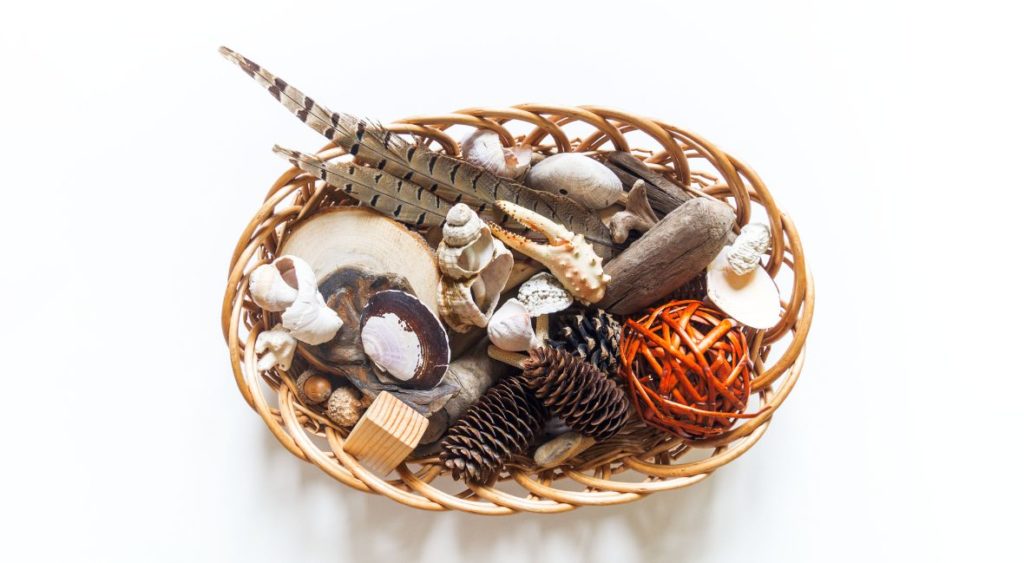
Nature provides an almost endless supply of beautiful, interesting, and completely free loose parts. Natural materials offer a wide variety of textures, weights, smells, colors, temperatures, and shapes.
- Rocks
- Pebbles
- Sticks
- Pinecones
- Acorns
- Shells
- Dirt
- Mud
- Sand
- Water
- Ice
- Snow
- Woodchips
- Leaves
- Feathers
- Seeds
- Bark
- Wood rounds
- Flowers
- Flower petals
- Grass
- Moss
- Driftwood
- Seedpods
- Twigs
- Pine needles
- Fruit pits
- Nuts in shells
- Dried corn cobs
- Reeds
- Seaweed
Nature loose parts work well in mud kitchens, sensory tables, block areas, small-world play, outdoor classrooms, and art invitations. Even a basket of rocks and sticks can support an incredible amount of play.
Be mindful of poisonous plants, sharp thorns, animal waste, choking hazards, and local rules about collecting natural materials.
Kitchen Loose Parts
The kitchen is one of the easiest places to find durable, interesting materials for pretend play, sensory play, water play, and outdoor mud kitchens.
- Wooden spoons
- Measuring cups
- Measuring spoons
- Whisks
- Mixing bowls
- Pots and pans
- Tongs
- Containers with lids
- Cinnamon sticks
- Silicone muffin liners
- Sponges
- Colanders
- Muffin tins
- Ice cube trays
- Rolling pins
- Funnels
- Ladles
- Spatulas
- Pie tins
- Baking sheets
- Small pitchers
- Cups
- Jars
- Strainers
- Trivets
- Napkin rings
- Egg cartons
- Reusable food containers
- Chopsticks
- Dish brushes
- Scoops
- Cookie cutters
- Garlic presses
- Potato mashers
- Spice jars
- Placemats
- Coasters
You do not need to purchase a special play kitchen set. A few real kitchen tools are often more interesting, more durable, and far more versatile.
Choose items without sharp edges or breakable glass, and save anything you no longer regularly use before buying new materials.
Household Loose Parts
Ordinary household items can quickly become costumes, forts, baby beds, roads, wrapping materials, building supplies, or props for dramatic play.
- Blankets
- Pillows
- Newsprint
- Hats
- Scarves
- Oversized button-up shirts
- Stretchy elastic bandages
- Blue painter’s tape
- Old keys
- Shopping bags
- Towels
- Sheets
- Fabric scraps
- Pillowcases
- Baskets
- Flashlights
- Clipboards
- Notebooks
- Paper bags
- Gift bags
- Wallets
- Purses
- Empty suitcases
- Belts
- Socks
- Gloves
- Sunglasses
- Costume jewelry
- Hair rollers
- Mailing tubes
- Shower curtain rings
- Carabiners
- Empty frames
- Old keyboards
- Phones with batteries removed
- Maps
- Calendars
- Greeting cards
- Wrapping paper tubes
Blankets and pillows alone can become forts, caves, boats, nests, restaurants, stages, or cozy hiding places. Painter’s tape can create roads, boundaries, designs, or signs without permanently attaching anything to the floor.
Avoid plastic shopping bags for young children and inspect all clothing, cords, and accessories for potential strangulation or entanglement hazards.
Recycling Loose Parts
Before you throw something away, take a second look. Clean recycling materials are some of the best loose parts because they come in unusual shapes, sizes, and textures.
- Packing material
- Clean food containers
- Plastic lids
- Cardboard boxes
- Cardboard tubes
- Egg cartons
- Bottle caps
- Yogurt containers
- Oatmeal canisters
- Coffee cans
- Berry baskets
- Plastic jars
- Shipping envelopes
- Bubble wrap
- Paper packing material
- Cardboard inserts
- Tissue boxes
- Cereal boxes
- Ribbon spools
- Tape rolls
- Mailing tubes
- Small cartons
- Paper cups
- Plastic cups
- Foil pie pans
- Appliance boxes
- Fabric scraps
- Foam packaging
- Clean squeeze bottles
Children can use recycled loose parts for building, collage, pretend cooking, robot making, small worlds, ramps, marble runs, and endless inventions.
Wash food containers thoroughly and avoid anything that held chemicals, raw meat, medicine, tobacco products, alcohol, or other unsafe substances. Remove staples, sharp metal, loose plastic film, and broken edges before adding items to play.
Print the Loose Parts List! ⤵️
How to Store Loose Parts
Loose parts do not need to be perfectly organized, but children are more likely to use them when they can see what is available.
I store most of my loose parts in ziploc bags and boxes when not in use, and only place out a manageable number of things at a time. Make sure loose parts are super visible when placed out. What children see is what they play with!
Try offering materials in:
- Open baskets
- Clear containers
- Divided trays
- Low shelves
- Wooden crates
- Drawer organizers
- Muffin tins
- Small bowls
You do not need to place all the materials out at once. Too many options can feel overwhelming and may create more dumping than meaningful play. Start with a small collection and rotate materials over time.
Final Thoughts
There is no single perfect collection of loose parts. The best materials are the ones children can safely access, move, combine, and use in many different ways.
Start small. Gather a few baskets of materials from this loose parts list, give children plenty of uninterrupted time to play, and observe what happens.
You may see a cardboard box become a rocket, a pile of corks turn into pretend food, or a collection of stumps and planks become an entire neighborhood. That freedom to imagine, create, test, change, and begin again is exactly what makes loose parts so valuable.

No Comments