
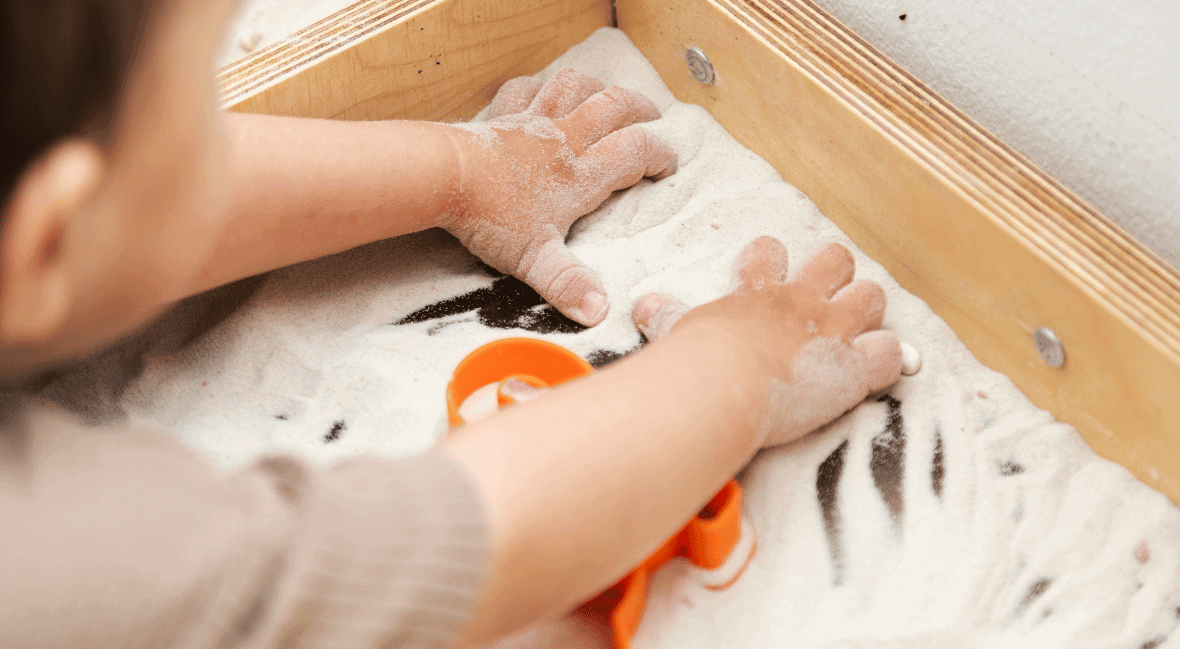
Toddlers are natural sensory explorers. They want to touch, dump, squeeze, splash, smell, taste, climb, carry, crinkle, stir, scrub, and investigate everything around them. This is not just mess-making. It’s how toddlers learn.
The best sensory activities for toddlers offer a variety of textures, temperatures, colors, smells, sounds, and movement experiences. They do not need to be complicated or Pinterest-perfect. A bowl of warm water, a sponge, a pile of leaves, a chunk of playdough, or a bucket of dirt can become rich, meaningful play for a toddler.
Sensory play is also not limited to sensory bins. Toddlers get sensory input when they peel fruit, wash vegetables, splash in the bath, stomp in puddles, dig in the garden, squish blueberries at snack time, or snuggle under a cozy blanket.
The goal is not to direct every moment or create a specific finished product. The goal is to give toddlers safe, open-ended materials and enough time to explore them in their own way.
Below you will find simple, play-based sensory activities for toddlers organized by category.
In this post:
- What Are Sensory Activities for Toddlers?
- Why Sensory Play Is Important for Toddlers
- 71 Sensory Activities for Toddlers
- Tips for Sensory Activities
- FAQs
What Are Sensory Activities for Toddlers?
Sensory activities are play experiences that engage one or more of a child’s senses:
- Touch
- Sight
- Sound
- Smell
- Taste
- Movement
- Balance
- Body awareness
When people think of sensory play, they often picture a bin filled with rice or water beads. But sensory play is much broader than that. A toddler climbing over couch cushions, stirring oatmeal, crunching leaves under their boots, carrying a heavy watering can, or listening to rocks drop into a bucket is having a sensory experience too.
For toddlers, sensory activities are especially valuable because they are still learning how materials work and how their own bodies move through the world.
Pouring water, scooping sand, squeezing play dough, or stomping through puddles gives them real information they can see, feel, hear, and repeat again and again.
Why Sensory Play Is Important for Toddlers
Sensory play supports so many areas of toddler development, but it does not have to look academic to be valuable.
When a toddler is scooping oats into a muffin tin or scrubbing a toy pumpkin with warm water, they are practicing coordination, concentration, problem-solving, and independence.
Sensory activities can help toddlers:
- Build fine motor skills through squeezing, scooping, pinching, stirring, and pouring
- Build gross motor skills through digging, climbing, dancing, jumping, and carrying
- Explore early science concepts like sink and float, wet and dry, full and empty, heavy and light
- Develop language as adults describe textures, colors, smells, temperatures, and actions
- Practice focus and persistence through repeated play
- Build confidence by making choices and testing ideas
- Learn about their own sensory preferences
- Engage in open-ended, child-led play
A toddler does not need to complete an activity “correctly.” Dumping, repeating, mixing, transferring, and exploring are all part of the learning.
71 Sensory Activities for Toddlers
Here are 71 of my favorite sensory play ideas for toddlers. I’ve divided them into categories to make it easy to find what you’re looking for!
Water Play for Toddlers
Water play is one of the easiest sensory activities for toddlers. It’s simple, calming, engaging, and endlessly adaptable. Try changing the water’s temperature, color, and smell for variety. I like to scent the water using baking extracts or fresh herbs.
You can set up water play outside, at the sink, in the bathtub, or in a shallow sensory bin. Have a towel on hand for cleanup!
1. Warm Water Sensory Bin
Fill a shallow bin with warm water and add scoops, cups, funnels, bowls, or measuring cups. Toddlers can pour, dump, fill, empty, and transfer water again and again.
Warm water adds a cozy sensory element, especially on cooler days. Keep the water shallow and supervise closely.
2. Water and Sponges
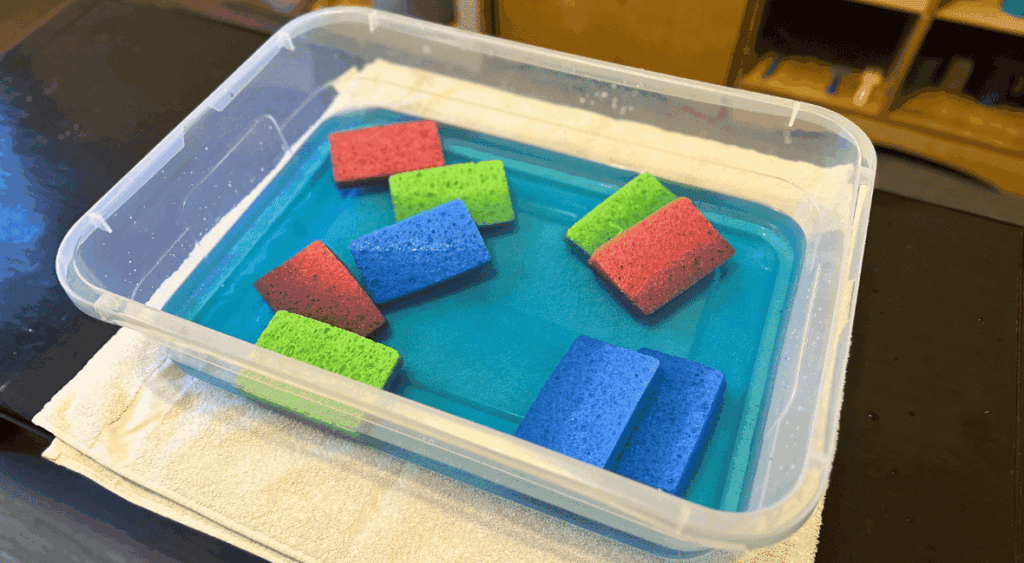
Add a few sponges to a bin of water with several bowls nearby. Toddlers can soak sponges, squeeze them out, transfer water from one bowl to another, and feel the difference between a dry and a wet sponge.
This is a wonderful hand-strengthening activity that feels like play.
3. Water and Scoops
A simple bin of water with scoops can hold a toddler’s attention for a long time. Add measuring cups, ladles, small pitchers, or large spoons.
Toddlers love the repetition of scooping and dumping. It gives them practice with coordination, volume, and cause-and-effect.
4. Water and Pom Poms
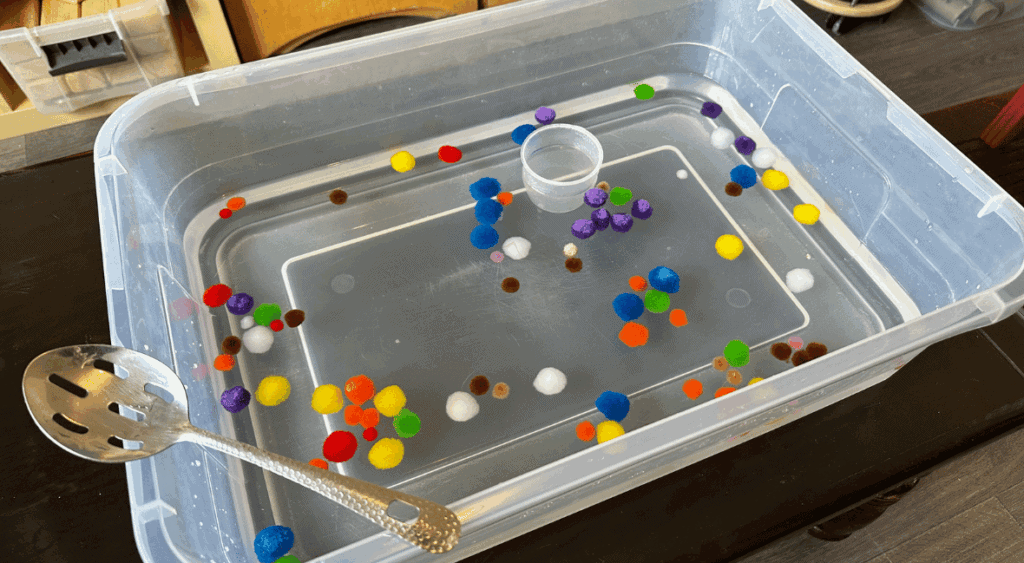
For older toddlers who are no longer mouthing materials, add large pom poms to a water bin. Include scoops, slotted spoons, or tongs.
Toddlers can scoop the wet pom poms, squeeze them, sort them, or transfer them between containers.
Because pom poms can be a choking hazard, this activity needs close supervision and is not a good fit for toddlers who put things in their mouths.
5. Orange Slices and Water Bin
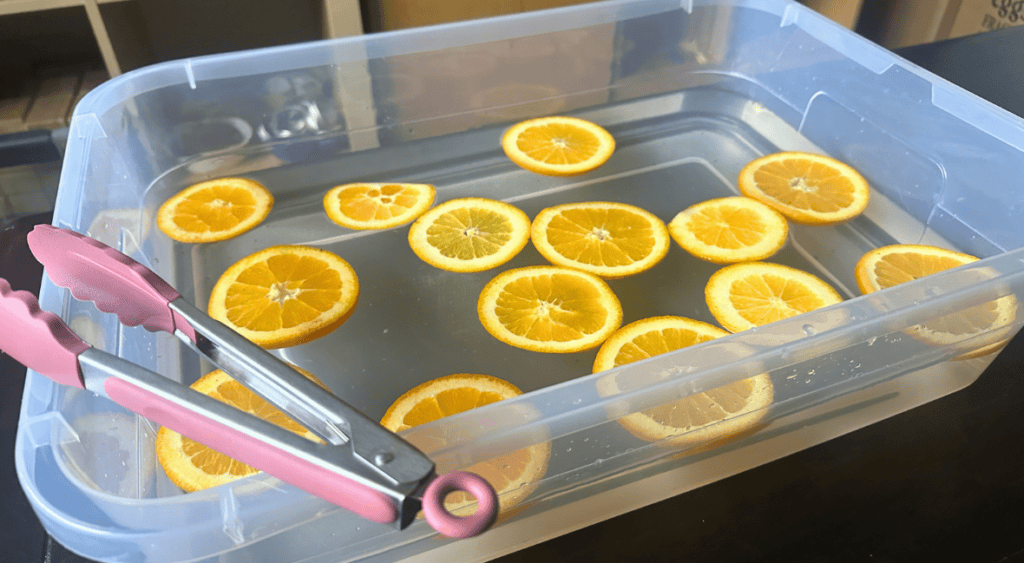
Add orange slices to a shallow bin of water for a bright, fresh-smelling sensory activity. Toddlers can scoop, stir, squeeze, smell, and explore the floating fruit.
This is a lovely way to add scent and color to water play.
6. Soap Foam
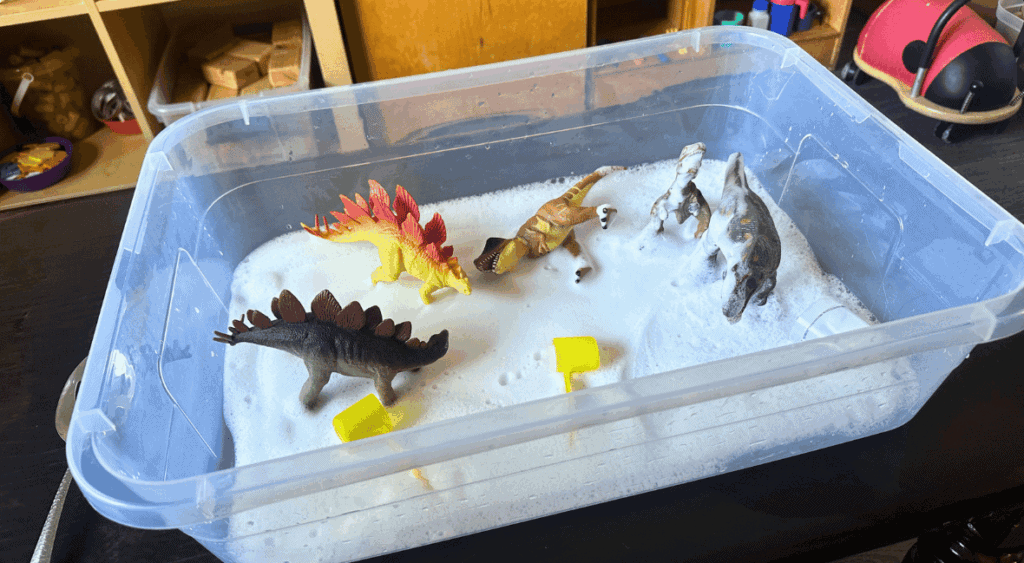
Blend a tiny bit of water with soap until a fluffy foam forms. Add the foam to a bin, tray, or bathtub and let toddlers scoop, swirl, pat, and wash toys.
Soap foam is especially fun with cups, spoons, foam blocks, or toy animals. Use gentle soap and supervise to avoid getting foam in eyes or mouths.
7. Taste-Safe Water Beads With Tapioca Pearls
Traditional water beads are not safe for toddlers, but cooked tapioca pearls can offer a similar squishy texture in a taste-safe way. I found a variety of tapioca pearls at my local Asian grocery store and prepared them according to the package directions.
Place cooked tapioca pearls in a shallow bin with scoops or cups. Toddlers can feel, squeeze, scoop, and transfer them. Even though they are taste-safe, supervise closely.
*Traditional water beads are TOXIC and should be avoided!*
8. Ice Toy Rescue
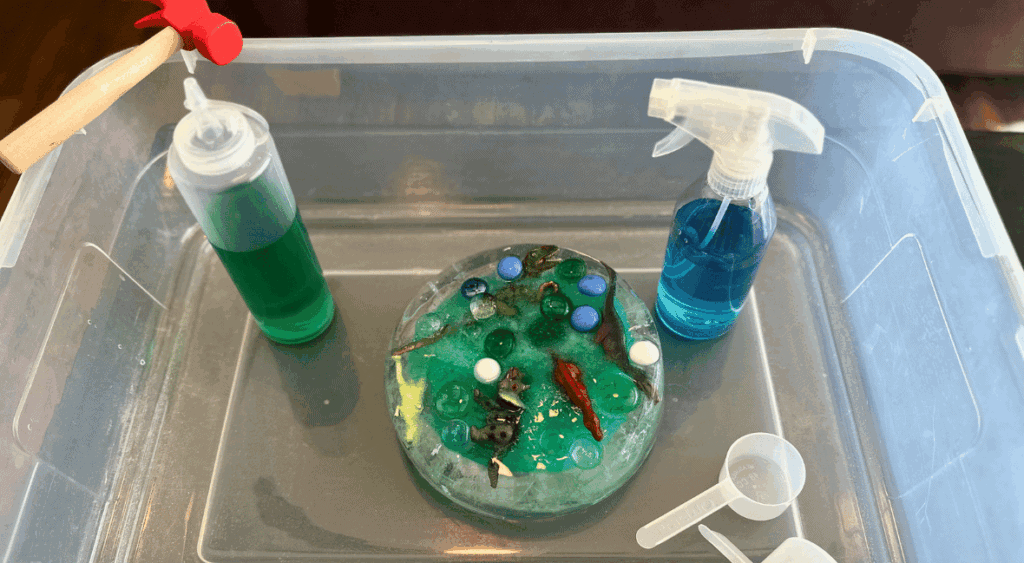
Freeze small toys into a large block of ice, then let toddlers help melt them out with warm water, spoons, or small cups.
Freezing the toys into a large block helps avoid the choking hazard of small ice cubes. Toddlers can explore cold, slippery, melting ice while working to free the toys.
9. Toy Wash Bin
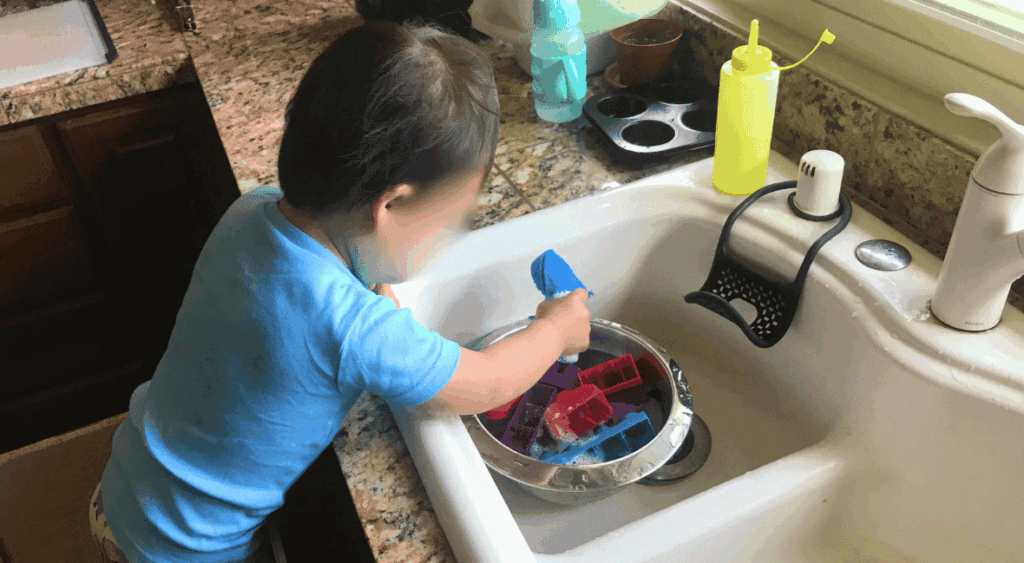
Fill a bin with warm water and add washable toys, a cloth, sponge, or small brush. Toddlers can scrub, rinse, dry, and repeat.
This works well with toy cars, plastic animals, blocks, outdoor toys, or play dishes. Toddlers often love this because it feels like real work.
10. Sink and Float Bin
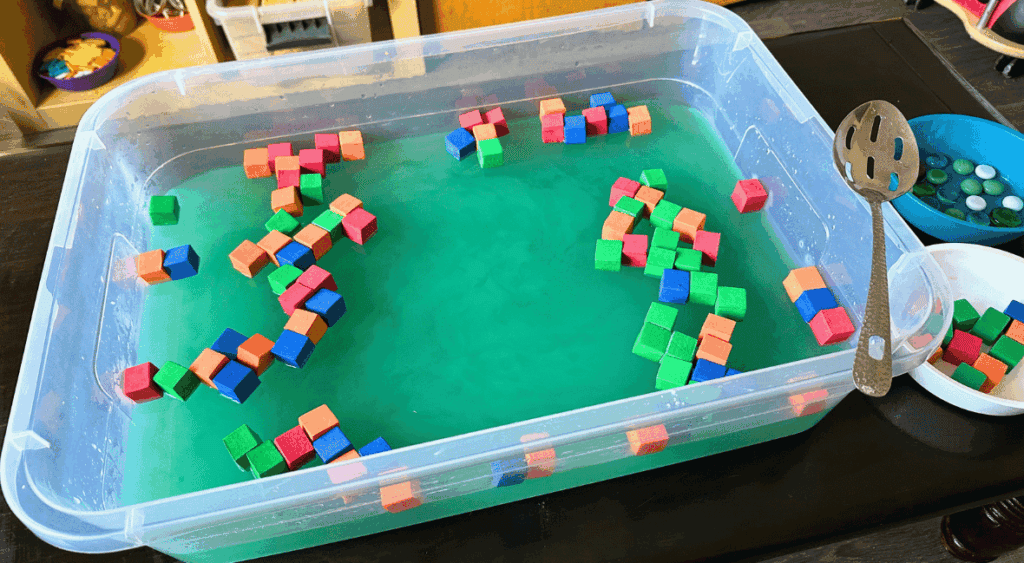
Fill a shallow container with water and offer a few safe objects to test. Try a sponge, rock, toy boat, plastic spoon, leaf, rubber duck, or wooden block.
Toddlers can drop items in and notice what sinks, floats, splashes, or bobs around. You do not need to turn it into a lesson. Let them explore.
11. Animal or Doll Bath Sensory Bin
Add soapy water, toy animals or dolls, a washcloth, and a small brush to a sensory bin. Toddlers can wash, scrub, rinse, dry, and care for their toys.
This activity combines water play, pretend play, practical life skills, and sensory exploration.
12. Water and Droppers
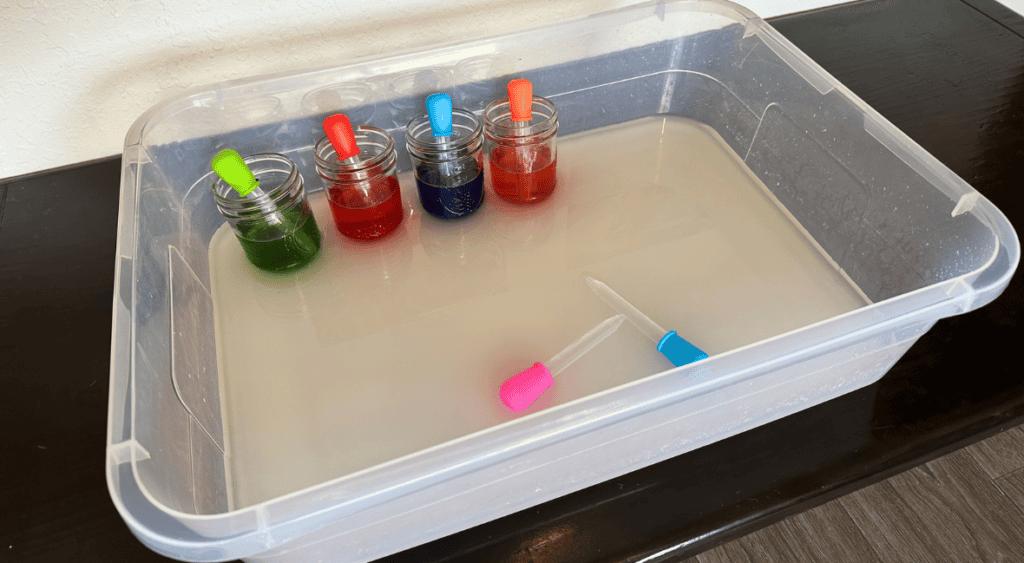
Offer small bowls of colored water and droppers or pipettes. Toddlers can squeeze and release water, mix colors, and transfer drops from one place to another.
This is excellent fine motor practice. For younger toddlers, larger droppers or squeeze bottles may be easier.
13. Pumpkin Wash
Set out small pumpkins with warm water and scrub brushes. Toddlers can scrub, rinse, roll, and wash the pumpkins.
This is a wonderful fall sensory activity that combines water play, texture, and practical work.
14. Water and Peas in a Ziplock Bag
For toddlers who are not quite ready for sensory bins, place water and peas in a ziplock bag, seal it well, and tape it down to the table or floor.
Toddlers can press, squish, and move the peas around through the bag. Always supervise and check that the bag stays sealed.
Sensory Bin Ideas for Toddlers
Sensory bins can be wonderful for toddlers when the materials are safe and developmentally appropriate. The best toddler sensory bins are simple, open-ended, and easy to explore with hands, scoops, bowls, or tools.
Instead of buying anything specific, I generally use a large shallow plastic bin and place it on the floor or on a kid table.
Have a broom and dustpan or a vacuum on hand for cleanup!
15. Oats and Cinnamon Sensory Bin
Add oats and a sprinkle of cinnamon to a bin with scoops and small bowls. Toddlers can scoop, pour, smell, and transfer.
This bin has a warm, cozy scent and a soft dry texture. It’s a great alternative to rice for younger toddlers, although it still needs supervision.
16. Colored Rice Sensory Bin
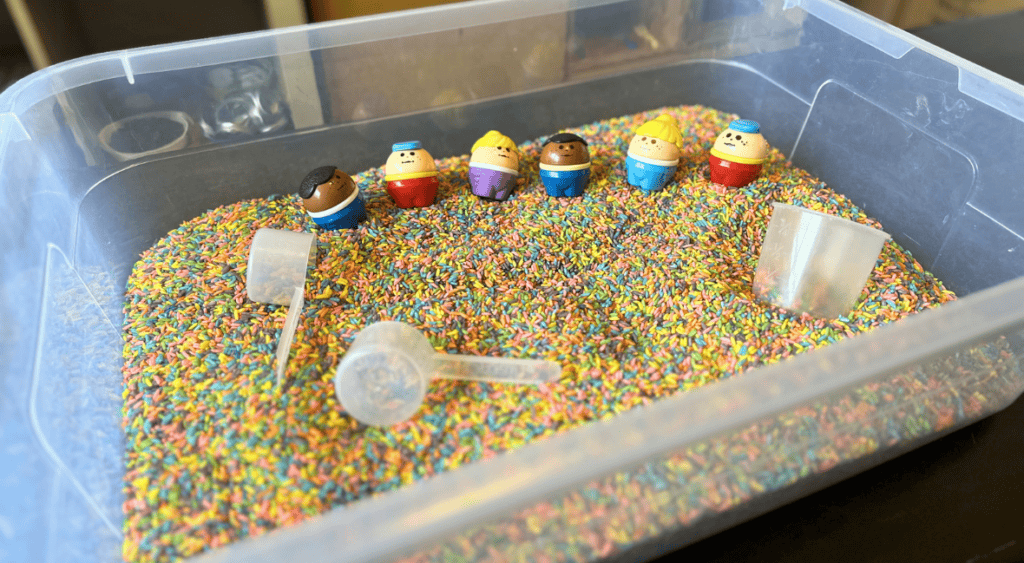
Colored rice is fun for scooping, pouring, filling muffin tins, and hiding small toys. It makes a lovely sound as it moves through cups and bowls.
It’s super easy to make your own dyed rice.
This is best for older toddlers who no longer put sensory materials in their mouths. Use close supervision.
17. Shaving Cream or Whipped Cream Sensory Bin
Shaving cream is fluffy, smooth, and fun to spread across a tabletop, bin, or bathtub wall. For toddlers who still mouth materials, whipped cream is a better taste-safe option.
Add foam blocks, toy animals, cars, or spoons. Toddlers can swirl, scoop, smear, and squish.
18. Dry Chickpeas Sensory Bin
Dry chickpeas are fun to scoop, pour, and combine with small bowls or toys. They make a satisfying sound and offer a firmer texture than oats or rice.
This activity is only for toddlers who are unlikely to mouth materials or put small objects in their noses or ears. Supervision is important.
19. Lentil Sensory Bin
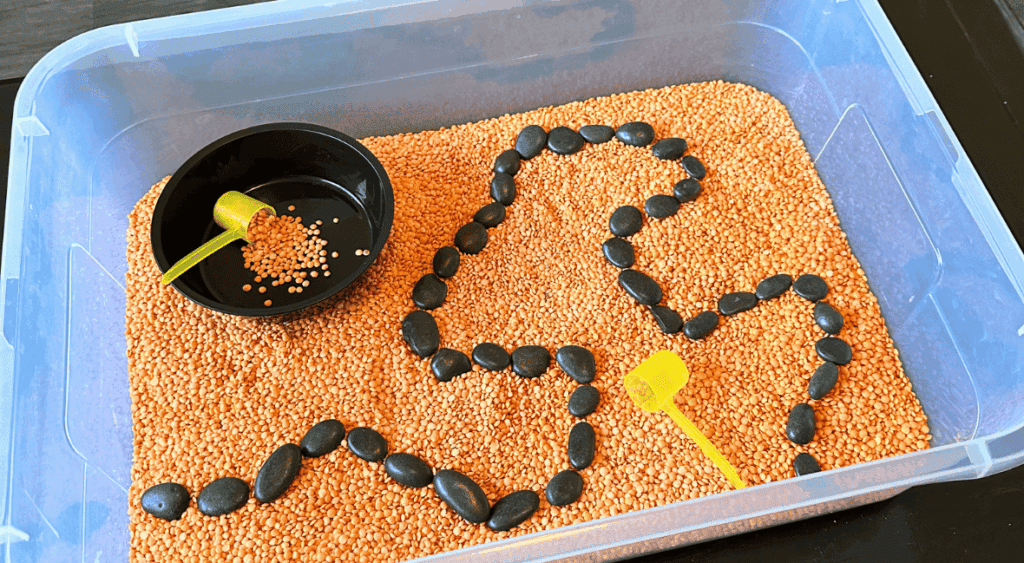
Red or brown lentils can be used with scoops, bowls, ice cube trays, muffin tins, and small toys. Toddlers can fill compartments, pour lentils from cup to cup, or bury and uncover toys.
I love that lentils are smaller than beans and therefore less likely to get stuck in noses or pose a choking hazard.
- Check out more of my favorite sensory bin filler ideas!
20. Taste-Safe Play Foam
You can make taste-safe play foam by blending aquafaba, which is the liquid from a can of chickpeas. Add 1/4 teaspoon cream of tartar if you want it to last longer.
The foam is light, fluffy, and fun to scoop or pat. It doesn’t hold its texture forever, but that’s part of the exploration.
21. Sand Bin
A small sand bin gives toddlers a chance to scoop, dig, pour, and bury toys. Add cups, spoons, construction vehicles, shells, or rocks. Adding varying amounts of water is a great way to adapt the bin.
A sand bin is mostly explored with the hands, while a sandbox allows for more full-body sensory play. Both are valuable.
22. Oobleck
Oobleck is a fascinating sensory material because it feels solid when squeezed but runny when released.
To make it, mix:
- 2 cups cornstarch
- 1 cup water
- Food coloring, optional
Toddlers can poke, squeeze, scoop, drip, and explore the changing texture. This one is messy, so it’s great for outdoor use or in the bathtub.
23. Taste-Safe “Sand”
For a toddler-safe sand alternative, crush or blend cereal until it has a sandy texture. Add scoops, cups, or toy construction vehicles.
This gives toddlers a dry, grainy material to explore without using actual sand.
24. Cooked Spaghetti Exploration
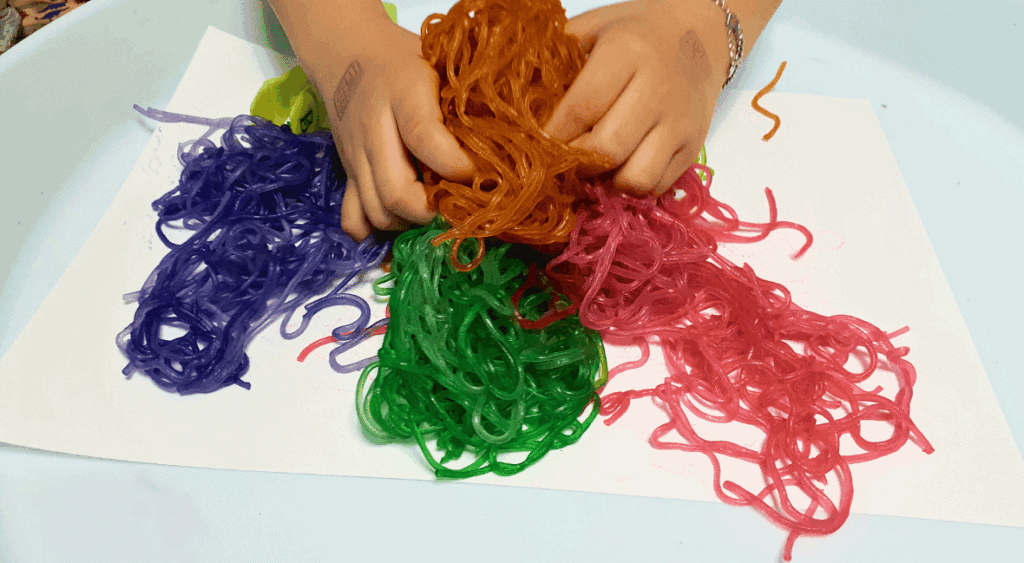
Cooked spaghetti is slippery, stretchy, and fun to pull apart. Add it to a bin or tray and let toddlers touch, scoop, stir, and explore.
For older toddlers, this can also be a fun way to practice using child-safe scissors.
25. Shredded Paper in a Kiddie Pool
Fill a kiddie pool with shredded paper for full-body sensory play. Toddlers can sit in it, toss it, hide toys, kick their feet, and move their whole bodies through the material.
This is a fun indoor gross motor sensory activity, especially when you need something different on a rainy day.
Yes, the paper will go EVERYWHERE, but it’s easy to vacuum up.
26. Taste-Safe Jello Bin
Make a shallow bin of jello and hide washable toys inside. Toddlers can dig, scoop, squish, and pull the toys out.
This is sticky, wobbly, colorful, and very engaging. Use close supervision, especially with younger toddlers.
27. Smash Cereal With a Toy Hammer
Place cereal on a tray or in a bag, then let toddlers smash it with a toy hammer. They can hear the crunch, feel the pieces break, and watch the texture change.
This is a satisfying sensory activity for toddlers who enjoy big movements and cause-and-effect play.
Outdoor Sensory Activities for Toddlers
Outdoor sensory play is often the easiest and richest kind of sensory play. Nature offers endless textures, smells, sounds, temperatures, and movement experiences and often needs very little curation.
28. Mud Kitchen Play
Mud kitchen play can be as simple as dirt, water, old pots, spoons, and bowls. Toddlers can stir mud soup, scoop dirt, pour water, make pretend coffee, or collect leaves to add to their creations.
You do not need a fancy mud kitchen. A bucket, a spoon, and permission to get messy are enough.
- Check out my complete mud kitchen guide to get started!
29. Sandbox Play
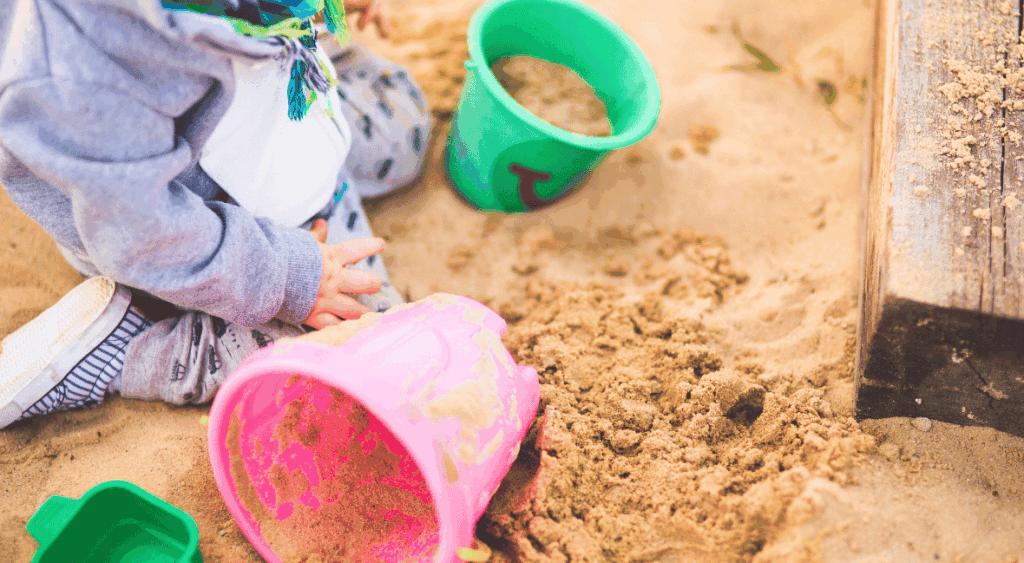
A sandbox gives toddlers a full-body sensory experience. Unlike a small sand bin that’s mostly explored with the hands, a sandbox lets toddlers sit, dig, crawl, scoop, bury their feet, and move their whole bodies.
Add buckets, shovels, trucks, or kitchen tools and let the play unfold.
30. Paint Outdoor Toys
Take washable paint outside and let toddlers paint outdoor toys, ride-on cars, plastic animals, or large rocks.
Because the toys can be washed afterward, the experience remains process-focused rather than product-focused.
- Check out all my favorite outdoor toys for toddlers!
31. Scrub and Wash Outdoor Toys
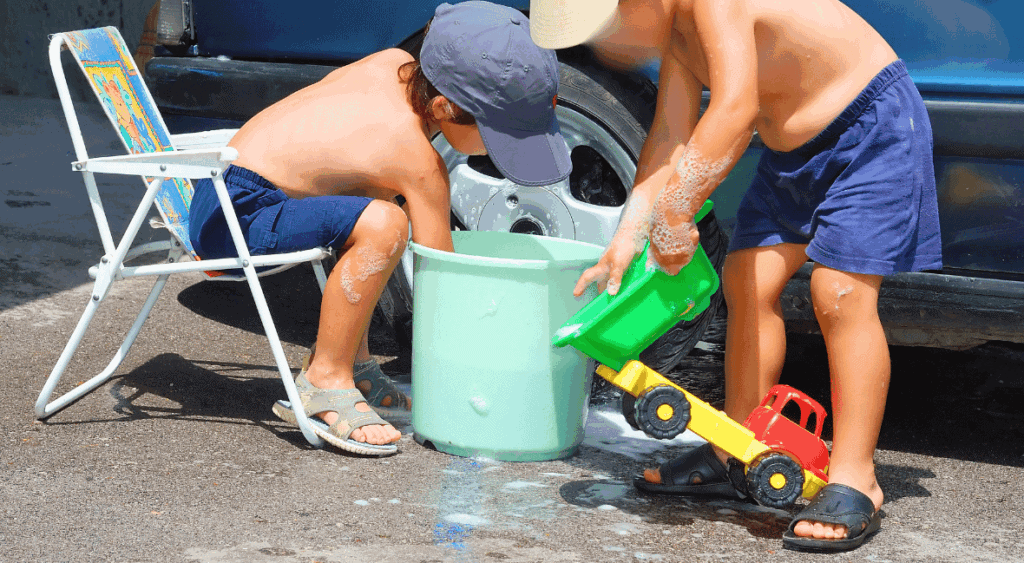
Give toddlers a bucket of soapy water and a scrub brush to wash outdoor toys. They can clean bikes, scooters, trucks, balls, playhouses, or plastic chairs.
This is sensory play, practical life work, and gross motor play all in one.
32. Water and Fence Painting
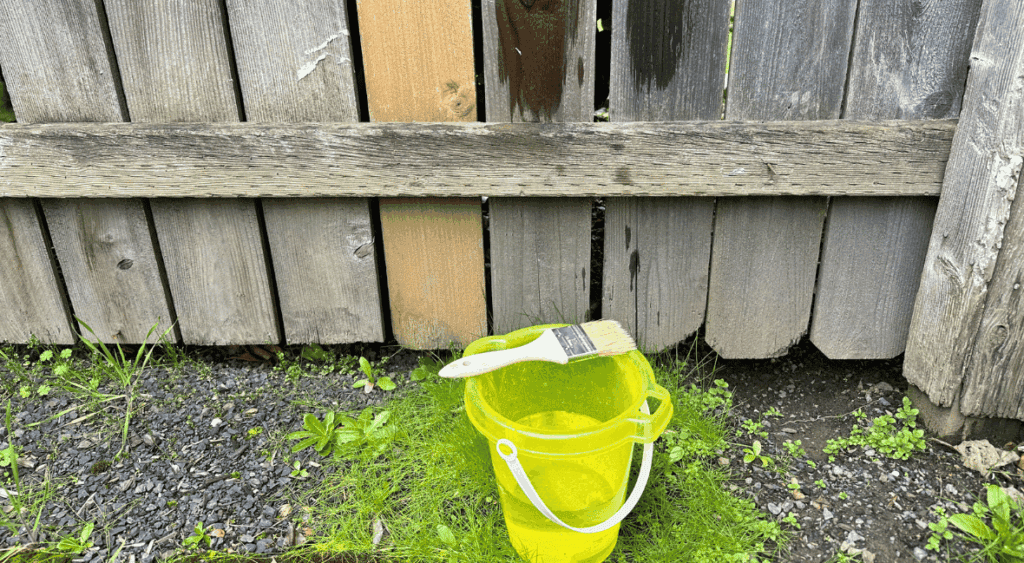
Give your toddler a bucket of water and a large paintbrush. Let them “paint” the fence, deck, sidewalk, or patio.
The water darkens the surface, then dries in the sun, so toddlers can paint again and again with no cleanup.
33. Jump in Puddles
Puddle jumping is classic toddler sensory play. It includes movement, water, sound, balance, and cause and effect.
Put on boots and rain gear and let your toddler splash, stomp, and explore.
34. Crunch Leaves
Dry leaves offer sound, texture, color, and movement. Toddlers can stomp on them, crumble them, toss them, collect them, or carry them in a bucket.
This is a simple seasonal sensory activity that requires no setup.
35. Play in the Grass
Grass is a sensory experience all on its own. Toddlers can sit, crawl, run, roll, pick blades of grass, or feel it on bare feet.
Some toddlers love this, while others are unsure at first. Let your child explore at their own pace.
36. Touch Tree Trunks
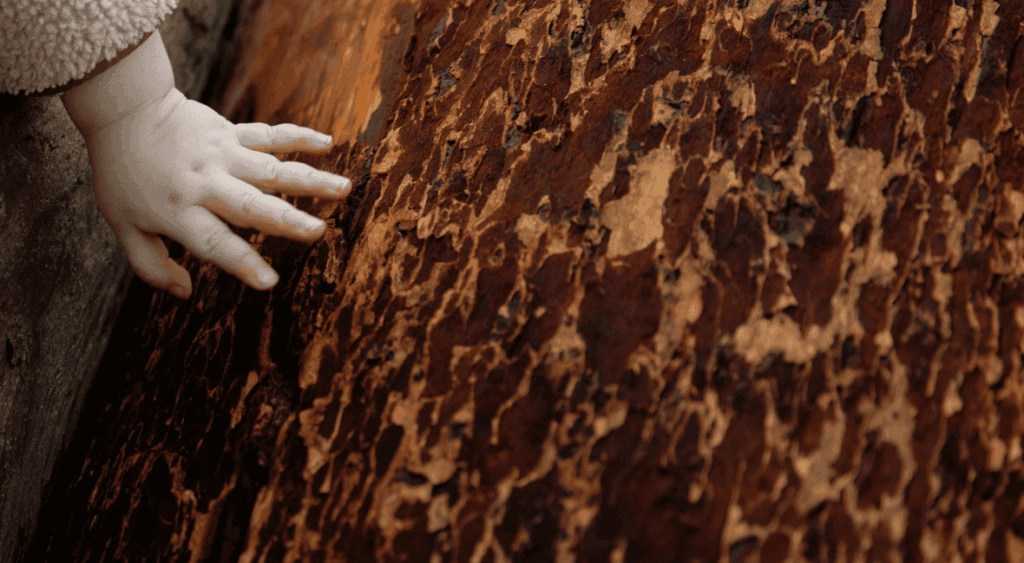
Invite toddlers to feel the bark on different trees. Some bark is rough, some is smooth, some is bumpy, and some is flaky. Climb over and play on fallen trees.
This is a quiet, simple way to notice texture in nature.
37. Play in the Snow
Snow offers cold, wet, powdery, crunchy, and melting textures. Toddlers can scoop it, stomp in it, throw it, carry it, or watch it melt in their mittens.
You can also bring a small bin of snow inside for a short indoor sensory activity.
38. Barefoot Outdoor Play
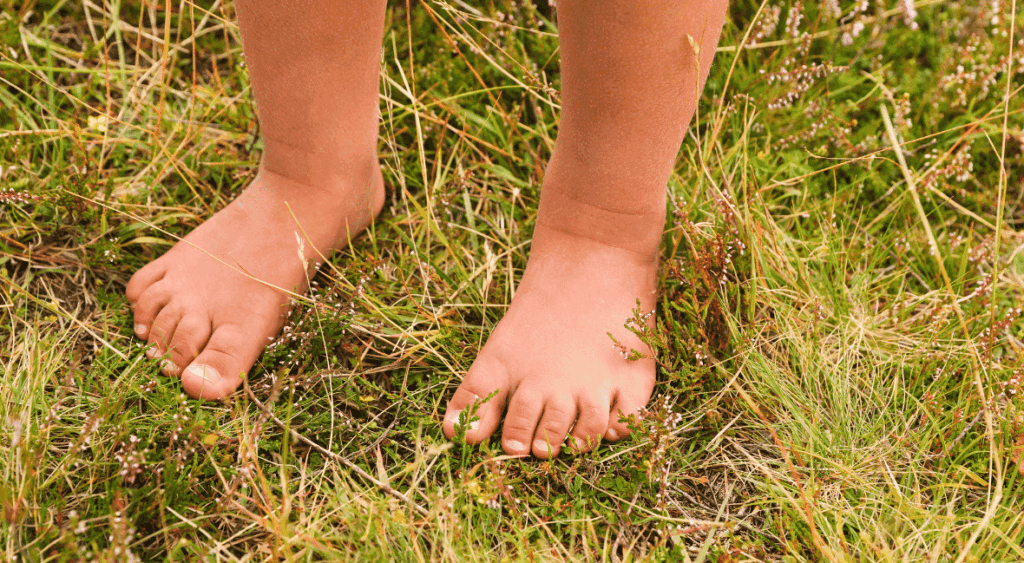
Barefoot play lets toddlers explore with their feet, not just their hands. Safe grass, sand, mud, smooth stones, or shallow water all offer different sensory information.
Never force barefoot play if your child dislikes it. Some toddlers need time to warm up to new textures.
39. Dig in the Garden
Give toddlers a designated digging area where they can explore without uprooting your plants. Toddlers are usually more interested in the dirt, worms, water, and tools than the actual gardening process.
A small shovel, bucket, or spoon can lead to long stretches of engaged play.
40. Play in the Rain
Rainy days are full of sensory possibilities. Toddlers can feel raindrops, watch water drip, listen to rain sounds, splash in puddles, and notice wet surfaces.
With proper clothing, rain can become one of the best sensory play materials.
41. Pick, Smell, and Taste Herbs
If you grow safe edible herbs, let your toddler pick, smell, and taste small pieces. Mint, basil, parsley, rosemary, and lavender all offer strong sensory experiences.
Toddlers can also add herbs to water play or mud kitchen play.
42. Collect Leaves and Nature Items
Give your toddler a basket or bucket and let them collect leaves, sticks, pinecones, rocks, flowers, or other interesting nature items.
Collecting is simple, child-led, and full of texture, weight, color, and smell.
- Check out more great nature activities for kids!
43. Listen to Birds
Sensory play can be quiet too. Sit outside and listen for birds. You can point out different sounds without turning it into a quiz.
Toddlers are building attention, listening skills, and awareness of the world around them.
Everyday Sensory Play for Toddlers
Some of the best sensory activities are not activities at all. They are everyday moments where toddlers are allowed to participate in real life.
44. Peel Fruit
Let toddlers help peel bananas, oranges, or clementines. Peeling fruit gives toddlers practice with texture, smell, fine motor skills, and independence.
45. Baking
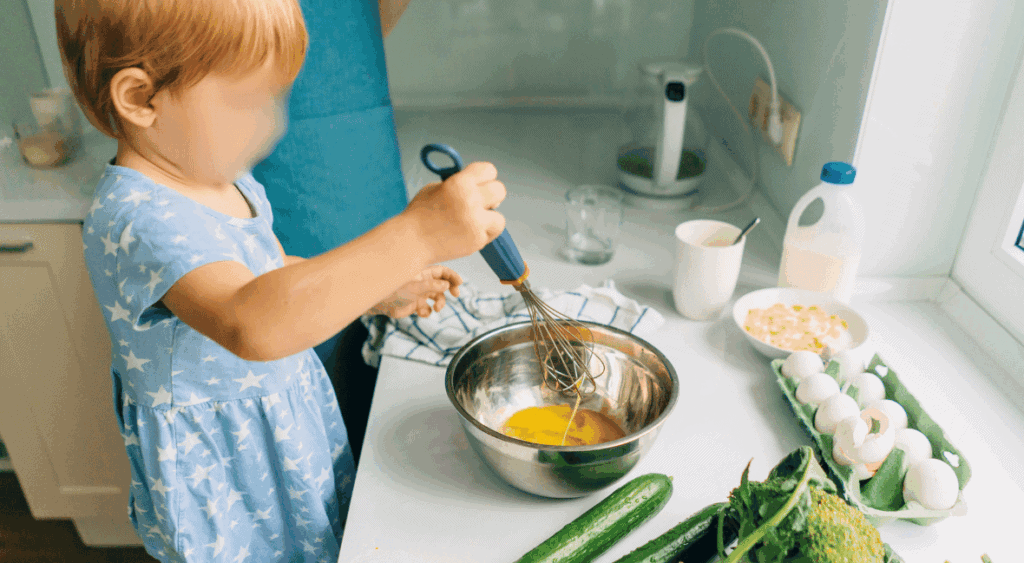
Baking is full of sensory experiences. Toddlers can stir, pour, scoop, sprinkle, mash bananas, knead dough, smell spices, and taste ingredients.
Yes, it takes longer with toddlers. But it’s also rich, meaningful sensory play.
46. Bath Time
Bath time is basically a giant full-body sensory bin! Toddlers experience warm water, bubbles, pouring, splashing, floating toys, slippery soap, and body awareness.
Add cups, foam blocks, washcloths, or bath-safe paints to extend the play.
47. Hand Washing
Hand washing is a simple daily sensory activity. Toddlers feel warm water, slippery soap, bubbles, and the motion of rubbing hands together.
Let them take their time when possible.
48. Cleaning With a Damp Cloth
Give your toddler a damp cloth and let them wipe the table, floor, cabinets, or toys.
Toddlers often love real work. Wiping gives them sensory input, movement, and a sense of contribution.
49. Washing Vegetables
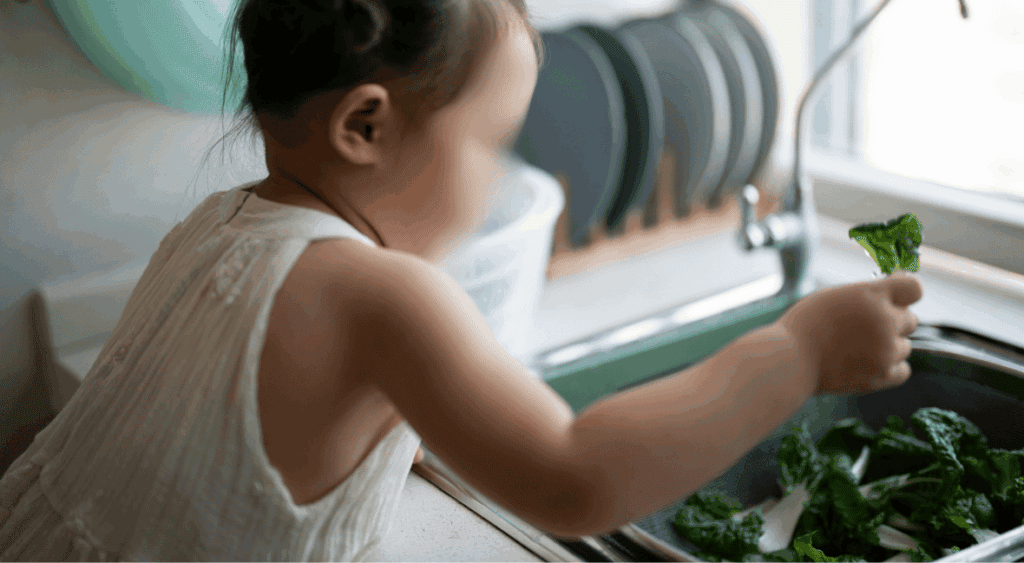
Let toddlers help wash vegetables in a bowl of water or at the sink. They can scrub potatoes, rinse carrots, wash lettuce, or move vegetables from one bowl to another.
This is practical, sensory-rich, and easy to include in daily life.
50. Squishing Blueberries During Snack
Self-feeding is full of sensory learning. Toddlers may squish blueberries, smear yogurt, poke avocado, or feel banana between their fingers.
This can be messy, but it’s also part of how toddlers learn about food textures and how to feed themselves.
51. Snuggling Under a Blanket
Sensory play does not always have to be messy or active. Snuggling under a soft or weighted blanket, rolling in a blanket, or building a blanket nest can give toddlers cozy sensory input.
52. Help Water Plants
Give your toddler a small watering can and let them help water plants. They can carry, pour, sprinkle, and watch the water soak into the soil.
This is especially satisfying for toddlers who like heavy work and practical tasks.
53. Self-Feeding
Self-feeding is one of the most important everyday sensory activities for toddlers. They touch different textures, practice grasping, bring food to their mouth, chew, taste, smell, and learn what they like.
It can be tempting to keep meals perfectly tidy, but some food exploration is part of the process.
54. Bathtub Paints
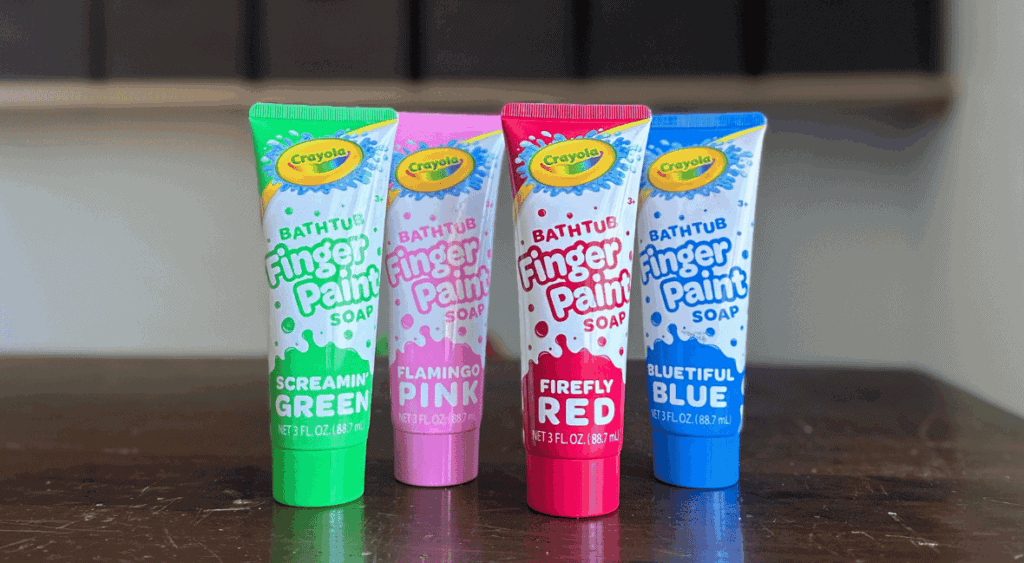
Bath paints let toddlers explore color and texture in a place that’s easy to clean. They can paint the tub walls, smear colors, rinse them away, and start again.
Dough Play Sensory Activities for Toddlers
Dough play gives toddlers a chance to squeeze, pinch, roll, flatten, poke, pull, and build hand strength. Different types of dough offer different textures and resistance.
55. Playdough
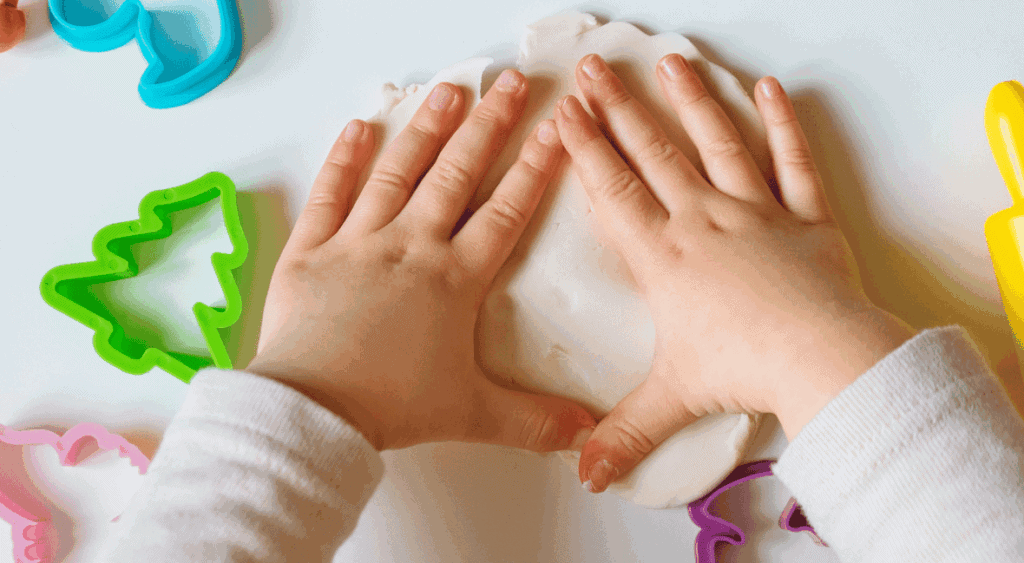
Playdough is a classic toddler sensory activity. Offer a small ball of dough along with simple tools such as craft sticks, toy animals, chunky rollers, or cups.
Toddlers do not need complicated playdough kits. They often enjoy poking, tearing, flattening, and squishing the dough in their own way.
- Here is my favorite easy playdough recipe that you can make with kids!
56. Taste-Safe Cloud Dough
Mix:
- 3/4 cup Greek yogurt
- 1 cup cornstarch
- Food coloring, optional
This creates a soft, taste-safe dough for toddlers who may still put materials in their mouths. Supervise closely, especially because the texture can get messy.
57. Conditioner Cloud Dough
Mix:
- 1 cup hair conditioner
- 2 cups cornstarch
This creates a smooth, soft dough with a pleasant scent. This version is not taste-safe, so it’s best for older toddlers who do not mouth materials.
58. DIY Moon Sand or Sensory Snow
Mix:
- 2 cups flour
- Baby oil until you reach the texture you want
Start with a small amount of baby oil and slowly add more. The result is a soft, moldable material that is white like snow.
This is not taste-safe, so use only with toddlers who are ready.
59. Clay
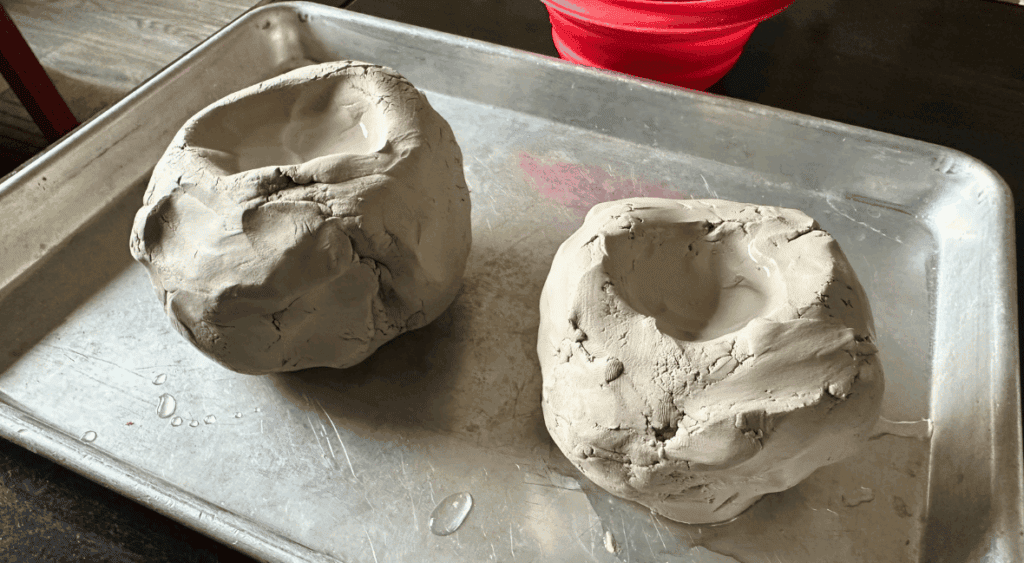
Clay takes more effort to manipulate than playdough, which can make it a wonderful sensory and strengthening material.
It also changes depending on how wet it is. Dry clay can feel dusty, damp clay can feel sticky, and very wet clay can feel slimy. This variety makes clay a rich sensory experience for toddlers who enjoy hands-on materials.
Art Sensory Play for Toddlers
Art with toddlers should be about the process, not the finished product.
The sensory experience of spreading paint, ripping paper, squeezing glue, or rolling cars through color is often more meaningful than the final artwork.
60. Finger Painting
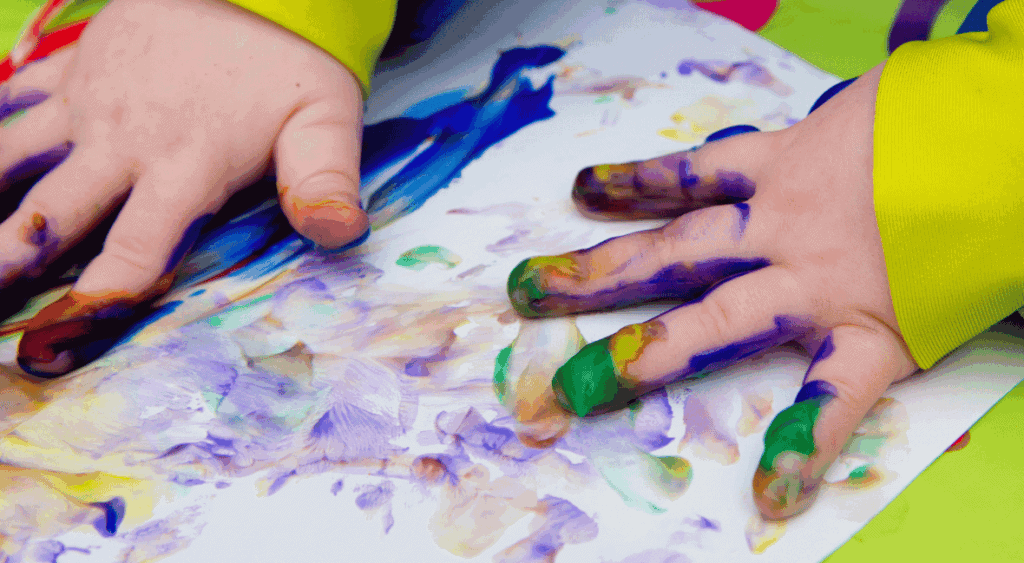
Finger painting lets toddlers explore color, texture, movement, and mark-making. They can smear, swipe, dot, mix, and squish.
If your toddler does not like touching paint, offer a brush, sponge, cotton swab, or toy car instead.
61. Taste-Safe Yogurt Painting
Use plain yogurt with a little food coloring for a taste-safe painting experience. Toddlers can paint on a tray, highchair surface, or paper.
This is a great option for young toddlers who still explore with their mouths.
62. Water Painting on Magic Cloth
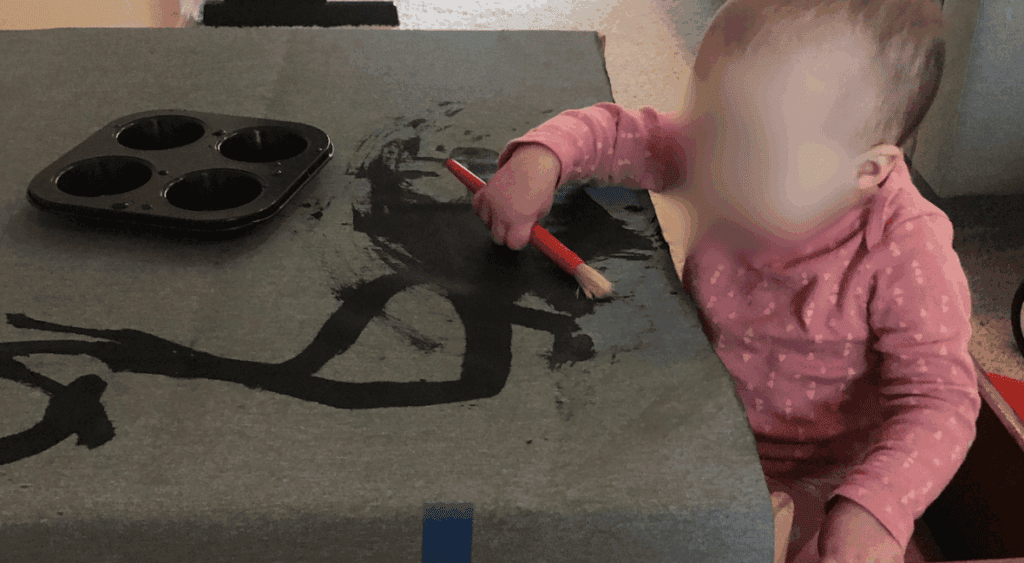
Chinese water drawing paper, sometimes called magic water cloth, allows toddlers to paint with only water. The marks appear and then disappear as they dry.
This is a wonderful low-mess option for toddlers who love painting but adults who do not want a big cleanup.
- Check out all my favorite art supplies for kids!
63. Paint With Cars
Add washable paint to paper and let toddlers drive toy cars through it. The wheels make tracks, mix colors, and create interesting patterns.
This is especially fun for toddlers who love vehicles.
64. Rip and Crinkle Paper
Give toddlers scrap paper, tissue paper, wrapping paper, or newspaper to rip, crinkle, and scrunch.
This simple activity builds hand strength and offers satisfying sound and texture.
65. White Glue and Paper Collage
Offer paper scraps and bottles of white glue. Toddlers can squeeze, spread, stick, layer, and explore.
It can be tempting to limit how much glue kids use, but they are building their focus, hand muscles, curiosity, and so much more when they are uninterrupted!
For younger toddlers, you can put glue in a small cup and offer a brush instead of using the bottle.
66. Ziplock Bag With Paint and Paper
Place paper and paint inside a ziplock bag, seal it well, and tape it down. Toddlers can press, squish, and move the paint around without touching it directly.
This is a good option for toddlers who do not like messy hands or for times when you need a lower-mess activity.
More Sensory Activities for Toddlers
These activities do not fit neatly into one category, but they are still wonderful sensory experiences for toddlers.
67. Fabric Basket Exploration
Fill a basket with different fabrics such as scarves, washcloths, felt, fleece, scratchy burlap, or small blankets. Toddlers can touch, pull, hide, carry, and sort the pieces.
This is a soft, quiet sensory activity that can also lead into pretend play.
68. Sticky Contact Paper Play
Tape contact paper to the wall or floor with the sticky side facing out. Toddlers can press large pieces of paper, fabric, leaves, or tissue onto it.
The sticky texture is interesting, and toddlers can experiment with pressing, pulling, and rearranging.
69. Listen to Music and Dance
Music and dancing provide sound, rhythm, movement, balance, and body awareness. Toddlers can clap, spin, stomp, sway, jump, or play along with instruments.
This is a great sensory activity when toddlers need movement.
- Check out all my favorite music-and-movement activities!
70. Swimming
Swimming is a full-body sensory experience and is just plain fun!
Toddlers feel water pressure, movement, temperature, buoyancy, and sound in a completely different way than they do on land.
Always supervise closely around water.
71. Play With Musical Instruments
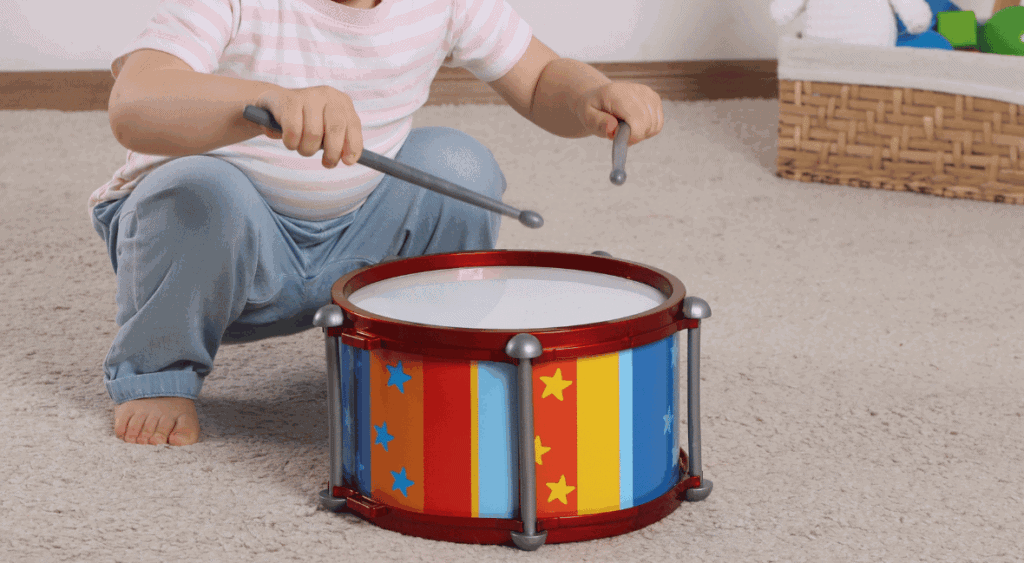
Simple instruments like shakers, drums, bells, rhythm sticks, or tambourines give toddlers a chance to explore sound, rhythm, movement, and cause and effect.
They can play loudly or softly, fast or slow, alone or alongside music.
Tips for Sensory Activities With Toddlers
Before setting up sensory play, keep things simple and safe.
First, know your child. Some toddlers still put everything in their mouths. Others may stick small objects in their nose or ears. For young toddlers or children who mouth materials, choose taste-safe options and avoid small, loose pieces like beans, chickpeas, pom poms, or uncooked rice.
Second, start small. You do not need a giant bin. A baking tray, bowl, muffin tin, or small tub is often plenty.
Third, expect mess. Sensory play is often easier outside, in the bathtub, at the kitchen sink, or on a washable surface.
Finally, let your toddler lead. They may not use the materials the way you expected. That’s okay. Sensory play is about exploration, not following adult directions.
FAQs
• What are good sensory activities for toddlers?
Good sensory activities for toddlers engage multiple senses (touch, smell, taste, etc) and avoid choking hazards.
Fun activities include water play, sponge squeezing, toy washing, playdough, finger painting, mud kitchen play, sand play, outdoor exploring, baking, bath time, music and dancing, and taste-safe sensory bins.
• What sensory activities are safe for young toddlers?
For young toddlers, choose taste-safe and low-choking-risk materials such as water, yogurt paint, whipped cream, cooked spaghetti, oats, crushed cereal, jello, soft fruit, and taste-safe cloud dough. Always supervise closely.
• Are sensory bins necessary for toddlers?
No! Sensory bins can be fun, but they are not necessary. Toddlers get sensory input through everyday play, such as washing hands, eating, climbing, digging, bathing, dancing, and playing outside.
• What can I use instead of water beads for toddlers?
Instead of traditional water beads, try cooked tapioca pearls, jello, cooked spaghetti, water and sponges, soap foam, oats, or crushed cereal. Traditional water beads are not a safe choice for kids of any age.
• How do I make sensory play less messy?
Take sensory play outside, use the bathtub, place a towel or washable mat underneath, offer small amounts of materials, or choose low-mess activities like water painting, ziplock bag paint, fabric baskets, music, or toy washing.
• What if my toddler does not like messy sensory play?
That’s completely okay!
Some toddlers do not enjoy sticky or wet textures. Offer tools like spoons, brushes, cups, tongs, or toy animals so they can explore without touching the material directly.
And remember: movement activities, music, water play, and fabric exploration are also sensory play!
Final Thoughts on Sensory Activities
Sensory activities for toddlers do not need to be fancy. Toddlers are already wired to explore the world through their senses. They want to know what happens when they pour water, squeeze a sponge, stomp in a puddle, squish a blueberry, crumble a leaf, or press their fingers into dough.
As adults, we do not need to entertain toddlers every second or turn every activity into a lesson. We can offer safe materials, stay nearby, observe, and let them lead.
Whether your toddler is washing pumpkins, painting with water, dancing to music, digging in mud, or helping peel fruit, they are learning through play with their whole body.
The simplest sensory experiences are often the most meaningful.
No Comments