
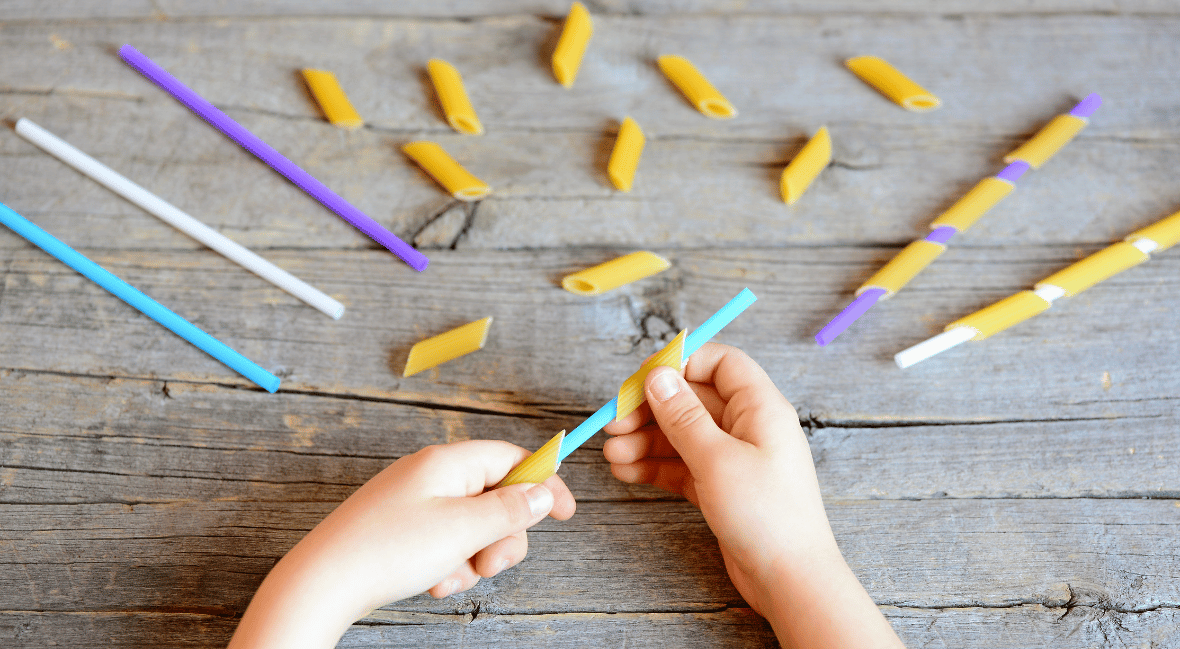
Fine motor skills activities for preschoolers do not have to be complicated, overly planned, or Pinterest-perfect!
In fact, some of the best fine motor development happens during ordinary, everyday moments: picking blueberries at snack time, peeling stickers, digging in the dirt, building with blocks, squeezing playdough, zipping a jacket, or carefully turning the pages of a favorite book.
As adults, it is easy to feel like we need to constantly plan fine motor “activities” for preschoolers. But the truth is that children build fine motor skills best when they have lots of time to play, explore, experiment, and use their hands in meaningful ways.
Fine motor development is not something we need to force. It grows naturally when children are given rich environments, interesting materials, independence, and plenty of time for open-ended play.
In this post:
- The Best Fine Motor Skills Activities for Preschoolers Are Often Just Play
- 14 Fine Motor Skills Activities for Preschoolers
- How to Make Fine Motor Activities More Child-Led
- A Simple Fine Motor Skills Setup Formula
- Fine Motor Skills Do Not Need to Be Rushed
The Best Fine Motor Skills Activities for Preschoolers Are Often Just Play
Before we jump into a big list of fine motor activities, I think it is important to say: Preschoolers do not need a day packed with adult-planned fine motor activities.
They need time. They need to play. They need access to interesting materials. They need chances to try real things, make mistakes, solve problems, and use their hands in ways that feel meaningful to them.
A child carefully picking up tiny rocks outside, making soup in the mud kitchen, peeling tape off the table, arranging buttons in playdough, or stacking blocks as tall as they can is working on fine motor skills. It just may not look like a formal “fine motor activity.”
And that is a good thing. Children are usually much more motivated when the hand work is part of their own play. Cutting paper because they want to make tickets for their pretend train is more meaningful than cutting random lines on a worksheet. Squeezing playdough because they are making birthday cakes for their stuffed animals is more engaging than being told to “strengthen your hands.”
The goal is not to squeeze in more activities. The goal is to create more opportunities for children to use their hands in real, playful, self-directed ways.
16 Fine Motor Skills Activities for Preschoolers
1. Play with Playdough
Playdough is one of the easiest and most open-ended fine motor materials for preschoolers. It builds hand strength, coordination, finger control, and creativity all at once.
You can keep it simple with just playdough or add a few loose parts and tools.
Playdough ideas:
- Roll playdough into balls and snakes
- Pinch playdough into tiny pieces
- Flatten playdough with palms or fingers
- Cut playdough with child-safe scissors
- Use cookie cutters
- Press buttons into playdough
- Hide beads, gems, or beads inside for kids to pick out
- Make pretend cookies, cupcakes, or pizzas
- Make playdough faces
- Use toy animals to make footprints
- Press pasta into playdough
- Add pipe cleaners for building
- Use a garlic press with playdough
- Make pretend birthday cakes with candles
- Build tiny sculptures
- Make pretend food for a restaurant
- Use rollers, lids, or small containers to make prints
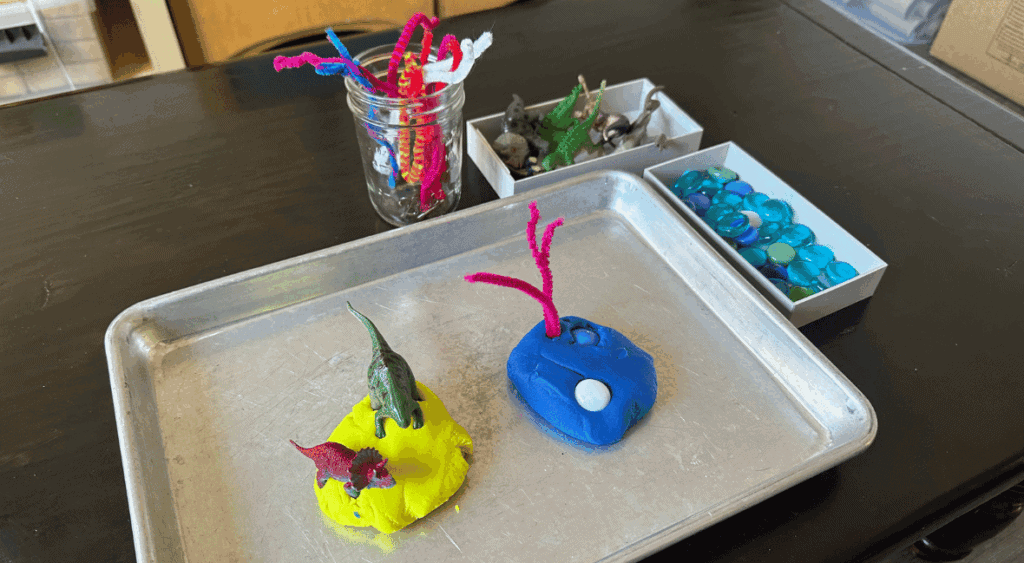
The best part about playdough is that there is no single “right” way to use it and no need to tell children what to do with it. Children can squish, roll, cut, poke, build, decorate, and start over as many times as they want.
2. Peel and Stick Stickers and Tape
Stickers are surprisingly powerful fine motor tools for building the pincer grasp!
Peeling a sticker from the sheet requires finger strength, coordination, and patience. Tape is the same way. Pulling, tearing, sticking, unsticking, and repositioning tape all work small hand muscles.
Sticker and tape ideas:
- Peel stickers and place them on paper
- Put dot stickers along a line
- Match stickers to drawn circles
- Decorate cardboard boxes with stickers
- Make sticker patterns
- Use stickers to make faces
- Cover a large paper with random stickers
- Peel washi tape
- Tear masking tape
- Tape paper scraps together
- Pull tape off a table or tray
For a child-led version, simply set out paper, stickers, and tape. Let your child decide what to make.
- Check out more of my favorite sticker crafts for kids!
3. Practice Beading, Threading, and Lacing
Threading activities are great for hand-eye coordination, bilateral coordination, and finger control. But they do not have to look like formal lacing cards.
You can use beads, pasta, straws, cereal, buttons, cardboard, pipe cleaners, and yarn.
- Check out more great bilateral coordination activities for kids!
Threading and lacing ideas:
- Thread beads, pasta, buttons, cut-up straws, or cereal onto pipe cleaners – turn them into bracelets or necklaces!
- String beads, pasta, cut up straws, or cereal onto yarn (tape around the end to make it slide the yarn through)
- Lace yarn through punched holes
- Use simple lacing cards
- Sew through burlap with a plastic needle
- Push pipe cleaners through a colander
- Lace leaves together after hole-punching them
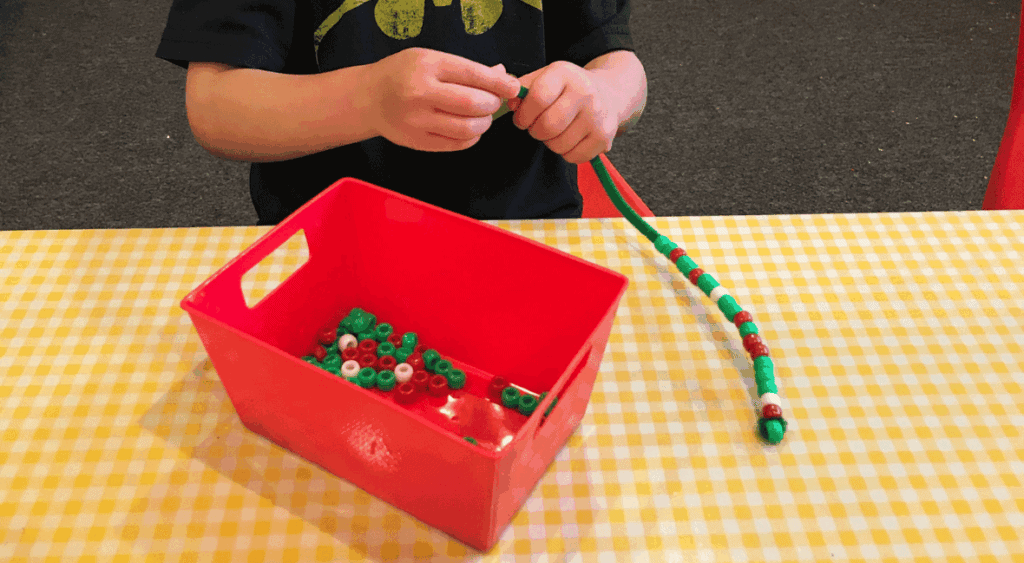
Pipe cleaners are often easier than yarn for younger preschoolers because they are stiff. This makes threading less frustrating and more independent.
4. Transfer and Sort With Tongs, Tweezers, Clothespin, and Spoons
Tongs, tweezers, and clothespins help children strengthen the small muscles they need for pencil grip, self-care, and tool use. These materials also make simple sorting and sensory play feel new and interesting.
Transferring and Sorting ideas:
- Use tweezers to move pom-poms
- Clip and unclip clothespins onto cardboard, baskets, or paper plates.
- Pick up small toys with tongs
- Transfer cotton balls with clothespins
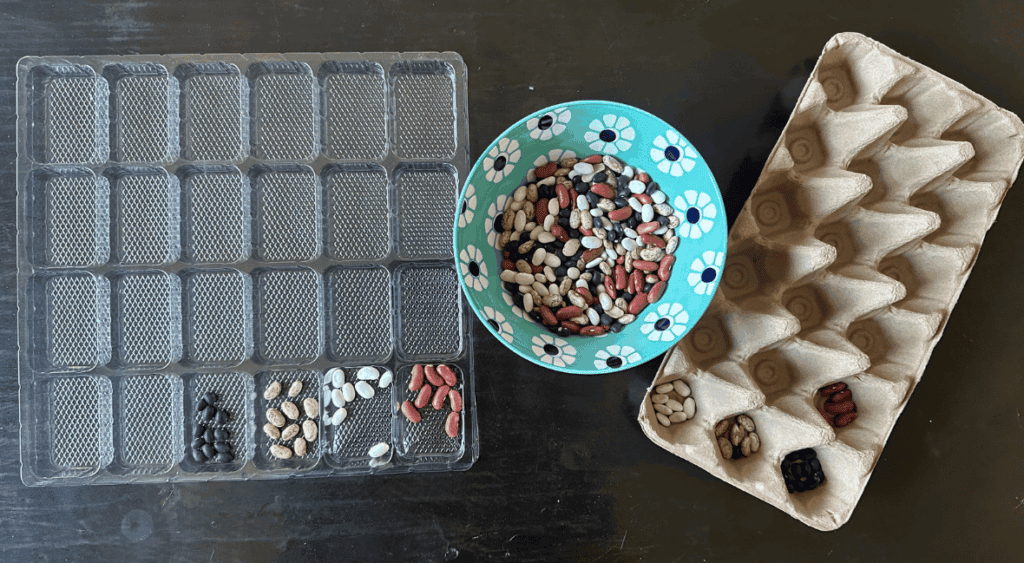
- Sort pom-poms into muffin tins using tweezers or tongs
- Move buttons from one bowl to another
- Pick up blocks with kitchen tongs
- Scoop pom-poms with small spoons
- Sort bottle caps by color
- Transfer acorns, rocks, or shells with spoons
5. Cut and Tear Paper
Scissor skills take time. Before preschoolers are ready to cut shapes or follow lines, they benefit from tearing, snipping, and cutting materials that are easy to manage.
Tearing paper is also a wonderful fine motor activity. It strengthens the hands and helps children use both hands together.
Cutting and tearing ideas:
- Tear paper into small pieces (save the paper to make collages!)
- Rip leaves for nature art
- Cut strips of paper
- Snip the edges of paper
- Cut playdough with scissors
- Cut straws into pieces
- Cut scrap paper freely
- Tear wrapping paper scraps
- Cut old magazines
- Cut yarn pieces
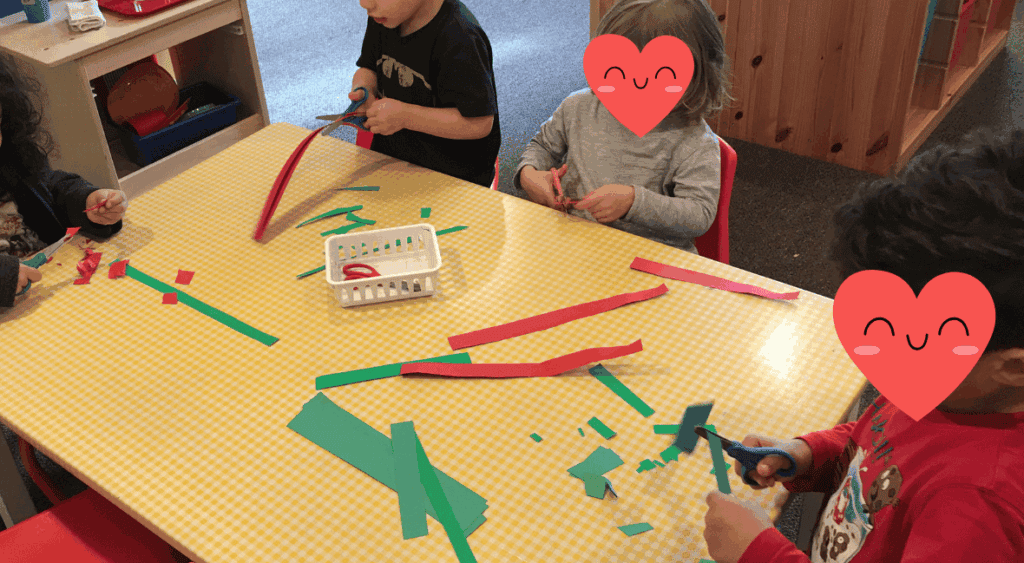
Instead of only offering worksheets, give children real reasons to cut.
6. Build With Blocks
Building is one of the best child-led fine motor activities for preschoolers because it naturally includes planning, gripping, balancing, adjusting, problem-solving, and persistence.
- Check out all my favorite sets of blocks!
When children build, their hands are constantly working. They stack, pinch, connect, pull apart, balance, and rebuild.
Building ideas:
- Build with wooden blocks
- Stack small blocks
- Build with LEGO DUPLO
- Use small LEGO bricks if appropriate
- Snap together linking cubes
- Build with magnetic tiles
- Use bristle blocks
- Connect pop beads
- Stack rocks outside
- Build with sticks and playdough
- Make houses for toy animals
- Create ramps for cars
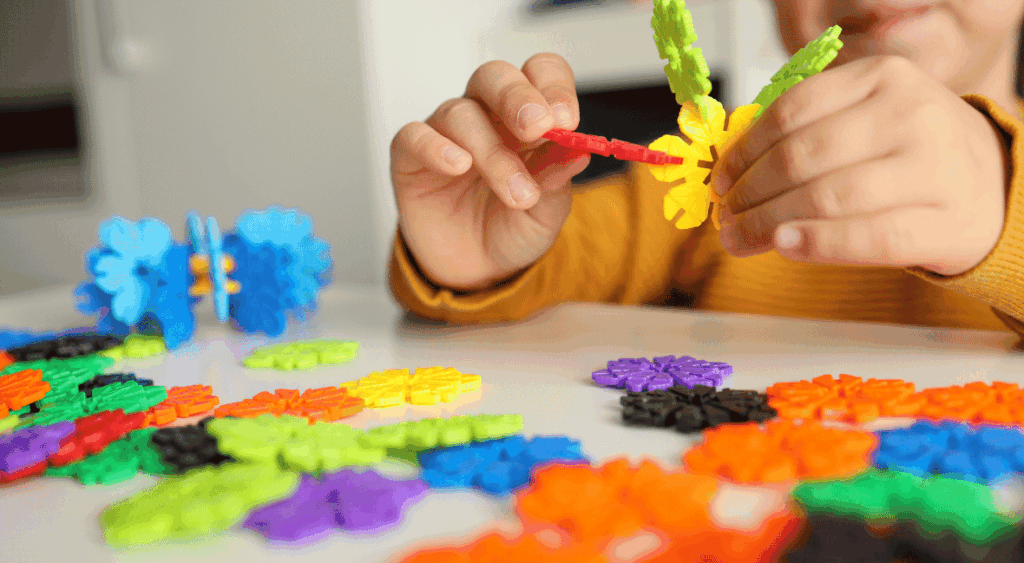
The important thing is to let the building belong to the child. It does not need to look like anything specific. The process is where the skill-building happens.
7. Play With Water
Water play is naturally engaging for preschoolers and offers many opportunities to squeeze, pour, scoop, twist, spray, and transfer.
Water play ideas:
- Squeeze sponges
- Use spray bottles outside
- Pour water from cup to cup
- Use small pitchers
- Scoop water with measuring cups
- Use funnels
- Transfer water with droppers
- Wash toy animals
- Scrub rocks with brushes
- Wash baby dolls
- Use turkey basters
- Use small ladles
- Fill and empty containers
- Give toy cars a car wash
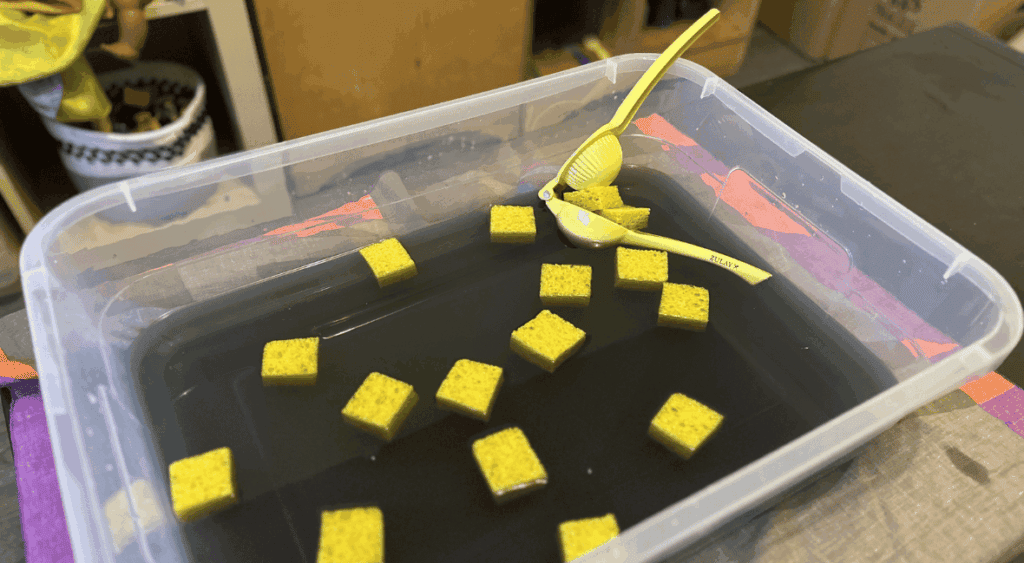
Water play does not need a theme. A bin of water, cups, sponges, and a few scoops can keep preschoolers busy for a long time.
8. Process Art Activities
Process art is another wonderful way to support fine motor development without turning it into a lesson. Children strengthen their hands as they draw, paint, glue, squeeze, stamp, peel, press, and create.
Fine motor art ideas:
- Paint with Q-tips
- Paint with cotton balls clipped in clothespins
- Use small paintbrushes
- Finger paint
- Draw with broken crayons
- Use markers on cardboard
- Trace shapes in shaving cream
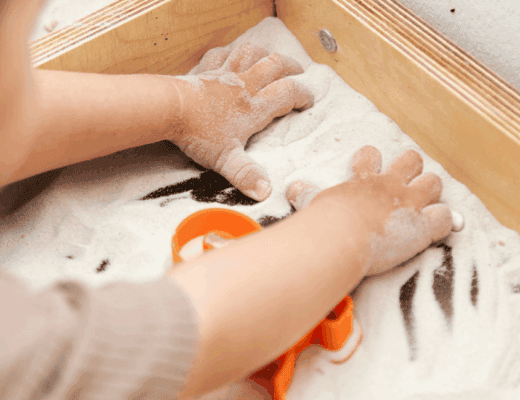
- Draw in sand or salt trays
- Use droppers on coffee filters
- Glue torn paper onto a collage
- Use a hole punch
- Fold paper
- Make nature collages
- Stamp with corks or bottle caps
- Use glue sticks
- Squeeze liquid glue
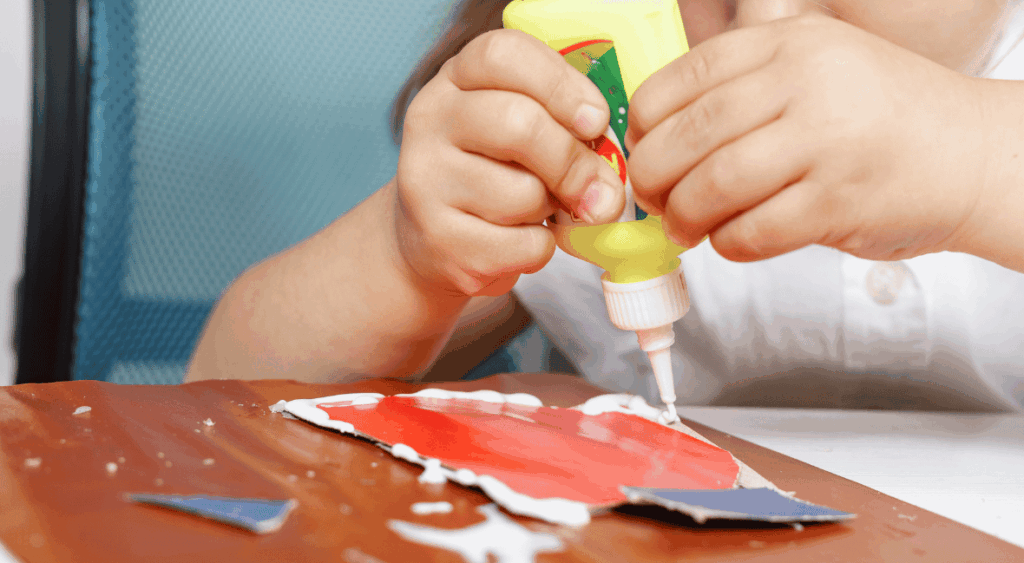
Broken crayons are especially helpful because they naturally encourage a more developed grip. Plus, kids usually love using tiny crayon pieces.
9. Sensory Bin Play
Sensory bins can be very simple. You do not need a complicated theme or a huge setup. A bin with rice, beans, oats, pom-poms, shredded paper, water, sand, or leaves can offer lots of fine motor practice.
- Check out all my favorite sensory bin filler ideas!
Sensory bin ideas:
- Scoop and pour dry beans
- Scoop rice with measuring spoons
- Hide small toys to find
- Pour through funnels
- Fill small containers
- Use small scoops
- Transfer materials between bowls
- Dig for buttons
- Use tweezers to find small treasures
- Use muffin tins for sorting
- Add spoons, cups, and jars
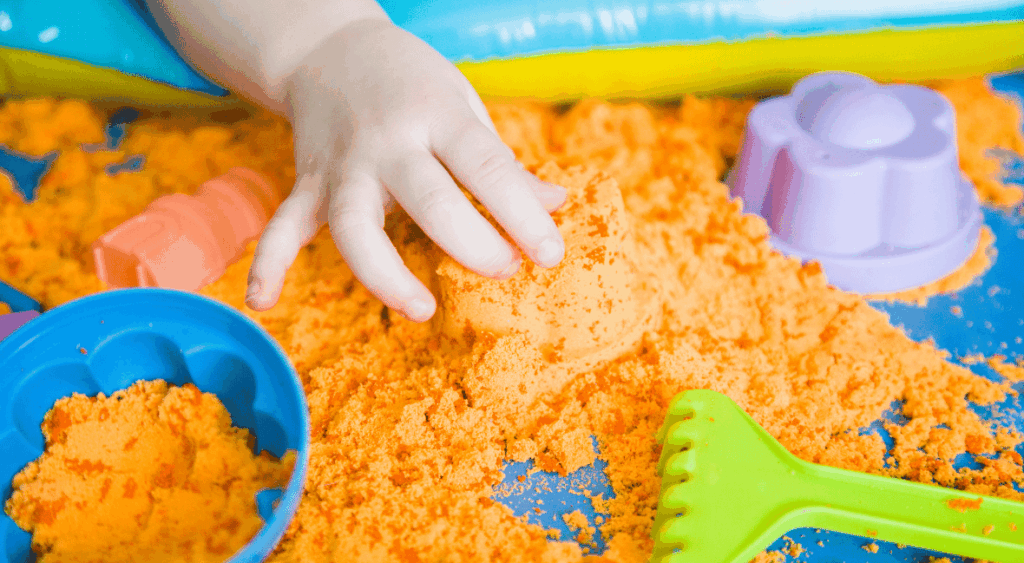
The most open-ended sensory bins are usually the simplest ones. Too many directions can take away from the play.
10. Spent Time Playing Outside
Outdoor play is full of fine motor work. Preschoolers use their hands constantly outside, often without adults noticing.
They pick up sticks, collect rocks, pinch tiny leaves, scoop mud, pull weeds, dig holes, carry treasures, stack pinecones, and arrange nature collections.
Outdoor fine motor ideas:
- Pick up acorns, rocks, or shells
- Make nature mandalas
- Collect leaves
- Dig in dirt
- Make mud pies
- Pull weeds
- Plant seeds
- Water plants with a spray bottle
- Pick flowers
- Scrub rocks with brushes
- Draw with sticks in dirt
- Use chalk outside
- Make leaf rubbings
- Pick berries, if appropriate and supervised
Outdoor fine motor play often has the added benefit of gross motor work too. Children squat, carry, balance, reach, climb, and move their whole bodies while also using their hands.
- Check out my list of 81 free outdoor activities!
11. Help Out in the Kitchen
The kitchen is full of real fine motor work. Preschoolers love helping when the work feels meaningful.
Kitchen fine motor ideas:
- Stir batter
- Knead dough
- Spread butter or cream cheese
- Use cookie cutters
- Tear lettuce
- Peel a banana
- Peel a clementine
- Shell peas
- Snap green beans
- Wash fruit
- Place fruit on skewers
- Use tongs to serve food
- Pour water from a small pitcher
- Scoop flour or oats
- Roll dough balls
- Sprinkle toppings onto pizza
- Use a child-safe knife to cut soft foods
- Decorate cookies with sprinkles
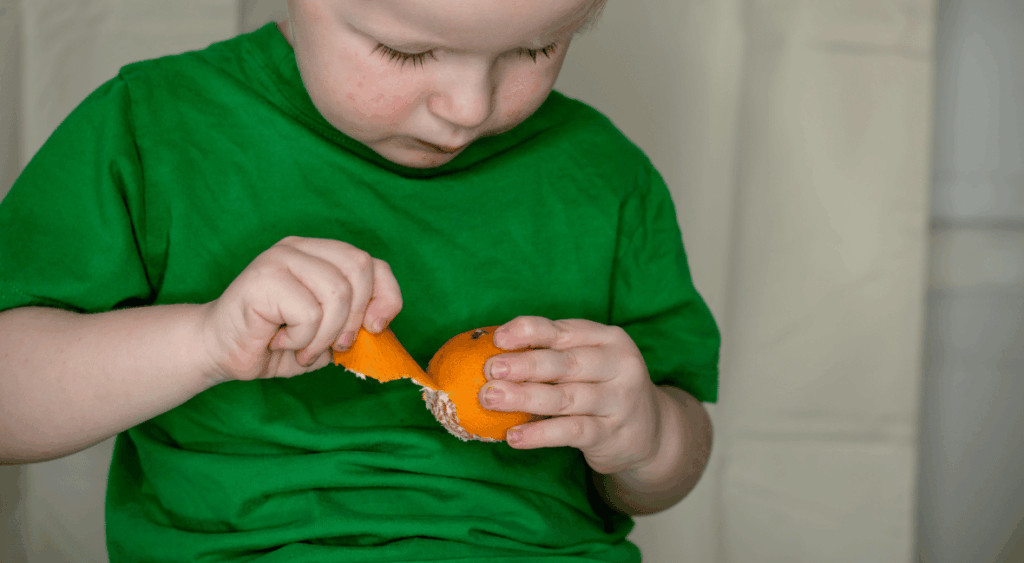
Eating itself also builds fine motor skills. Picking up blueberries, using a spoon, holding a cup, spearing food with a fork, and opening a lunch container all require coordination and control.
- Check out these simply gluten free snacks you can make with your kids!
12. Participate in Self-Care Routines
Self-care tasks are some of the most meaningful fine motor activities for preschoolers because they support independence.
These tasks can take longer when children do them independently, but that time is not wasted. It is skill-building.
Self-care fine motor ideas:
- Zip and unzip jackets
- Button large buttons
- Snap and unsnap clothing
- Pull socks on
- Put shoes on
- Open and close backpacks
- Twist lids on water bottles
- Wash hands
- Brush teeth
- Brush hair
- Put clothes on baby dolls
- Pack a small bag
- Open snack containers
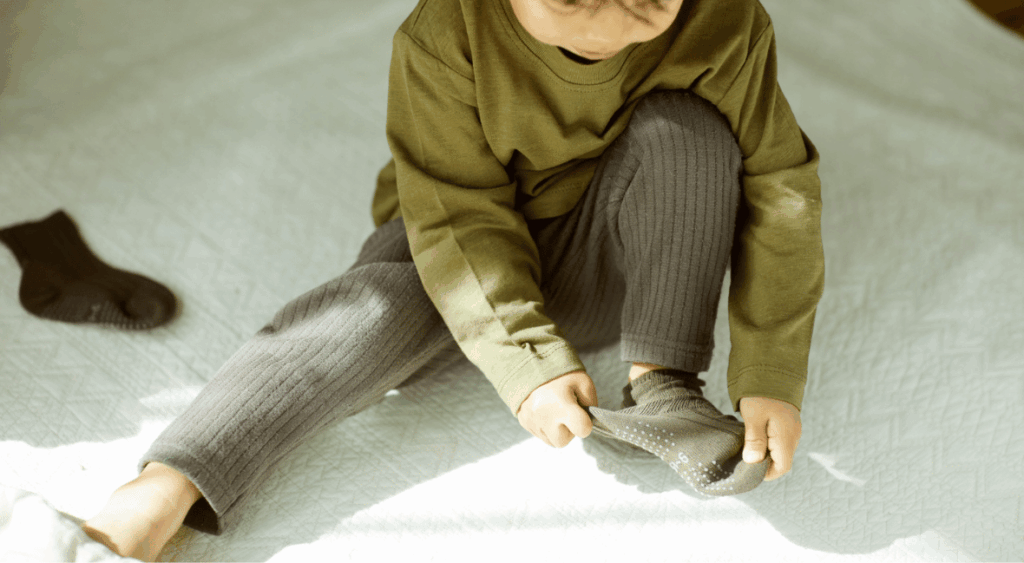
Sometimes the best fine motor activity is simply giving a child enough time to try.
13. Pretend Play Activities
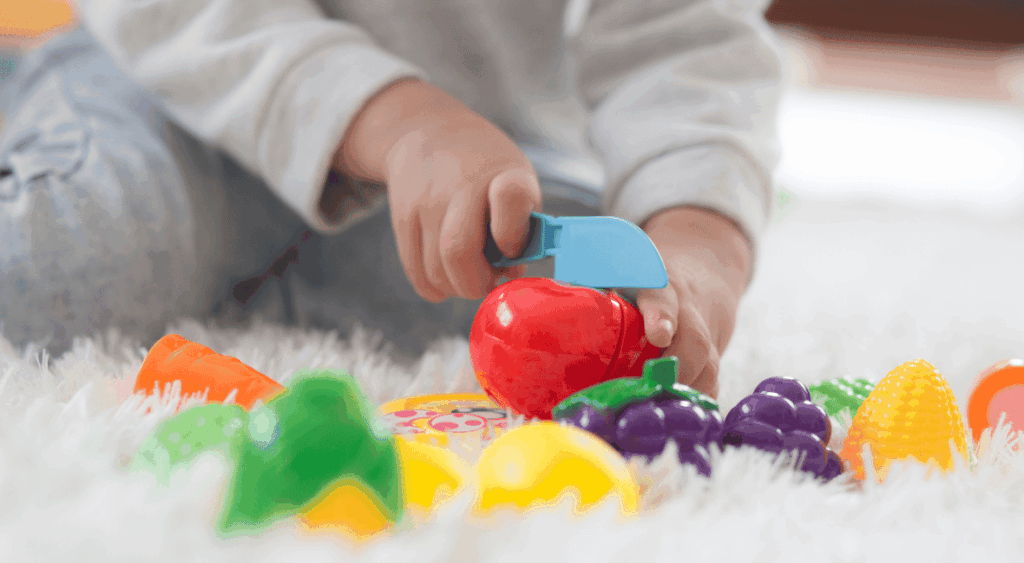
Pretend play is full of fine motor practice. When children play restaurant, doctor, store, construction site, family, school, or post office, they naturally use their hands in detailed ways.
They write menus, stir pretend soup, button doll clothes, wrap presents, tape signs, sort pretend money, pack bags, set tables, and arrange materials.
This kind of play is powerful because the fine motor work is connected to the child’s own ideas. They are not just practicing for the sake of practicing. They are using their hands to make their play happen.
Pretend play ideas:
- Make menus for a pretend restaurant
- Use play money
- Wrap pretend presents
- Make and Tape signs to the wall
- Set a pretend table
- Dress baby dolls
- Use doctor tools
- Build roads for cars
- Stir pretend soup
- Use small notebooks for orders or lists
14. Complete Puzzles
Puzzles are a great fine motor activity for preschoolers because they naturally encourage children to grasp, pinch, rotate, slide, push, pull, and carefully place pieces. They also build visual discrimination, problem-solving, spatial awareness, persistence, and hand-eye coordination.
The best part is that puzzles are self correcting (the piece only fits in one spot) so adults don’t need to hover or correct as children work.
Puzzle fine motor ideas:
- Put together chunky wooden puzzles
- Try knob puzzles with knob handles
- Sort edge pieces and middle pieces
- Turn puzzle pieces to see how they fit
- Trace around large puzzle pieces
- Put together simple floor puzzles
- Use shape sorter puzzles
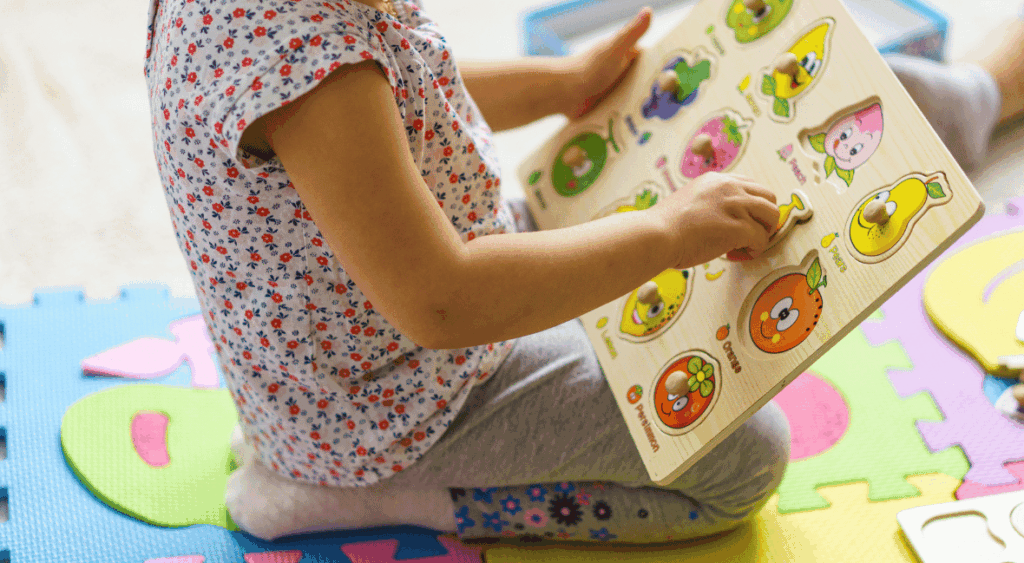
For younger preschoolers, chunky puzzles, knob puzzles, and simple shape puzzles are often the best place to start. Older preschoolers may enjoy floor puzzles, interlocking puzzles, or puzzles with more detailed pictures.
15. Play With Rubber Bands and Geoboards
Geoboards are a simple, hands-on way for preschoolers to build fine motor strength and coordination. Stretching rubber bands around the pegs works the small muscles in the fingers and hands while also encouraging planning, problem-solving, and spatial awareness.
Geoboard ideas:
- Stretch rubber bands across two pegs
- Make simple shapes like squares, triangles, and rectangles
- Create open-ended designs
- Use different colored rubber bands
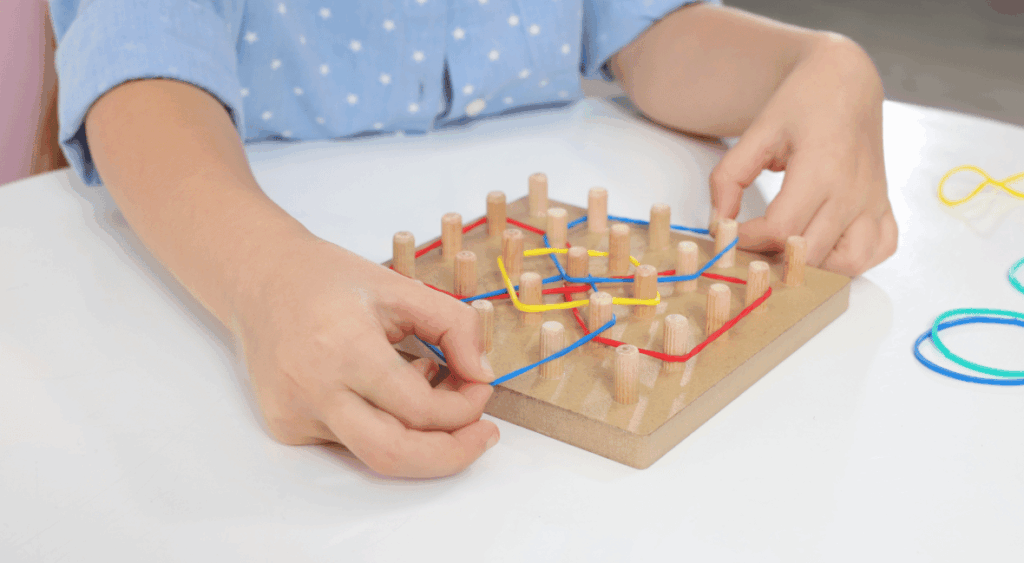
Geoboards can be used as a structured challenge, but they are also great for open-ended play. Instead of asking preschoolers to copy a specific pattern every time, you can simply offer the geoboard and rubber bands and let them experiment with stretching, connecting, and creating their own designs.
16. Read Books
Yes, even reading books supports fine motor skill development as children turn pages! Make sure there are plenty of books available for children to peruse in your playspace, and allow them to turn the pages when you read together.
For young children, turning the pages is sometimes more engaging than reading the story.
How to Make Fine Motor Activities More Child-Led
The easiest way to make fine motor skills activities for preschoolers more play-based is to offer materials instead of instructions.
Instead of saying, “Make this exact craft,” try setting out a few materials and letting your child decide what to do.
The adult’s job is not to control the outcome. The adult’s job is to create an environment where children can explore, use their hands, and follow their own ideas. For example, you might offer Paper, stickers, markers, and tape and let children decide what to create.
A Simple Fine Motor Skills Setup Formula
When I want to set up a simple fine motor invitation, I like to think in terms of materials rather than a finished product.
Try choosing:
- One base material: playdough, paper, water, rice, blocks, cardboard, or dirt
- One tool: scissors, tongs, tweezers, droppers, scoops, brushes, or tape
- One loose part: buttons, beads, pom-poms, rocks, sticks, shells, fabric scraps, or bottle caps
This keeps the setup simple while still leaving lots of room for creativity.
Fine Motor Skills Do Not Need to Be Rushed
It can be tempting to push fine motor skills because we know children will eventually need to write, cut, zip, button, and manage school materials. But fine motor skills develop over time.
Children need repeated practice in lots of different contexts. They need hand strength, shoulder stability, core strength, coordination, patience, and confidence. These things are not built by a single perfect activity. They are built through daily life and play.
A preschooler who spends long stretches building, digging, drawing, squeezing, climbing, pouring, dressing dolls, peeling fruit, and making things is already doing important fine motor work.
Final Thoughts on Fine Motor Skills Activities for Preschoolers
Fine motor skills activities for preschoolers do not need to be complicated. They do not need to be perfectly planned, themed, or directed by adults.
Preschoolers build fine motor skills when they have time to play, access to interesting materials, and chances to participate in everyday life.
They build fine motor skills when they pick up blueberries, peel stickers, squeeze playdough, dig in the mud, pour water, build towers, tear paper, zip jackets, stir batter, and create pretend worlds with their own hands.
So instead of feeling like you need to plan endless fine motor activities, think about how to make room for more play, more independence, and more hands-on exploration.
That is where so much of the real development happens.


No Comments