
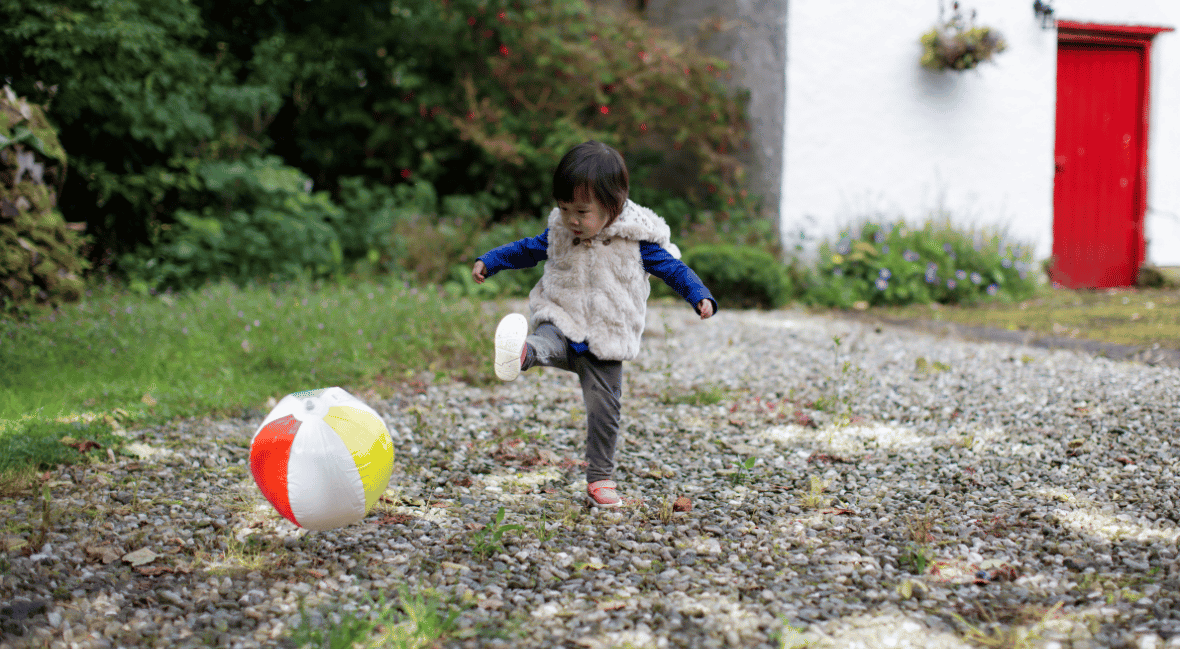
Toddlers are natural movers. They climb, carry, push, pull, run, jump, crawl, roll, dance, squat, and explore because that is how they learn about their bodies and the world around them.
Gross motor activities for toddlers do not need to be complicated. In fact, the best gross motor play usually happens when toddlers are given time, space, and access to simple materials that invite movement.
Toddlers are already deeply motivated to move. Our job is usually less about planning a long list of adult-directed gross motor activities and more about creating an environment where movement is possible, welcome, and repeated often.
In this post:
- What Are Gross Motor Skills?
- Gross Motor Play Does Not Need to Be Adult-Directed
- 73 Best Gross Motor Activities
- Tips for Encouraging Gross Motor Play
What Are Gross Motor Skills?
Gross motor skills are the big body movements that use the larger muscles in the arms, legs, and core. These are the movements toddlers use for climbing, running, jumping, crawling, balancing, throwing, kicking, pushing, pulling, and carrying.
Gross motor skills help toddlers build:
- Strength
- Balance
- Coordination
- Body awareness
- Confidence
- Core stability
- Spatial awareness
- Independence
Gross Motor Play Does Not Need to Be Adult-Directed
It can be tempting to look for lots of structured toddler activities, but toddlers often get the most out of movement when they are free to explore.
A toddler may climb the same cushion mountain again and again. They may push a laundry basket across the room for twenty minutes. They may carry rocks from one side of the yard to the other with no obvious “goal.” They may crawl up and down the stairs simply because it feels good to practice.
That kind of repetition is valuable.
Toddlers are learning how their bodies work. They’re testing balance, strength, speed, distance, weight, and coordination. They are also learning risk assessment and problem-solving.
Instead of trying to direct every movement, try offering access to materials and spaces that invite movement.
Think:
- Cushions to climb
- Balls to kick
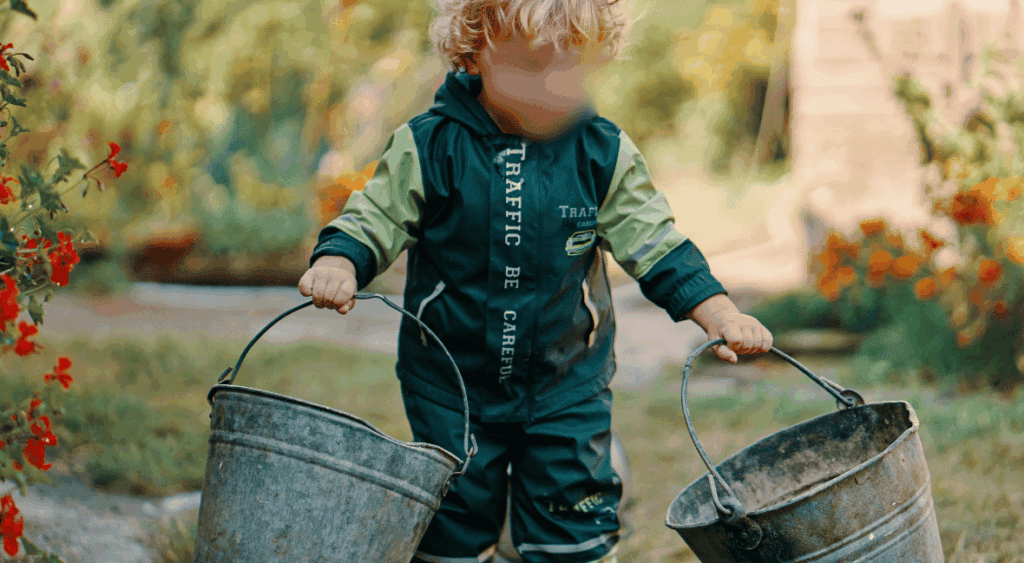
- Buckets to carry
- Baskets to push
- Logs to balance on
- Dirt to dig
- Scarves to dance with
- Tape lines to walk on
- Outdoor space to explore
Then step back when it is safe and let your toddler play.
73 Best Gross Motor Activities
Below you will find simple gross motor activities for toddlers that are open-ended, play-based, and easy to offer at home, outside, or during everyday routines.
Indoor Gross Motor Activities for Toddlers
Indoor gross motor activities are especially helpful on rainy days, cold days, or days when you just need a little more movement inside. These ideas use simple household items and leave plenty of room for toddlers to decide how they want to play.
1. Couch Cushion Mountain
Take the cushions off the couch and stack them on the floor. Toddlers can climb over them, crawl around them, roll on them, or slide down them.
This is simple, open-ended, and often much more engaging than a structured obstacle course.
2. Play Couch Climbing
If you have a play couch, let your toddler arrange the pieces into ramps, tunnels, mountains, or little forts. The rearranging is part of the gross motor work too because toddlers push, pull, lift, and drag the pieces as they build.
I created my own “play couch” using crib mattresses that I got for free from my local moms facebook group.
3. Pillow Path
Lay pillows across the floor and invite your toddler to move across them. They might walk, crawl, jump, balance, or flop from pillow to pillow.
Pillows feel different from the floor, making this a wonderful balance and body-awareness activity.
4. Pillow Jump Landing
Place a pillow or folded blanket on the floor to create a large “crashpad” and let your toddler jump onto it.
For younger toddlers, jumping from the floor is enough. Older toddlers may enjoy jumping from a very low, safe surface with supervision.
5. Laundry Basket Push
Put a few towels, stuffed animals, or blankets in a laundry basket and let your toddler push it across the room. This gives toddlers heavy work and lets them use their whole body.
You can use whatever you have: a laundry basket, a cardboard box, a stroller, a toy shopping cart, a wagon, or a large dump truck.
6. Laundry Basket Pull
Tie a scarf, rope, or long piece of fabric to a laundry basket and let your toddler pull it around. They might load it with toys, stuffed animals, pillows, or blocks.
This is a great open-ended activity because toddlers can decide what to transport.
7. Push a Cardboard Box
Give your toddler a cardboard box and let them push it, climb in it, fill it, empty it, turn it into a car, or use it as part of pretend play.
The box does not need a theme. Toddlers will usually find one.
8. Carry Heavy Objects
Give toddlers access to safe, portable objects such as small bags, buckets, board books, pillows, blocks, and baskets. Carrying objects around the house builds strength, balance, and coordination.
The best part is that this does not need much direction. Toddlers often love carrying things.
9. Stuffed Animal Rescue
Place stuffed animals around the room and let your toddler “rescue” them. They can crawl under a table, climb over pillows, carry animals back to a basket, or tuck them into a blanket.
This adds a little pretend play without making the activity too rigid.
10. Stuffed Animal Toss
Use stuffed animals as a safe indoor throwing activity. Toddlers can toss them into a laundry basket, onto the couch, into a box, or onto a blanket.
This is a great way to practice throwing inside without using hard balls.
11. Rolled Sock Toss
Roll up socks and toss them into a laundry basket. Socks feel different from beanbags or balls, making them fun for toddlers to explore as they throw.
You can move the basket closer or farther away, but you don’t need to make it too much like a game.
12. Beanbag Into a Basket
Give your toddler beanbags and a laundry basket. Beanbags are easy to make, easy to store, and satisfying for toddlers to throw. Let them toss, drop, roll, or carry the balls into the basket.
Toddlers may not “aim” in the way older children do, and that is fine. They are still practicing coordination and body control.
13. Indoor Basketball Toss
If you have a small toddler basketball hoop, let your toddler toss soft balls into it. Keep it playful. The goal is movement, not perfect form.
14. Hallway Ball Roll
Sit on the floor and roll a ball back and forth down the hallway. Toddlers can chase it, stop it, roll it back, or kick it.
15. Balloon Tap
Blow up a balloon and let your toddler tap it into the air. Balloons move slowly, which gives toddlers more time to track, reach, and respond.
Always supervise balloon play, and throw away broken pieces immediately!
16. Balloon Kick
Let your toddler kick a balloon across the room or down a hallway. This is a nice indoor alternative to kicking a ball.
17. Bubble Wrap Stomp
Tape bubble wrap to the floor and let your toddler walk, stomp, jump, and crawl over it. This combines gross motor movement with sensory play.
18. Dance Party

Turn on music and let your toddler dance. They might spin, stomp, bounce, run, march, squat, or wave their arms. I love to play the instrumental version of Wiggy Wiggles Freeze Dance.
There does not need to be a correct way to dance. Free movement is the point.
19. Dance With Scarves
Give your toddler scarves, dish towels, or playsilks to wave while dancing. Scarves invite reaching, spinning, running, tossing, and big arm movements.
- Check out more of my favorite music-and-movement activities!
20. March to Music
Play music with a strong beat and march around the room. Toddlers can march fast or slow, loudly or softly, around furniture, or in a pretend parade.
21. Marching Band
Give your toddler a pot and spoon, a shaker, or a small drum, and let them march around making music. This is noisy, but toddlers love it.
22. Animal Walks
Invite your toddler to move like different animals.
Try:
- Bear crawl
- Frog jump
- Bunny hop
- Crab walk
- Elephant stomp
- Snake slither
- Duck waddle
- Horse gallop
You do not need to correct their movements. Let them interpret the animals in their own way.
23. Follow the Leader
Take turns leading simple movements like stomping, crawling, spinning, tiptoeing, jumping, marching, or reaching high.
Let your toddler be the leader too. Their ideas are usually better than ours.
24. Simon Says
Keep Simon Says simple for toddlers. You can say:
- Simon says jump.
- Simon says touch your toes.
- Simon says crawl like a puppy.
- Simon says stomp your feet.
- Simon says reach up high.
- Simon says spin around.
For young toddlers, do not worry too much about the rules. Use it as a playful movement prompt.
- Make it simple with all my Simon Says Ideas!
25. Color Run
Place colored paper or toys around the room, then call out a color for your toddler to run to. You can also let them choose the color and lead the game.
26. Tape Balance Line
Put painter’s tape on the floor and let your toddler walk along it. Try a straight line, zigzag line, or curvy line.
Some toddlers will walk on it. Others will jump over it, crawl along it, or drive cars down it. All of that is good play.
27. Tape Jump Line
Place a line of tape on the floor and invite your toddler to jump over it. They may step over it first, hop over it, or simply run across it. That still counts as movement practice.
28. Crawl Through Tunnels
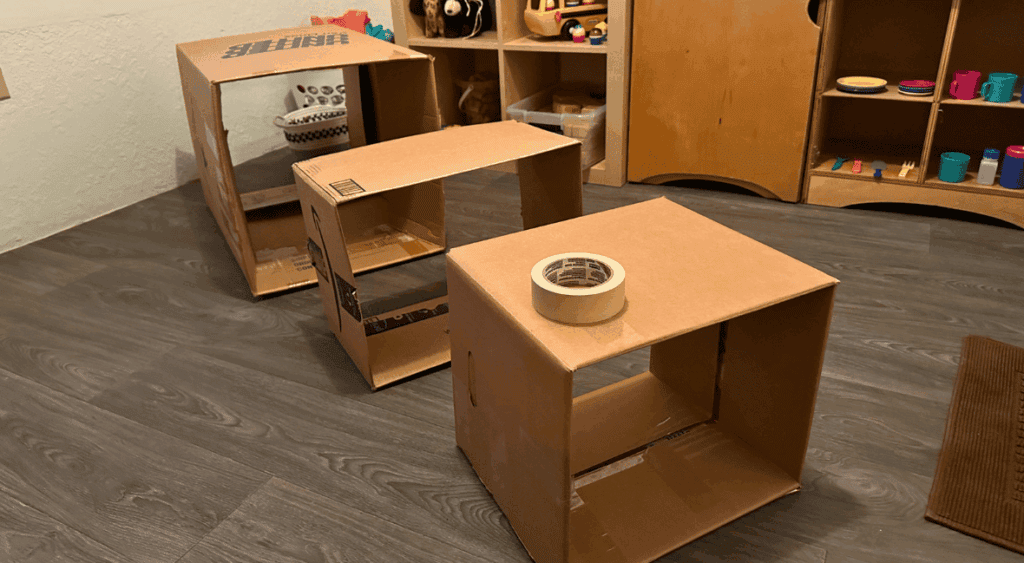
Tunnels are great for crawling, hiding, chasing, and pretend play. You can use a play tunnel, a large cardboard box with both ends open, or chairs with a blanket draped over them.
The setup can be simple, and toddlers will usually find lots of ways to use it.
29. Indoor Obstacle Course
Use pillows, tape lines, chairs, boxes, and baskets to make a simple movement path.
For example:
- Crawl under the table.
- Walk on the tape line.
- Step over a pillow.
- Toss socks into a basket.
- Push a box to the wall.
Keep it flexible. If your toddler changes the course, that is part of the play.
30. Large Cardboard Block Building
Large cardboard blocks invite toddlers to lift, carry, stack, push, knock down, and rebuild. This is both construction play and gross motor play.
- Check out all my favorite blocks for kids!
31. Climb a Pikler Triangle
A Pikler triangle or similar climbing frame gives toddlers access to climbing in a safe, child-sized way. They can climb up, climb down, crawl underneath, or add pretend play.
- Check out some of my favorite pikler triangles!
32. Soft Play Climbing
Soft play equipment gives toddlers a place to climb, slide, crawl, and tumble. It is especially nice for indoor movement when outdoor play is not possible.
- Check out all the best soft play climbers!
33. Walk on Stepping Stones
Set up stepping stones across the floor and let your toddler step, balance, jump, or move from one to the next.
My favorites are Stapelstein stepping stones, but you can use something as simple as paper plates, pillows, cardboard circles, or felt squares.
34. Walk on a Balance Beam
There are many great low balance beams that toddlers can play on!
Toddlers can walk across, step off, turn around, or carry something while balancing.
- Check out all the best balance beams for kids!
Outdoor Gross Motor Activities for Toddlers
Outdoor play naturally invites big movement. Toddlers have more room to run, climb, balance, throw, kick, dig, carry, and explore.
Much of the best gross motor play happens outside, with little to no adult direction.
35. Kick a Ball Around Outside
Give your toddler a ball and space. They can kick it, chase it, carry it, roll it, sit on it, or throw it. You do not need to turn it into soccer.
- Check out more of my favorite outdoor toys for toddlers!
36. Kick a Ball at Cones or Cups
Set up cones, paper cups, empty bottles, or buckets and let your toddler kick a ball to knock them down.
This adds a little target practice while still keeping the play simple.
37. Play Catch
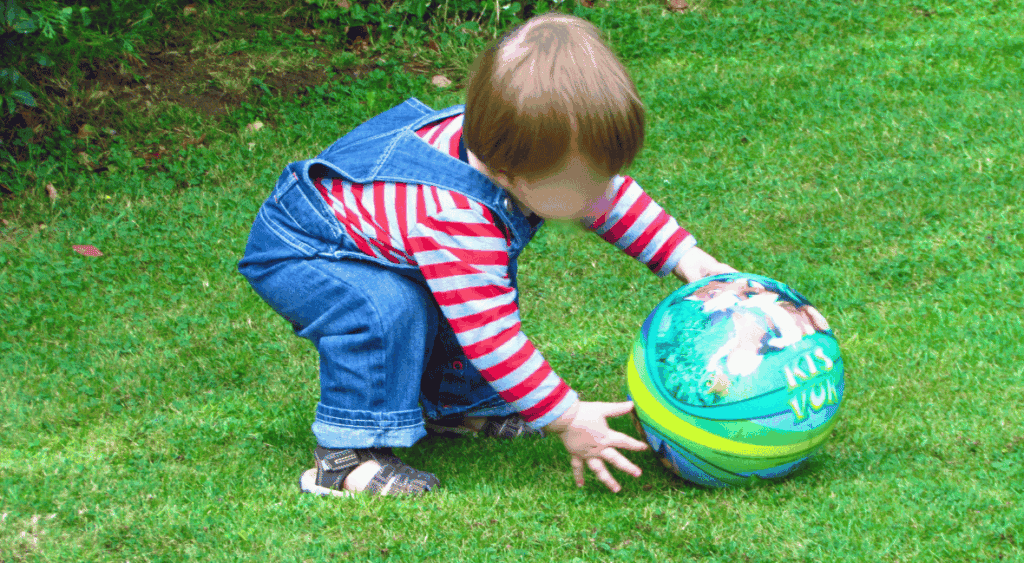
Use a large, soft ball and play a very loose version of catch. Toddlers may throw, drop, roll, or chase the ball more than they catch it. That is normal.
38. Toss Balls Into a Laundry Basket
Take the laundry basket outside and let your toddler toss balls into it. They can also carry balls to the basket, dump them out, and start again.
I like to keep a small bin of ball pit balls outside for toddlers to toss.
39. Bubble Chase
Blow bubbles and let your toddler chase, reach for, jump on, stomp on, and pop them. This is one of the easiest outdoor movement activities.
40. Run to the Tree
Call out simple places for your toddler to run to:
- Run to the tree.
- Run to the fence.
- Run to the porch.
- Run to the rock.
- Run to the slide.
This can be a quick way to invite movement, but keep it playful and stop before it feels like a drill.
41. Sidewalk Chalk Road
Draw a road with sidewalk chalk and let your toddler run, walk, ride a scooter, push cars, or drive ride-on toys along it.
You can add houses, trees, bridges, or parking spots if your toddler is interested.
42. Chalk Jump Circles
Draw circles on the sidewalk or driveway and let your toddler jump from one to the next. They might also step, hop, crawl, or toss rocks into the circles.
43. Chalk Balance Line
Draw a straight, zigzag, or curvy line with chalk and invite your toddler to walk along it.
This is an easy outdoor balance activity with almost no setup.
44. Climb and Play at the Park
The park is full of gross motor opportunities. Toddlers can climb steps, slide, crawl through tunnels, balance on edges, run across open spaces, and practice moving around other children.
Whenever it is safe, give them time to figure out the equipment. Avoid lifting them onto anything that they can’t access themself.
45. Play on a Slide
Slides offer climbing, sitting, balancing, pushing with feet, and body control. Many toddlers love to climb up the steps and slide down over and over again.
Climbing up the slide is also amazing for building gross motor skills! Just help your kids move when others wish to go down.
46. Ride-On Toys
Ride-on toys help toddlers practice pushing with their feet, steering, stopping, starting, and navigating space.
They can ride around the driveway, yard, sidewalk, or even inside if you have the space.
- Check out my favorite ride-on toys for one-year-olds!
47. Ride a Small Balance Bike
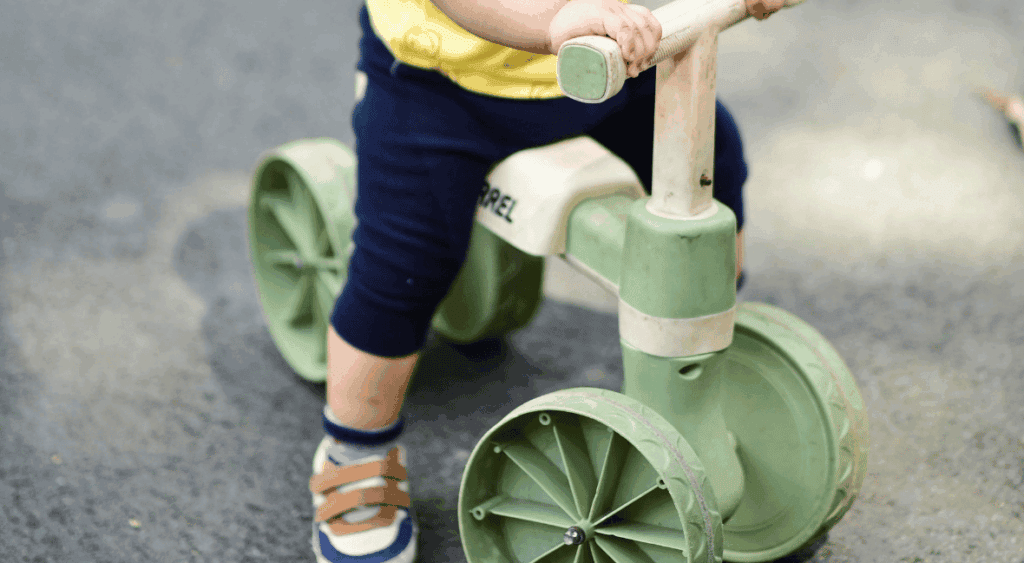
Balance bikes support coordination, balance, leg strength, and confidence. Toddlers can start by simply walking the bike along before they ever glide.
- Check out some great wooden balance bikes!
48. Ride a Scooter
Scooters help toddlers practice balance and coordination. Keep it slow and supervised, especially at first.
- Check out some fun scooters for toddlers!
49. Climb a Hill
Find a small grassy hill and let your toddler climb up it. They might walk, crawl, scramble, or use their hands for support.
Hills are naturally challenging and require no setup.
50. Roll Down a Small Hill
Let your toddler roll down a small, safe hill. Rolling supports body awareness and gives toddlers a different kind of movement experience.
51. Run Down a Gentle Hill
Running down a gentle hill helps toddlers practice balance, speed, and stopping. Stay nearby, especially for younger toddlers who are still learning how to slow their bodies down.
52. Nature Walk
A toddler nature walk may be slow and full of stops, which is perfect. Toddlers can walk on uneven ground, step over roots, climb over logs, squat to look at bugs, carry sticks, and balance on rocks.
It does not need to be a long walk to be valuable.
- Check out more great nature activities for kids!
53. Balance on a Log
Find a low, stable log and let your toddler walk across it, sit on it, climb over it, or jump off the end.
Logs offer more interesting balance practice than flat ground.
54. Jump in Puddles
Put on rain gear and let your toddler jump, stomp, splash, and run through puddles.
Puddle play is sensory play, gross motor play, and outdoor play all at once.
55. Play in Sprinklers
Running through sprinklers gives toddlers practice with running, stopping, starting, turning, and reacting to moving water. And it’s just plain fun!
56. Play in Fall Leaves
A pile of leaves invites running, jumping, tossing, kicking, rolling, hiding, and carrying. It is one of the easiest seasonal gross motor activities.
57. Rake Leaves
Offer a child-sized rake or regular rake and let your toddler help. Raking uses the arms, shoulders, core, and legs.
58. Collect Rocks
Give your toddler a bucket and let them collect rocks. They can carry them, dump them, sort them, or move them from one place to another.
Carrying heavy objects is wonderful toddler work.
59. Carry Buckets
Buckets are among the best open-ended gross-motor tools for toddlers. They can carry rocks, sticks, leaves, sand, water, snow, or toys.
The adult does not need to invent much. Toddlers usually know exactly what to do with a bucket.
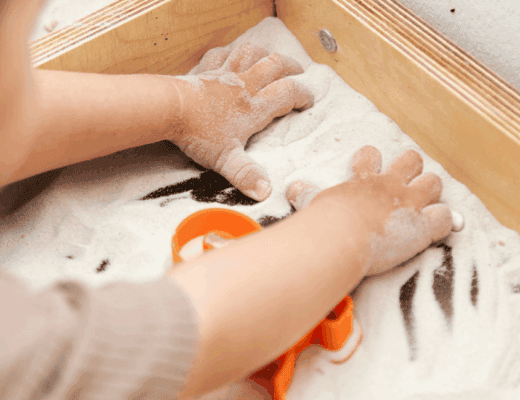
60. Dig in a Sandbox
Sandboxes invite digging, scooping, carrying, dumping, squatting, reaching, and lifting.
Add shovels, buckets, trucks, bowls, or spoons and let your toddler explore.
61. Scrub Outdoor Toys
Fill a tub with soapy water and let your toddler scrub toy cars, trucks, balls, buckets, or outdoor toys.
This is great heavy work and practical life play.
62. Pull a Sled
In the snow, let your toddler pull a sled across the yard. It does not need to have a child on it. They can pull stuffed animals, snow, toys, or nothing at all.
63. Make a Snow Stomp Trail
Let your toddler stomp a trail through fresh snow. Walking through snow takes extra effort, making it great heavy work.
64. Play and Build in the Snow
Snow play can include digging, carrying snow, rolling snowballs, climbing snow piles, pulling sleds, stomping footprints, and sliding down small hills.
Everyday Gross Motor Activities for Toddlers
Some of the best gross motor activities for toddlers are not activities at all. They are everyday moments where toddlers get to use their bodies in meaningful ways.
65. Carry Laundry
Let your toddler carry clothes to the washer, push a laundry basket, or help move towels from one room to another.
66. Help Sweep
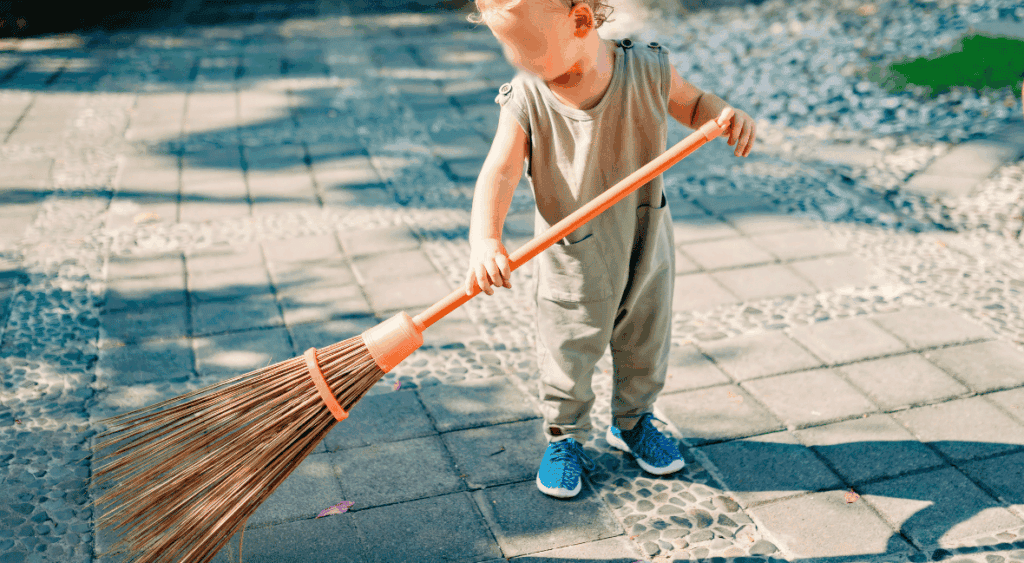
Sweeping is simple, real work that uses large arm movements and coordination. Toddlers may not actually clean much, but they are still building skills.
67. Carry Groceries or Bags
Give your toddler a small, manageable bag to carry. Even a light grocery bag or lunchbox gives them a chance to practice strength and balance.
68. Water Plants With a Watering Can
A small watering can gives toddlers a chance to lift, carry, pour, squat, and walk with weight.
Toddlers often love this because it feels like real work.
69. Push a Stroller or Shopping Cart
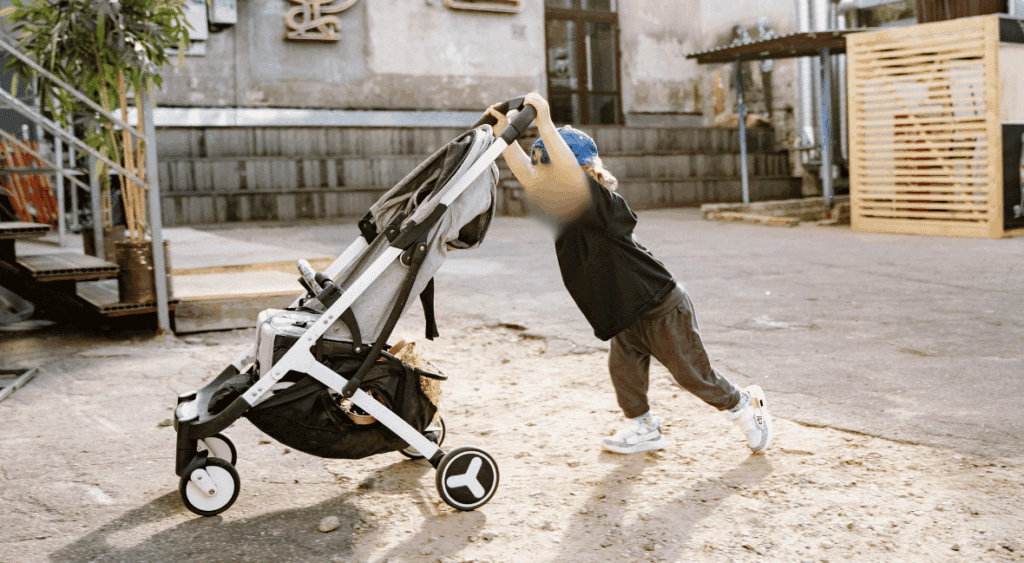
A toy stroller, a real stroller, or a small shopping cart provides toddlers with resistance and whole-body movement.
70. Climb Up and Down Stairs
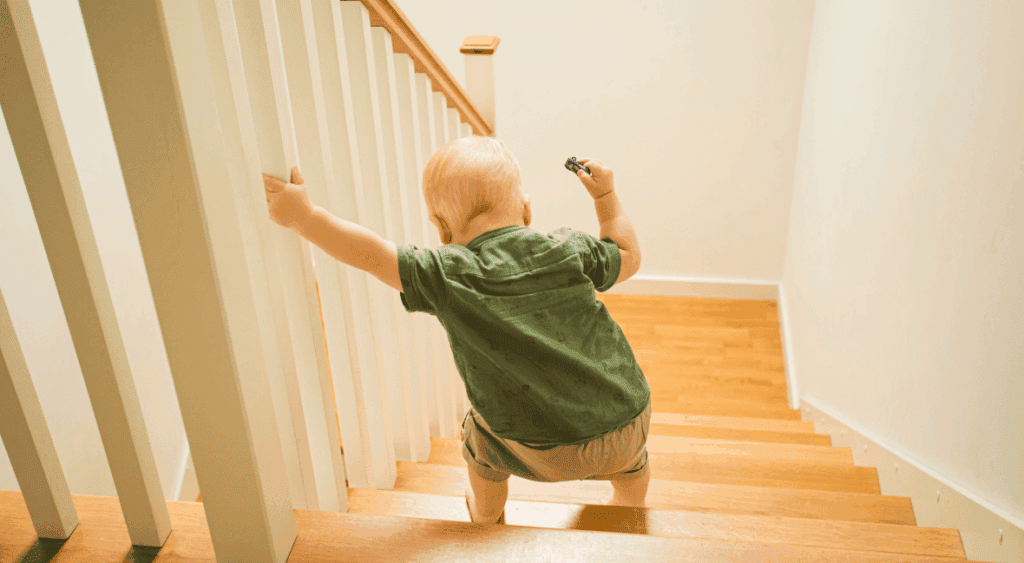
With close supervision, stairs offer excellent gross motor practice. Toddlers often love crawling or walking up and down stairs without needing a game or extra direction.
71. Squat to Pick Up Toys
Cleaning up toys involves squatting, reaching, lifting, carrying, and walking. It is a simple, everyday gross-motor opportunity.
72. Move Pillows and Blankets
Let your toddler help move pillows, blankets, or cushions. They can drag them, carry them, pile them, or build with them.
73. Help in the Yard
Toddlers can pull weeds, carry leaves, move sticks, rake, dig, sweep, and water plants. These real tasks are often more engaging than planned gross motor games.
Tips for Encouraging Gross Motor Play
You don’t need to do all of these gross motor activities. Gross motor development happens best when movement is part of everyday life.
Here are a few simple ways to support it:
• Give Toddlers Time to Move
Toddlers need long stretches of time to explore movement. If every moment is rushed, strapped in, or adult-managed, they have fewer chances to build strength and coordination.
• Offer Access to Open-Ended Materials
Instead of planning complicated activities, offer things toddlers can use in many ways:
- Buckets
- Balls
- Pillows
- Baskets
- Boxes
- Scarves
- Cushions
- Watering cans
- Wagons
- Large blocks
- Outdoor space
Open-ended materials let toddlers decide how to move.
• Let Them Repeat Movements
If your toddler wants to climb the same step, push the same basket, or jump into the same pile of pillows again and again, let them. Repetition is how toddlers master movement.
• Go Outside Often
Outdoor spaces naturally offer opportunities for movement: uneven ground, puddles, sticks, hills, logs, rocks, leaves, snow, and space to run.
You do not need to entertain toddlers outside as much as you need to give them time to explore.
• Allow Safe Risk
Toddlers learn by testing what their bodies can do. Climbing, balancing, jumping, and running all involve small risks.
Stay close, but try not to interrupt every challenge. When we give toddlers a chance to solve movement problems, they build confidence and body awareness.
• Let Real Life Count
Gross motor development does not have to come from Pinterest-worthy activities. Carrying laundry, watering plants, climbing stairs, sweeping, and walking across the yard all count.
Final Thoughts on Gross Motor Activities for Toddlers
Gross motor activities for toddlers do not need to be complicated, expensive, or overly planned.
Toddlers naturally want to move. They’re motivated to climb, carry, push, pull, dance, run, dig, jump, and explore. When we give them time, space, and access to simple materials, movement happens naturally.
The goal is not to fill the day with adult-directed activities. The goal is to create an environment where toddlers can use their bodies in playful, meaningful ways.
No Comments