We hear the phrase learning through play all the time: on classroom walls, in parenting books, and across early childhood spaces. It sounds good. It feels right. But it’s often misunderstood.
Because not everything that looks fun is actually play. If we really want to understand the value of learning through play, we have to start by getting clear on what play truly is and what it isn’t.
When we talk about learning through play, it’s worth slowing down and asking a simple question:
What actually counts as play?
Psychologist Peter Gray offers a clear definition. True play has three main characteristics: it is self-chosen, self-directed, and intrinsically motivated. In other words, the child decides what to do, how to do it, and does it simply because they want to.
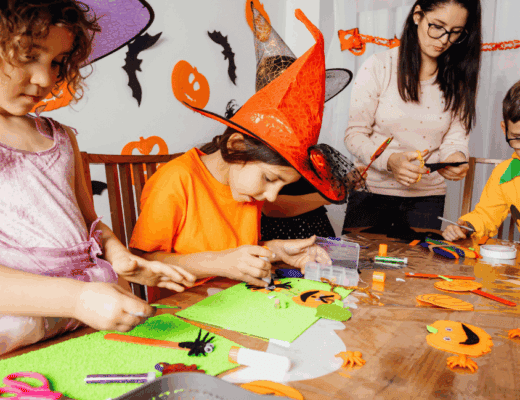
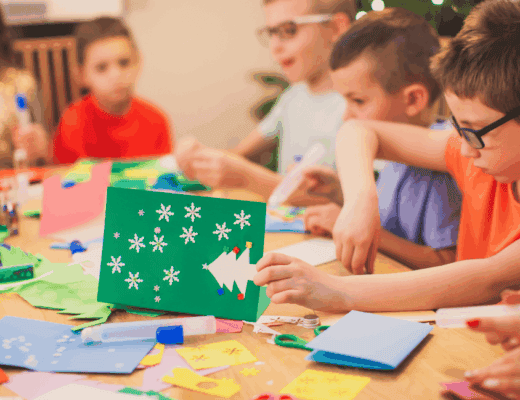
That means something important, something that often gets overlooked. Even the most fun, creative, colorful, adult-led activity is not play if the adult is directing it.
And that’s not a knock on those activities. They can still be valuable. But when we’re talking about learning through play, we’re talking about something different. We’re talking about the kind of experiences where children are in charge.
Now that we have the definition of play, let’s dive into all the benefits!
In this post:
- Kids Do Hard Things When It Matters to Them
- Play Is a Safe Place to Make Mistakes
- Learning Through Play Is Holistic
- Play Builds Independence and Focus
- Social Skills Are Built in Real Time
- If “Play” Doesn’t Feel Serious Enough…
- What This Means for Teachers
Kids Do Hard Things When It Matters to Them
There’s a common assumption that play is light, easy, or even unproductive. But if you watch closely, you’ll see the opposite. Children regularly take on hard challenges during play.
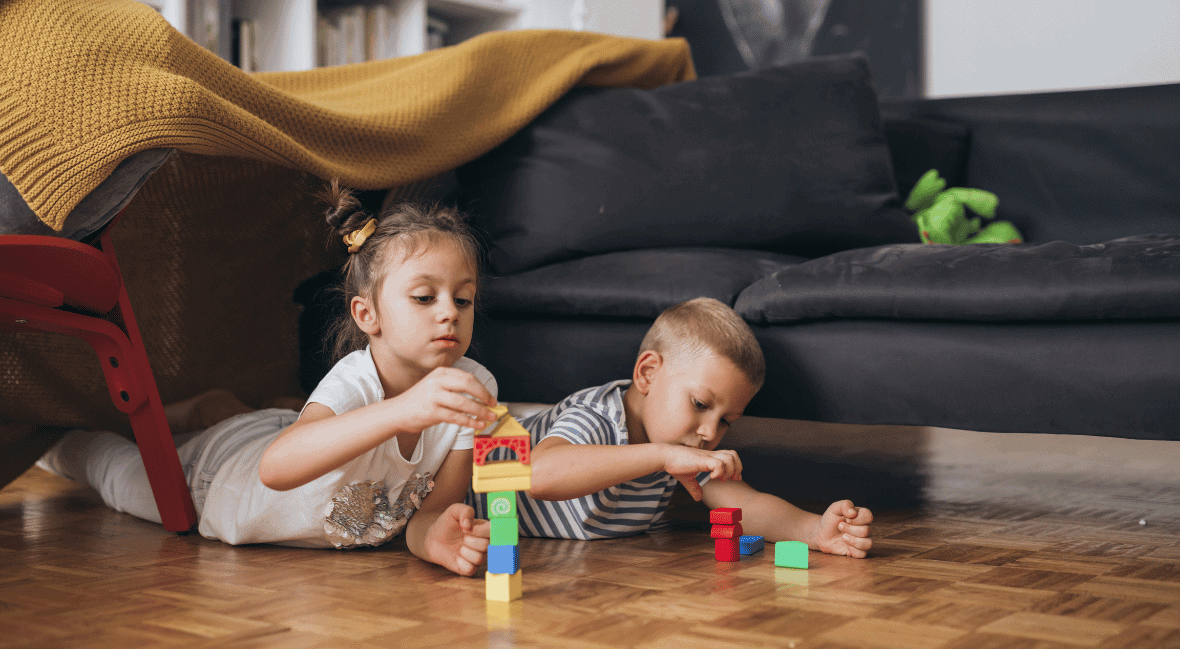
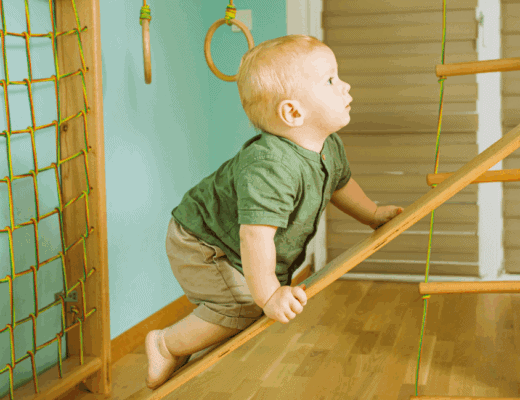
They’ll spend long stretches trying to balance one more block on a tower that keeps falling. They’ll carry heavy objects across the yard to build something meaningful to them. They’ll climb higher, run faster, or try something new, not because someone told them to, but because it matters within their play.
That’s the key. Play makes hard things relevant.
When a challenge is connected to something a child cares about, they are far more willing to put in the effort. A child who has no interest in writing during a worksheet might suddenly be deeply motivated to write a menu for their restaurant, a sign for their block structure, or a list for their game.
The skill hasn’t changed but the reason for using it has.
In play, children aren’t working to complete a task. They’re working to keep something meaningful going. And that meaning is what drives persistence.
Play doesn’t lower expectations. It raises motivation.
Play Is a Safe Place to Make Mistakes
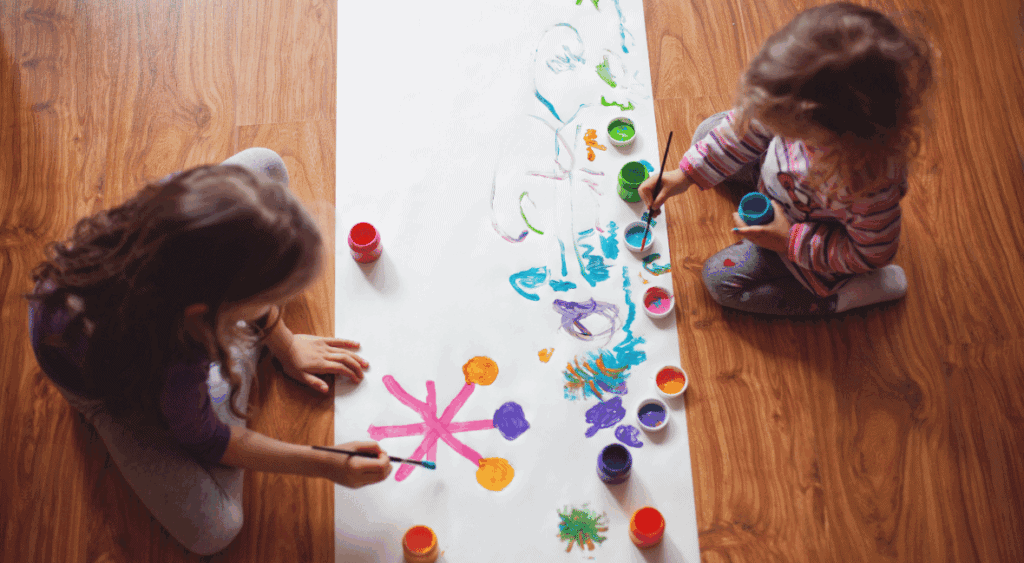
Another reason children are willing to take on hard things in play is because it feels safe to try and fail.
In play, the stakes are low. There isn’t one right answer. No one is grading the outcome or stepping in to correct every misstep. If a block tower falls down, it’s not failure. It’s just part of the process. Kids can rebuild it again and again without feeling like they’ve done something wrong.
That lack of pressure changes everything.
Because play feels less risky than structured lessons or other areas of life, children are more willing to experiment, take chances, and push themselves further. They don’t hold back in the same way they might when they’re worried about being corrected or getting the “right” answer.
Mistakes aren’t something to avoid in play. They’re expected. Welcomed, even.
And because of that, children develop something incredibly important: the willingness to keep going when things don’t work the first time.
Play doesn’t make things easier for kids. It makes them more willing to take risks, make mistakes, and do hard things.
Learning Through Play Is Holistic
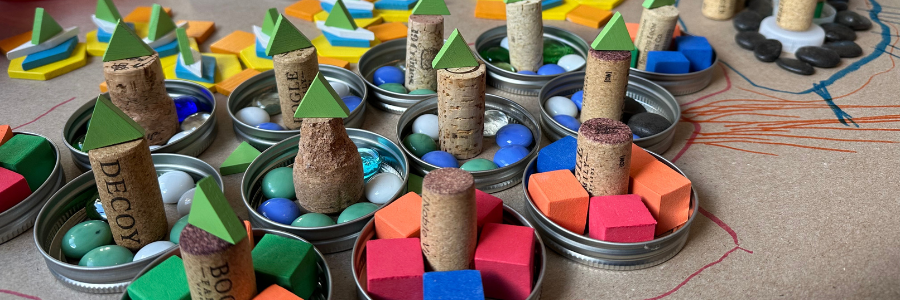
When children are engaged in real play, they aren’t developing one isolated skill at a time. They’re growing across multiple areas all at once.
You can see it happening in real time:
- A child climbs, lifts, and balances, building physical strength and coordination.
- Two children negotiate roles in a pretend game, learning how to communicate and collaborate.
- A structure falls apart, and a child rethinks their plan, developing problem-solving skills.
- A story unfolds, full of new words and ideas, strengthening language and literacy.
Play naturally supports development across the four key domains, physical, social-emotional, cognitive, and language, without needing to separate them into lessons.
This is what makes learning through play so powerful. It mirrors real life, where skills are never used in isolation.
Play Builds Independence and Focus
Because play is self-directed, children learn more than any single skill. They learn how to manage themselves.
They decide what to do, how long to do it, and when to change direction. They follow their own curiosity and begin to uncover what genuinely interests them. And this matters far beyond childhood.
Learning to direct your own time is a skill that carries across a lifetime. In most areas of adult life, no one is planning every minute for you. You have to decide what to pursue, what matters, and how to spend your time.
School is one of the only places where nearly every moment is structured and directed by someone else.
While following directions is certainly useful in that context, it doesn’t build the same skills as self-directed time. It doesn’t foster creativity, curiosity, or self-discovery in the same way.
Play does. Through play, children practice making choices, exploring ideas, and figuring out what interests them, not because they’re told to, but because they’re internally motivated.
And perhaps most noticeably, they stay engaged. Children often spend far more time focused during play than during adult-directed tasks. Not because someone is reminding them to pay attention, but because they’re invested. The work matters to them.
Interest drives effort, and effort drives learning.
Social Skills Are Built in Real Time
Play is also where children learn how to be with others, not through lectures or reminders but through experience.
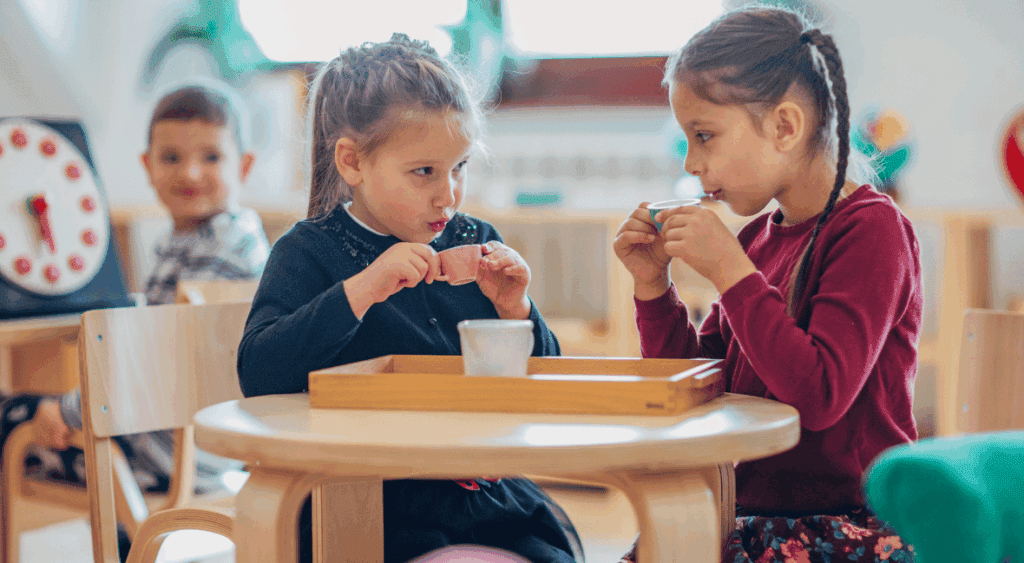
Dramatic play, especially, is full of negotiation. One child wants to be the doctor, another insists on being the doctor too. Someone wants the story to be about a birthday party, someone else is set on it being a superhero rescue. One child says, “I’m the mom,” while another responds, “No, I’m the mom! You can be the baby.”
These moments don’t always go smoothly. Voices get louder. Feelings get big. Sometimes someone walks away. But this is exactly where the learning is.
Play often leads to conflict, but that’s not a problem to eliminate. It’s an opportunity. Kids need lots and lots and lots of practice working through these situations.
They are learning how to:
- express what they want
- hear what someone else wants
- negotiate roles and ideas
- manage frustration
- adjust their behavior to keep others engaged
And here’s the key: they are motivated to figure it out. If they want the play to continue, they have to work through the conflict. They can’t always have things their way, and they learn that quickly when peers walk away or push back.
Over time, this builds emotional regulation and social awareness in a way that no scripted lesson can replicate. Because these aren’t hypothetical situations. They’re real. They matter. And kids feel the impact of their responses.
This is why time for play is so critical. When children have fewer opportunities for extended, uninterrupted play, they simply don’t get the same volume of practice. And social-emotional skills, like any other skill, require repetition.
A 20-minute social-emotional lesson once a week in third grade can’t make up for hours and hours of real-time problem-solving in play.
Play is where children live these skills, not just learn about them. It’s where they figure out how to be with others in a meaningful, lasting way.
If “Play” Doesn’t Feel Serious Enough…
For some adults, the word play doesn’t quite capture the depth of what’s happening.
In their book Let the Children Play, Pasi Sahlberg and William Doyle offer another term: SEED—Systematic Exploration, Experimentation, and Discovery.
And honestly, it fits because when children play, they are:
- Exploring ideas and materials
- Experimenting with different approaches
- Discovering what works (and what doesn’t)
It may look simple on the surface, but it’s deeply meaningful work.
What This Means for Teachers
If you value learning through play, your role shifts, but it doesn’t become less important. It becomes more intentional.
It is the teacher’s responsibility to make play possible.
Children need large blocks of uninterrupted time, and that doesn’t happen by accident. Teachers have to intentionally plan for it, protecting time from being broken up by transitions, over-scheduling, or constant interruptions. Real play unfolds slowly. It deepens over time as children revisit ideas, work through problems, and extend their thinking. Without that time, the play never fully develops.
The environment matters just as much.
Teachers are the ones setting up spaces that invite play. A well-resourced, thoughtfully curated environment, filled with open-ended materials, loose parts, and space to move, supports children in following their ideas without needing constant adult direction. The setup of the room can either limit play or expand it.
Observation also becomes a central part of the role.
When teachers step back and watch, they begin to see the learning that’s already happening. Documentation helps make that learning visible, both to guide future planning and to communicate the value of play to others.
And then there’s support. Support needs to be offered carefully, without taking over or directing the play. But support doesn’t mean doing nothing.
It can look like:
- getting materials a child needs to carry out an idea
- helping them access information (“How could we find out how to build that?”)
- supporting the development of a skill they’re motivated to learn
- stepping in when safety or conflict truly requires it
The key is that the teacher supports the child’s goals, not replaces them with their own.
In many cases, the most powerful thing we can do is hold back just enough to let the child remain in control while still being present, responsive, and intentional in how we support the experience.
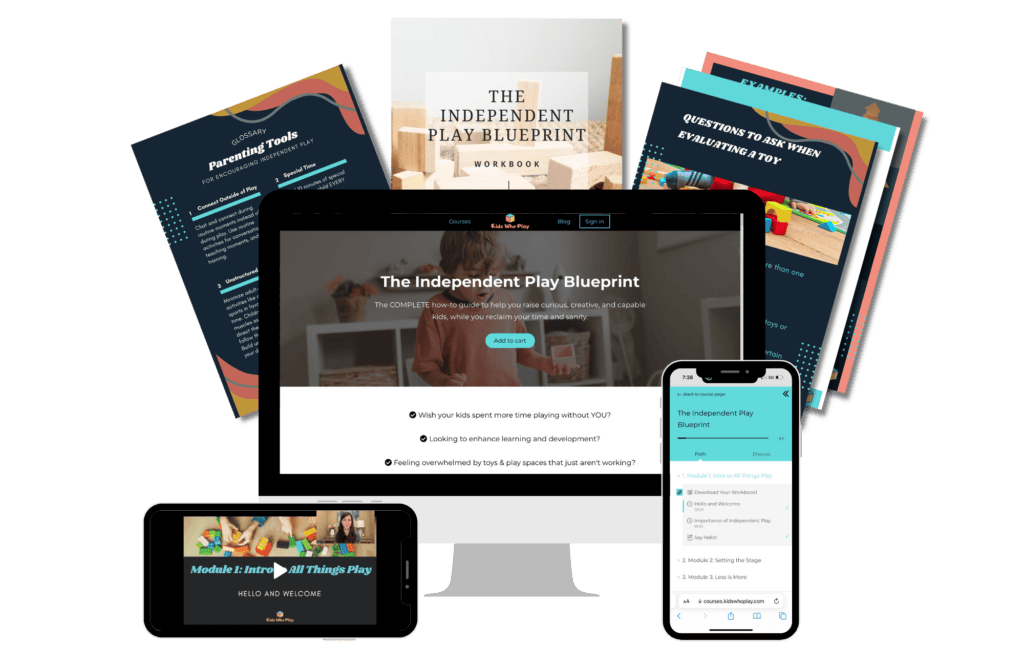
- If you’re looking to get kids playing more, check out my popular course, The Independent Play Blueprint!
Learning Through Play Is Real Learning
Learning through play isn’t a break from learning. It’s not a bonus or an extra. It’s the foundation.
When children are free to follow their interests, they engage more deeply, persist through challenges, and develop skills that extend far beyond any single activity.
From the outside, play can look simple. But inside that play, children are building the skills, habits, and ways of thinking they’ll carry with them for the rest of their lives.
No Comments