
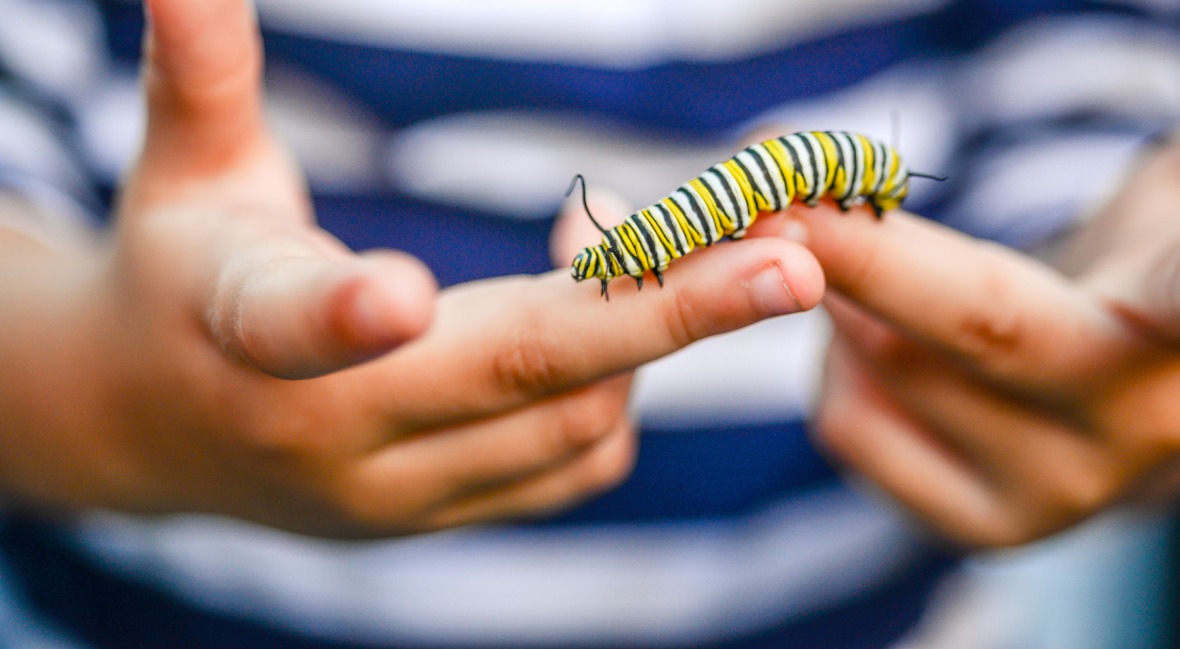
The best bug activities for preschoolers are not worksheets or perfectly planned craft projects. Young children learn about bugs best through actual exposure, observation, movement, books, and hands-on experiences.
Bugs are already fascinating to preschoolers. They crawl, fly, jump, burrow, build webs, and sometimes completely transform their bodies. Giving children opportunities to observe these tiny creatures helps them learn about life cycles, habitats, movement, and the important role bugs play in our environment.
These bug activities for preschoolers focus on real experiences while also encouraging children to treat living creatures gently and respectfully.
We get commissions for purchases made through links in this post. As an Amazon Associate, we earn from qualifying purchases.
17 Bug Activities for Preschoolers
1. Raise Caterpillars and Watch Them Become Butterflies
This one is a Springtime classic and for good reason: children love it! I do this each year.
A butterfly-growing kit allows preschoolers to watch an entire life cycle happen right in front of them.
Children can observe the caterpillars eat and grow, form their chrysalises, and eventually emerge as butterflies. Once the butterflies are ready, take them outside and release them together.
This experience makes the butterfly life cycle much more meaningful than simply seeing the stages in a picture. Children get to watch the transformation unfold over several weeks.
2. Keep a Praying Mantis as a Class Pet
A praying mantis can be a fascinating class pet for preschoolers to observe. I first got one from another teacher and have had them since! You can easily find them online for purchase.
Before bringing one into the classroom, read books about praying mantises and learn about their habitat, diet, temperature needs, and proper care. Children can help observe its behavior, notice how it moves, and watch how it uses its front legs.
Be sure to research whether the mantis species is native to your area and what should happen when you are no longer able to care for it. Nonnative insects should never be released outdoors; they multiply SO quickly!
3. Keep Ants in an Ant Farm
An ant farm lets children observe ants building tunnels, carrying food, and working together, and they are super enthralled by what they see.
Preschoolers can watch how the tunnels change from day to day and notice how ants interact with one another. Ant farms offer a close-up look at behavior that usually happens underground and out of sight.
Choose a secure ant farm designed for children, follow the care instructions carefully, and keep it somewhere it will not be shaken or knocked over. I have had ants escape before, so you have been warned!
- Check out all the best insect kits for kids!
4. Keep Worms in a Worm Farm
Worm farms give children the chance to observe how worms move through soil and help break down food scraps and other organic material. It’s just important to remember that they prefer the dark and must be covered most of the time.
Children can help add appropriate foods, check the moisture level, and look for changes in the soil. Over time, they can begin to understand how worms help create healthy soil.
Worms are not insects, but they are often included in preschool bug studies because they are easy to observe and play an important role in the garden.
5. Head Outside on a Bug Hunt
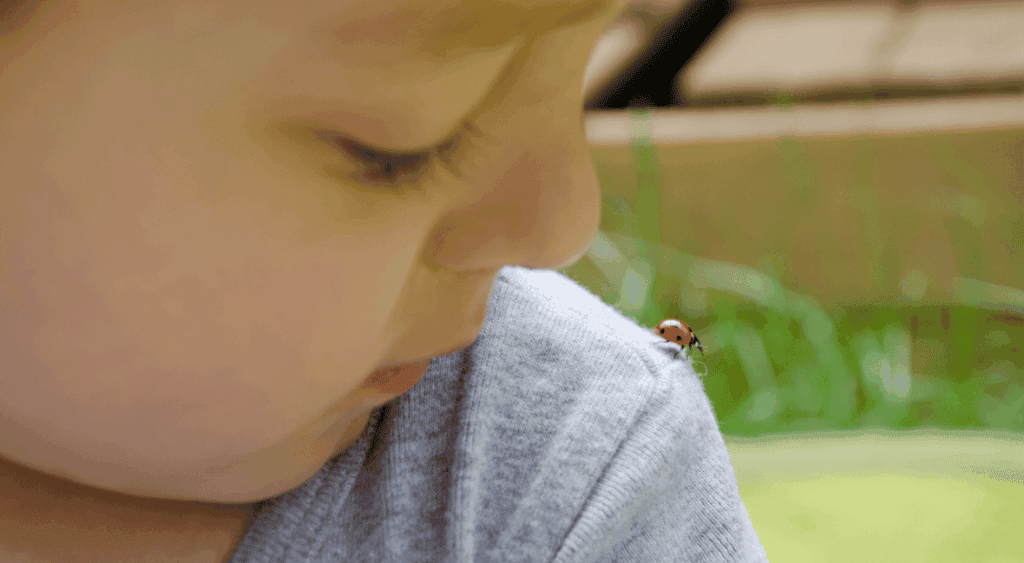
One of the simplest and best bug activities for preschoolers is heading outside to see what they can find. I remember spending hours searching for bugs growing up!
Search in a backyard, playground, garden, park, forest, or along the edge of a sidewalk. Look around flowers, tree bark, leaves, logs, rocks, damp soil, and shallow water.
You may find:
- Ants
- Beetles
- Caterpillars
- Butterflies
- Moths
- Grasshoppers
- Ladybugs
- Dragonflies
- Worms
- Spiders
- Pill bugs
- Centipedes
- Millipedes
Move slowly and encourage children to look carefully. Sometimes the best bug discoveries happen when everyone stops moving and watches one small area.
Turn Over Rocks and Logs Carefully
Rocks, logs, flowerpots, and pieces of bark often create cool, damp hiding places.
Lift one side gently and look underneath. Always place the object back exactly as you found it, so you do not destroy the creatures’ habitat.
Look for Signs of Bugs
Children can learn about bugs even when they do not see the bug itself.
Look for holes in leaves, egg clusters, cocoons, chrysalises, shed exoskeletons, webs, ant hills, chewed wood, tunnels, and rolled leaves.
These clues invite children to wonder what made them and where the bug might have gone.
Explore at Different Times of Day
The insects you see in the morning may be different from the ones active in the afternoon or evening.
Butterflies and bees may be easier to find in warm sunshine, while moths and other insects may become active closer to dusk.
You can also look near an outdoor light in the evening to see which insects are attracted to it.
Bring a Magnifying Glass
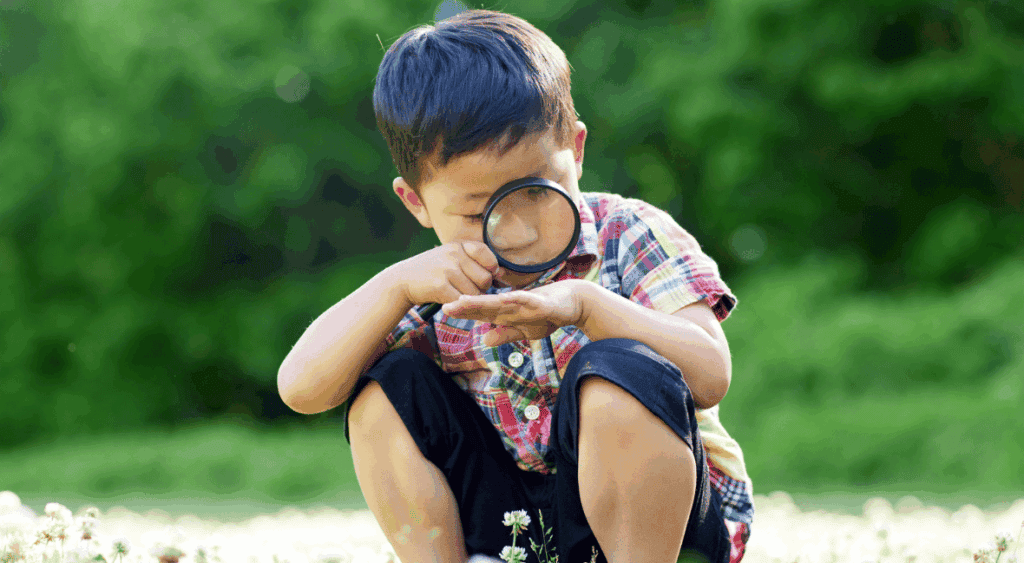
A simple magnifying glass helps children notice tiny details such as antennae, body segments, wing patterns, hairs, and legs.
Children can also use it to examine abandoned webs, chewed leaves, bark, and insect eggs. Teach children never to use a magnifying glass to focus sunlight on an insect, plant, or other object.
Look for Bugs Near Water
Ponds, streams, marshes, and puddles attract many different insects.
Children may see dragonflies, damselflies, water striders, mosquitoes, and beetles moving near or underneath the water. Stay close to children around water and observe from a safe area.
Look for Worms in Damp Soil
Check beneath leaves, logs, or damp soil for worms.
Watch how a worm stretches and contracts to move. If it needs to be handled, use damp hands and return it quickly to the same place where it was found.
Keep Outdoor Bug Exploration Respectful
The goal of a bug hunt is to observe rather than collect or harm.
Children should always be supervised while exploring insects. Teach them to observe gently, move slowly, and respect each creature’s space.
Avoid touching unknown insects, nests, stinging bugs, or brightly colored caterpillars. Wash your hands after handling soil, leaves, observation containers, or safe-to-touch creatures.
6. Fill a Bin with Dirt and Worms
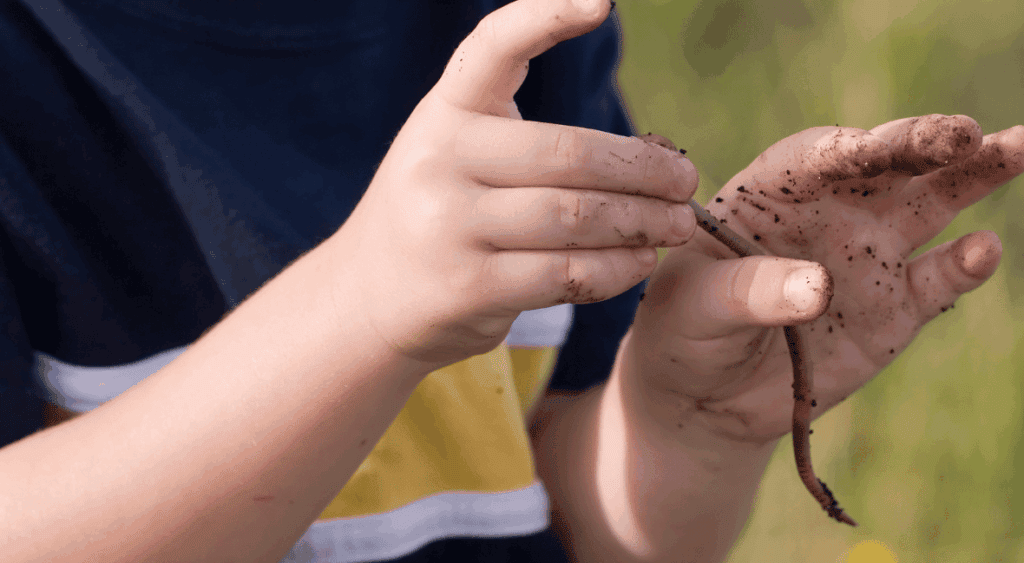
Create a temporary sensory bin using damp soil and some worms.
Over the years, my preschool students have been absolutely delighted to hold handfuls of worms! I usually just order a pound of live worms and have them delivered, but you may be able to find a local place that sells worms for fishing or composting.
Children love digging through the dirt, feeling the soil, watching the worms move, and noticing how quickly they burrow. Add natural materials such as leaves, pieces of bark, and small sticks.
Supervise closely, keep the soil moist, and return the worms outdoors or to a worm farm when the exploration is finished. This should be a short observation experience rather than a permanent habitat.
7. Use a Bug Observation Container
A clear bug viewer or magnifying container allows preschoolers to examine small creatures more closely. It is also a great way for young children to view bugs up close without accidentally crushing or hurting them. Win-win!
Children can look at the bug’s legs, antennae, wings, colors, patterns, and body shape. They can also watch it climb, crawl, or try to hide.
Keep observation periods short, place the container in the shade, and release the bug exactly where it was found.
Do not collect bees, wasps, stinging insects, or anything you cannot safely identify.
- Check out all the best bug boxes for kids!
8. Explore Bugs Preserved in Resin

Bugs preserved in resin allow children to closely examine insects that would normally move too quickly or be unsafe to touch. I have this set of bugs and love seeing children investigate them.
Preschoolers can hold the resin blocks, turn them over, use a magnifying glass, and compare the different specimens. It’s super cool for children to see bugs from all angles and so up close.
They may notice differences in the number of legs, wing shape, body size, antennae, colors, and patterns. These specimens are especially helpful for comparing several insects side by side.
Choose fully sealed resin specimens intended for educational use.
9. Observe a Spiderweb
I think spiders are super cool and love discovering their webs, but feel free to skip this one if spiders are not for you!
Spiderwebs are fascinating to explore, especially early in the morning when they may be covered in dew.
Look at the web’s shape, where it is attached, and how the different strands connect. Watch to see whether the spider is sitting in the middle, hiding nearby, repairing the web, or waiting for food.
Teach children not to touch or tear the web. A spider may have spent hours creating it.
This is also a good opportunity to explain that spiders are not insects. Insects have six legs, while spiders have eight.
10. Visit a Butterfly Garden or Insect Exhibit
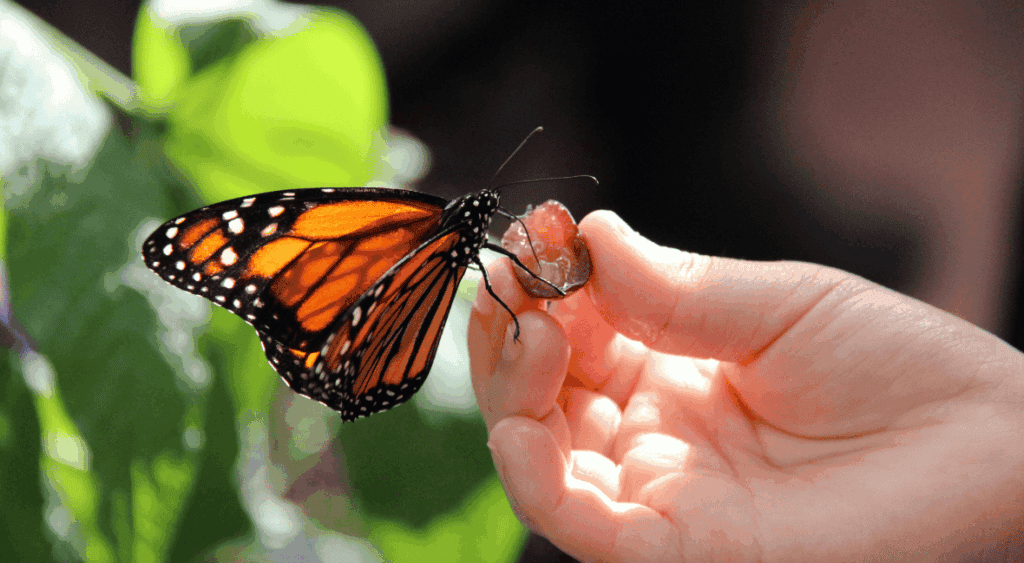
I grew up going to the Tropical Butterfly House at the Pacific Science Center, and there is just something so cool about seeing that many butterflies at once!
Butterfly houses, museums, zoos, botanical gardens, and nature centers may have live insect exhibits. A visit can be a fun family activity or a class field trip.
Children might see butterflies drinking nectar, ants moving through tunnels, insects camouflaging themselves, or beetles and other bugs they would not normally encounter at home.
Give preschoolers plenty of time to look around without expecting them to remember every fact. Let them follow whatever catches their interest.
11. Plant a Pollinator Garden
Okay, yes, this is a bit more of a long-term project, but something worth beginning if you have the time! Planting flowers that attract pollinators creates ongoing opportunities to observe bees, butterflies, beetles, and other insects.
Choose plants that are well-suited to your climate. Native flowers are often especially helpful because local insects already depend on them for food and shelter.
Some common examples of pollinator-friendly native plants include milkweed (for butterflies), coneflowers, black-eyed Susans, bee balm, goldenrod, and native sunflowers. The best choices will vary depending on where you live.
To find native plants specific to your area, you can visit the National Wildlife Federation’s Native Plant Finder or check with your local extension office or native plant society.
Avoid pesticides and include several types of flowers that bloom at different times of the year.
Once the flowers begin blooming, sit nearby and observe which insects visit.
12. Watch Bees Collect Pollen
Find an area where bees are visiting flowers and observe them from a safe distance. Children may notice bees crawling inside flowers, flying between blossoms, or carrying pollen on their back legs.
Talk about how bees move pollen from flower to flower, helping plants produce seeds, fruits, and vegetables.
Encourage children to remain calm and avoid chasing, swatting, or trying to touch the bees. Avoid this activity with children who have a known allergy to insect stings.
13. Read Bug Books
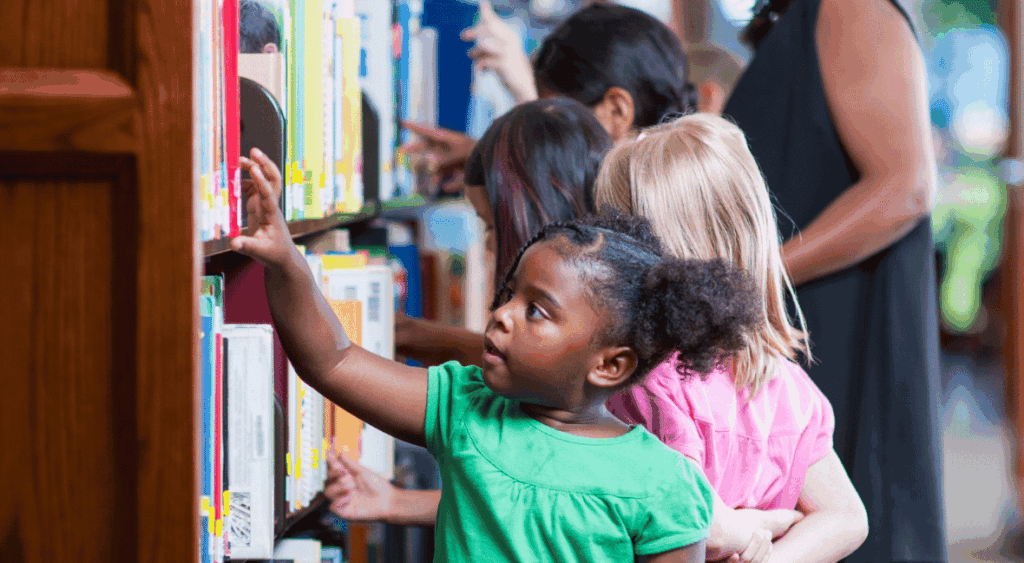
Bug books are a great way to support children’s real-world observations.
Read a book before heading outside to help children know what to look for. After exploring, use books to learn more about the insects you found.
You can also take a trip to the library and let children help choose bug books. This is a fun opportunity to work with a librarian, ask where insect books are located, and learn how the library works. And children can often get their own library card!
Look for a mixture of:
- Books with real photographs
- Simple nonfiction books
- Insect field guides
- Stories featuring bugs
- Books about life cycles
- Books about specific insects
There is no need to quiz children after reading. Let the books add information and inspire more questions.
14. Compare How Different Bugs Move
Observe how different bugs crawl, fly, hop, wiggle, hover, climb, and burrow.
You may be able to watch some of these movements outdoors. Videos can also be useful for seeing insects that move very quickly or are difficult to find in person.
After watching, invite children to move like different bugs.
They might:
- Crawl slowly like a caterpillar
- Flutter like a butterfly
- Hop like a grasshopper
- Scurry like an ant
- Wiggle like a worm
- Hover like a dragonfly
- Creep like a spider
This gives children a chance to combine science, observation, and gross motor play.
15. Visit a Garden or Farm
Here’s a great option if you’re not about to plant your own pollinator garden and spend years getting it established! Gardens, farms, orchards, and greenhouses are full of opportunities to observe bugs.
Children may find bees visiting flowers, worms in the soil, ladybugs on leaves, butterflies near plants, beetles under garden debris, or caterpillars eating leaves.
They can also begin to notice how insects interact with plants. Some insects pollinate plants, some break down organic matter, and others eat plants.
16. Listen for Insects
Bug exploration is not only about what children can see.
Sit quietly outside and listen for buzzing, chirping, clicking, humming, and rustling. You may hear bees, flies, cicadas, grasshoppers, or crickets. I’ve spent many an evening over the years listening to grasshoppers and cicadas.
Try to determine where each sound is coming from. Is it in a tree, near flowers, in the grass, or underneath the leaves?
Listening encourages preschoolers to slow down and notice parts of nature they might otherwise overlook.
17. Put Out a Bug Hotel
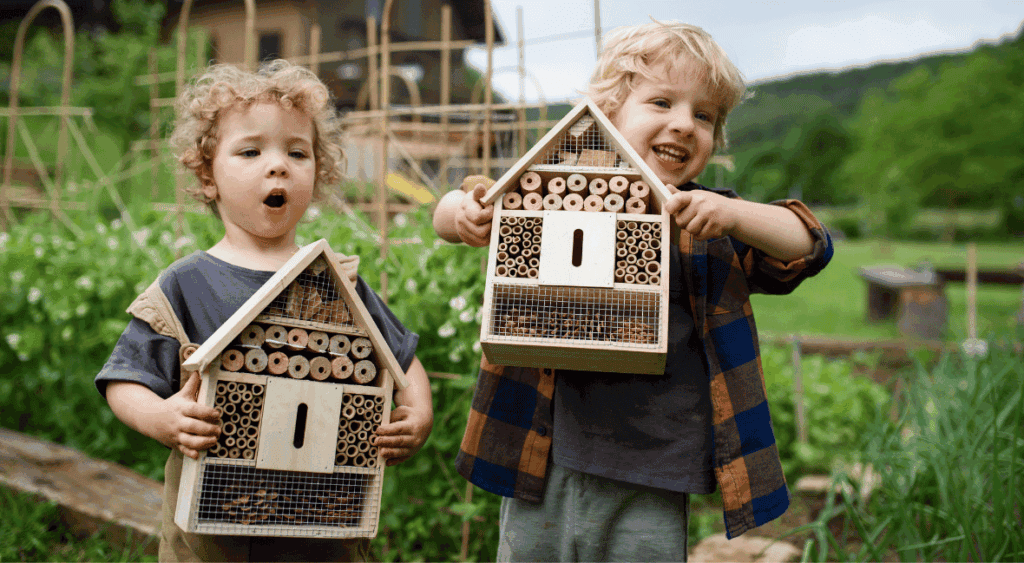
When I was teaching preschool, putting out a bug hotel was always a fun project. You can build one using pinecones, sticks, and bark, or buy a ready-made bug hotel. Either way, it creates a protected place for insects to hide, rest, nest, or spend the winter.
Place your bug hotel in a quiet, sheltered spot near flowers and visit it during outdoor time. Be a gentle observer. crouch down, look closely, and whisper what you notice. You might see solitary bees in hollow stems, beetles in crevices, spiders spinning webs, or ladybugs settling in.
Slow down, watch patiently, and let curiosity guide you. Don’t move or open the hotel once insects settle in. Your role is to provide a safe space and quietly enjoy the tiny world you’ve created.
Final Thoughts on Bug Activities for Preschoolers
The most meaningful bug activities for preschoolers allow children to see, hear, observe, and interact with the real world.
They do not need to complete a worksheet or make a bug craft to prove they learned something. Watching an ant build a tunnel, listening for crickets, digging gently through soil, or seeing a caterpillar transform into a butterfly can create a much deeper understanding.
Keep the experiences gentle, supervised, and respectful. Bugs may be small, but they offer preschoolers endless opportunities to wonder, explore, and learn.

No Comments