Finding an activity for a child isn’t just a question of interest. For many families, there is also a practical side to consider. How much equipment will we need? Will there be monthly fees? What happens when the child improves? Will we suddenly need better equipment, more travel, or additional classes?
These questions are completely reasonable. Many hobbies are inexpensive at the beginning but become considerably more costly once a child takes them seriously.
Chess is a little unusual in this respect. A child can learn the rules, play regularly, compete, and improve for years without the family having to spend very much money at all. There are certainly ways to spend money on chess, especially when coaching and serious tournament play enter the picture, but very little of it is necessary just to participate.
I am Valery Filippov, a Chess Grandmaster and professional chess coach. Over the years, I have worked with many children who were taking their first steps in chess.
You Really Do Not Need Much to Start
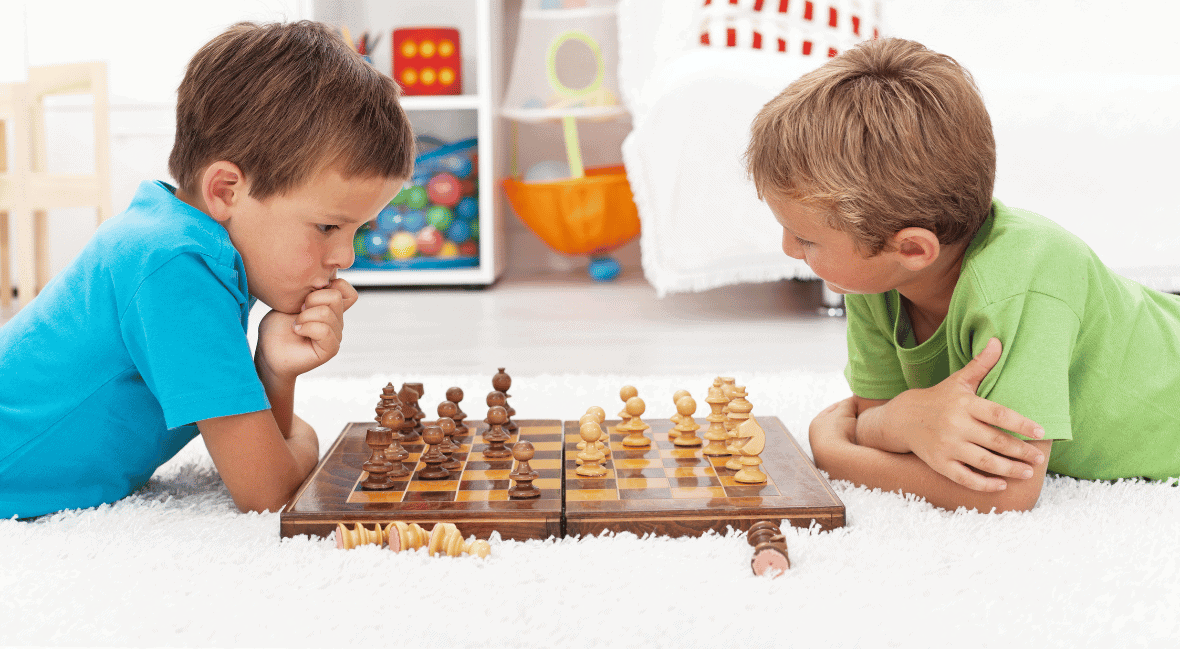
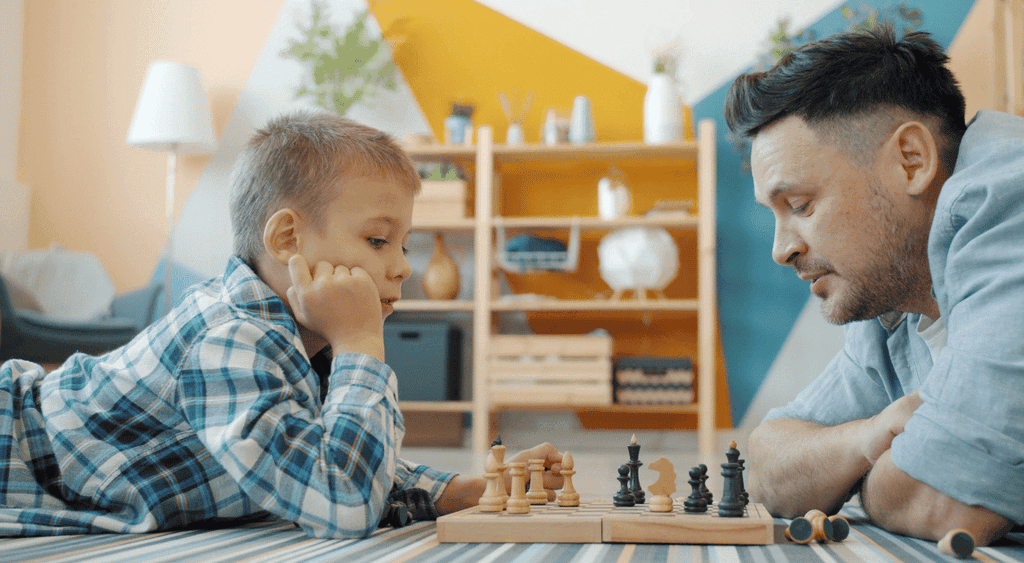
You don’t need much to play chess: a board and 32 pieces.
The pieces do not make a child calculate better. A beautiful wooden board may look wonderful in the living room, but from a learning perspective, an ordinary plastic set does exactly the same job.
Children can also start online without buying anything. Moving real pieces is enjoyable, and for younger children especially, I think there is value in experiencing chess away from a screen.
But that is a small one-time purchase, not the beginning of an endless equipment list.
Compare that with activities where children regularly need new shoes, uniforms, protective equipment, instruments, materials, or replacements as they grow. Chess pieces do not become too small after six months. A board bought for a seven-year-old can still be sitting on the same table when that child is seventeen.
The Game Does Not Become More Expensive When a Child Gets Better
This is probably one of the most interesting things about chess from a parent’s perspective.
In many activities, progress creates new expenses. A beginner can start with simple equipment, but an advanced participant may eventually need something much better. The cost of taking the activity seriously increases together with the child’s level.
Chess does not really work that way.
There is no premium racket that makes the pieces move better. There are no professional chess shoes. A child does not need a new board after reaching a certain rating.
I find that distinction important.
Free Chess Is Actually Real Chess
There are hobbies where the free version is mostly a preview of the real experience. Chess is different. A child playing a free game online is still playing chess in its complete form. The rules are identical.
Free chess websites allow children to play opponents, solve puzzles, watch games, and practice positions.
There is no reason to buy several courses or immediately hire a coach. Let the child play. Show them the rules. Play a few games together. See whether they come back to the board without being reminded.
Interest is much easier to judge after a few weeks than after one enthusiastic afternoon.
A Chess Set Can Entertain More Than One Child
Another small advantage is easy to overlook: chess equipment is not personal.
One football belongs to the family just as easily, of course, but many children’s activities eventually require individual equipment for each participant. The whole family can share the same board.
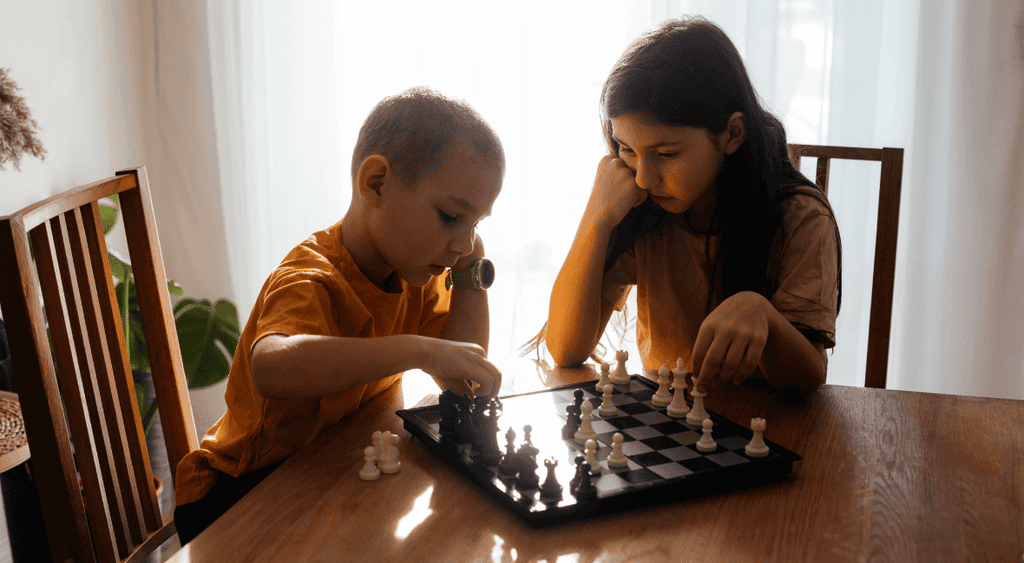
Two children can play. A parent can play with a child. A stronger sibling can teach a younger one.
This is one reason I like chess as a family activity. The parent does not have to become a coach. Sometimes it is better if they don’t. They can simply become the opponent on the other side of the board.
And being much weaker at chess than your child is not necessarily a problem. Children usually enjoy discovering that they can genuinely beat an adult at something. In most parts of their lives, adults know more, decide more, and do things better.
Improvement Does Not Have to Mean Private Lessons
As a grandmaster chess coach, I obviously believe good coaching can be extremely useful. It can save time, identify mistakes that a player does not recognize independently, and give training some
structure.
Still, private lessons are not necessary for every child. Playing regularly, solving positions, reading, or joining a school chess club may be quite enough, particularly at the beginning.
Private coaching makes more sense when there is a particular goal behind it. Perhaps a child has become serious about tournaments. Perhaps progress has stopped.
Chess Can Fit Into an Existing Schedule
Time matters too. Regular activities often mean driving, waiting, and arranging the rest of the family’s schedule around them.
You can open a board after dinner. A child can play online for twenty minutes. Two siblings can play while visiting their grandparents. A parent and child can have one game on a Sunday afternoon.
There is no field that has to be available and no minimum number of participants required.
For busy families, I think this flexibility is part of what makes chess genuinely affordable. An activity that costs very little but requires four car trips every week is not necessarily cheap in practice.
Local Chess Can Be Surprisingly Inexpensive
For children who want to play away from home, it is worth looking locally before paying for anything expensive.
Schools, libraries, community centers, and chess clubs may offer opportunities to play at little or no cost. What is available obviously depends on where a family lives, but chess has a long tradition of informal clubs and local playing groups.
A child does not necessarily need a prestigious academy to enjoy over-the-board chess.
In my experience, having regular opponents is often more valuable for a beginner than having impressive surroundings. A room with a few boards and children who are excited to play can be enough.
Parents can look for:
- a chess club at school
- a local chess association or community club
- chess sessions at a library or community center
- beginner tournaments in the area
- informal family or children’s chess events
Tournament Chess Is Where Costs Can Start to Grow
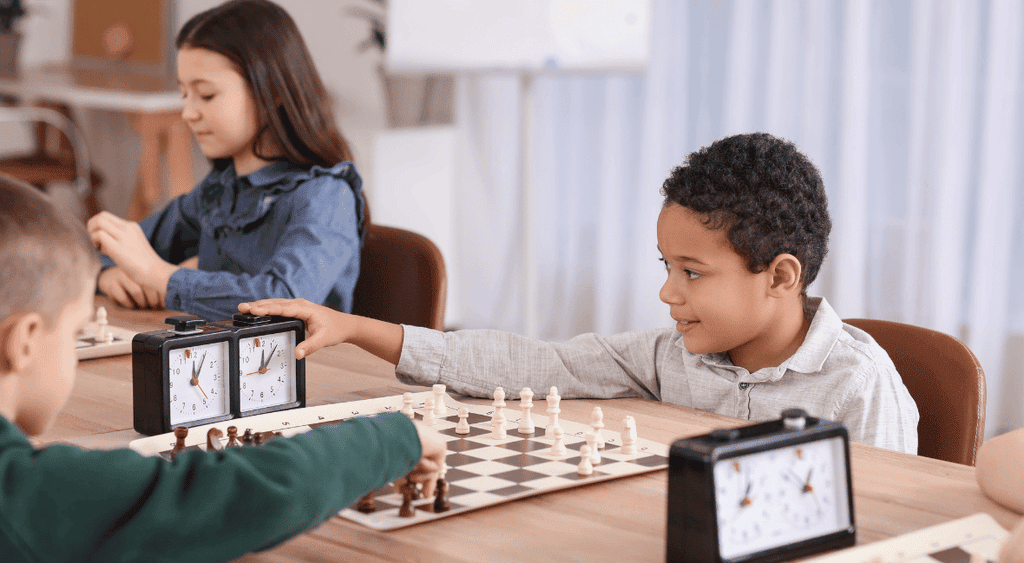
Serious tournament chess is different. Once regular travel begins, hotels and transportation can easily cost far more than tournament entry fees.
There is nothing incomplete about playing chess without traveling around the country. A child can enjoy the game for years without pursuing ratings, titles, or major competitions.
I sometimes think parents feel pressure to turn an interest into a serious project too quickly. If a child enjoys chess, that is already a perfectly good reason to play.
Competition can come later if the child actually wants it.
Parents Can Try Chess Before Spending Money on It
This may be the strongest practical argument for chess as an affordable children’s activity. You can test it almost for free.
Teach your child how the pieces move. Find a simple board or use a free website. Play together. Let them experiment. If they want to know more, help them find beginner material or a local place to play. Then wait.
- Does the chessboard keep appearing?
- Does your child ask for another game?
- Do they start talking about a position that happened yesterday?
- Do they become curious about why they lost?
Those signs tell you far more than buying an expensive course in the first week. If the interest disappears, very little has been lost. If it grows, there are many directions to go next. That low-risk beginning is something I wish more parents considered when choosing activities for their children.
What Is Actually Worth Paying for?
If a child becomes enthusiastic about chess, spending some money can certainly improve the experience. I would just spend it gradually. A comfortable physical chess set is a sensible first purchase. After that, the next step depends entirely on the child.
For one child, joining a local club may be enough. Another may love tournament competition. A third might benefit from structured study or professional chess coaching. Some children simply want to play with their friends and parents, and there is nothing wrong with leaving it there.
More spending does not automatically produce more enthusiasm or faster improvement.
In my work as a coach, I have seen motivated players make excellent use of very simple resources. I have also seen players with access to plenty of material who barely use it. The child’s interest matters much more than the size of the chess budget.
An Affordable Hobby That Can Stay With a Child
Few financial barriers stand in the way of discovering chess. Chess does not ask for much space or equipment, and today a child does not even need another player living nearby.
That is what I find particularly attractive about chess for children. It allows parents to start small. Buy a simple board, or don’t buy one yet. Let the child play. Give curiosity some time. Either way, getting started can cost almost nothing.

No Comments