

Holiday gift lists have changed. Parents are no longer simply asking, “Will my child like this?” They are also asking, “Will this get used after the first day?” “Will it bring us together?” and, increasingly, “Will it give my child something fun to do away from a screen?”
Screen-free gifts still need to be engaging. A toy can be beautifully made, educational, and parent-approved and still sit untouched in a closet.
The goal is to find something children will choose to play with. That means looking beyond labels and thinking about how the gift fits the child, how easy it is to start, and what kind of play it invites.

Here are eight qualities to look for when choosing holiday gifts that encourage meaningful, screen-free play.
1. Start With the Child, Not the Category
It is easy to shop according to what adults think children should enjoy. A better starting point is what already captures that particular child’s attention. Think about how the child naturally likes to play:
- Do they love racing, movement and quick reactions?
- Do they enjoy building, drawing or making things?
- Do they like jokes, storytelling and imaginative play?
- Do they prefer quiet concentration or loud group activities?
- Do they want to lead, collaborate or compete?
A child who loves movement may not be excited by a complicated strategy game, even if it has excellent reviews. A child who spends hours creating imaginary worlds may get more from a set of open-ended figures, costumes, or building materials than from a toy with one prescribed use.
Age recommendations help with safety and general difficulty, but interest turns an appropriate gift into an appealing one.
2. Look for a Fast Start
The holidays are full of distractions. If a toy requires extensive assembly, an adult-led tutorial, and 20 minutes of setup, children may lose interest before play begins. The strongest screen-free gifts have a low barrier to entry. Children can see what to do, begin quickly, and experience something satisfying within the first few minutes.
A few things can make a big difference:
- Simple instructions that children can understand quickly
- Minimal setup and no extra supplies required
- A clear path to starting play without significant help from a parent
- Easy cleanup so the family will want to bring it out again
As a game designer, I think about this a lot. A game can contain surprises, strategy, and replay value without making players study a manual first. At Taco Cat Games, the goal is to get everyone playing quickly, because we want the game to feel fun from the start.
That same principle applies to art supplies, construction toys, puzzles, outdoor equipment, and pretend-play sets. Easy-to-start gifts make the fun more accessible for children.
3. Choose Gifts That Leave Room for the Child
Some toys perform while children watch. Others give children a role in creating what happens next. Look for gifts you can use in more than one way. Blocks can become a tower, a zoo, or a spaceship. Art materials can produce hundreds of projects. A deck of cards can lead to a familiar game, a child-invented game, or a completely new set of rules.
Open-ended play gives children room to make decisions. They can experiment, solve problems, and change direction when an idea does not work. The Harvard Center on the Developing Child notes that games and playful activities can give children opportunities to practice attention, working memory, and self-control; the best challenge is engaging without becoming excessively frustrating.
A gift doesn’t need to have an educational purpose to be worthwhile. Children don’t need to know that they are practicing a skill. From their perspective, the activity should simply feel worth doing.

4. Think About Who Can Join
Independent play is valuable, and children need options they can enjoy on their own. But the holidays are also a useful time to give something that creates an invitation: Come sit with me. Let’s do this together.
Social play can happen through board and card games, sports equipment, collaborative building sets, puppet theaters, cooking kits, and experience gifts. The activity gives everyone something to focus on together.
For a group gift, a few things are worth considering:
- Can siblings of different ages participate?
- Will adults genuinely enjoy joining in?
- Can a new player jump in without feeling behind?
- Is the activity flexible enough for different group sizes?
A family game is especially useful when children and adults can play on relatively equal footing. Luck, speed, observation, creativity, and surprise can sometimes level the field more effectively than deep knowledge or complex strategy.
In our 2026 survey of 420 parents and caregivers, 91% said their children would be very or somewhat likely to put down a screen to join a fun family game. The finding suggests that giving children something they want to join can be more effective than simply asking them to put the screen down.
5. Look for Gifts That Build Confidence
Gifts can build confidence in many ways, especially when they give children a chance to practice a skill they are still developing. A graphic novel can help a child build confidence in reading. Scissor-skill activity sets and craft projects can help children practice fine-motor skills. Building sets can give kids a chance to work through a design and see their ideas come together.
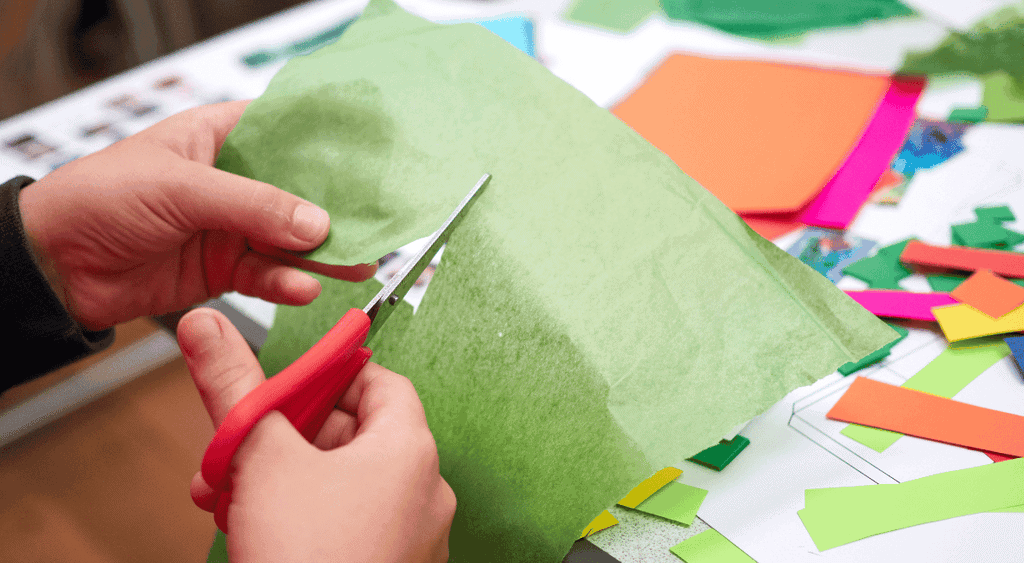
The key is finding something that gives children a manageable challenge. A gift should give them something to work toward without making them feel like they are constantly getting it wrong.
Look for activities that:
- Match the child’s interests and abilities
- Give children a clear starting point
- Let children work through challenges before an adult needs to step in
- Allow children to see their own progress
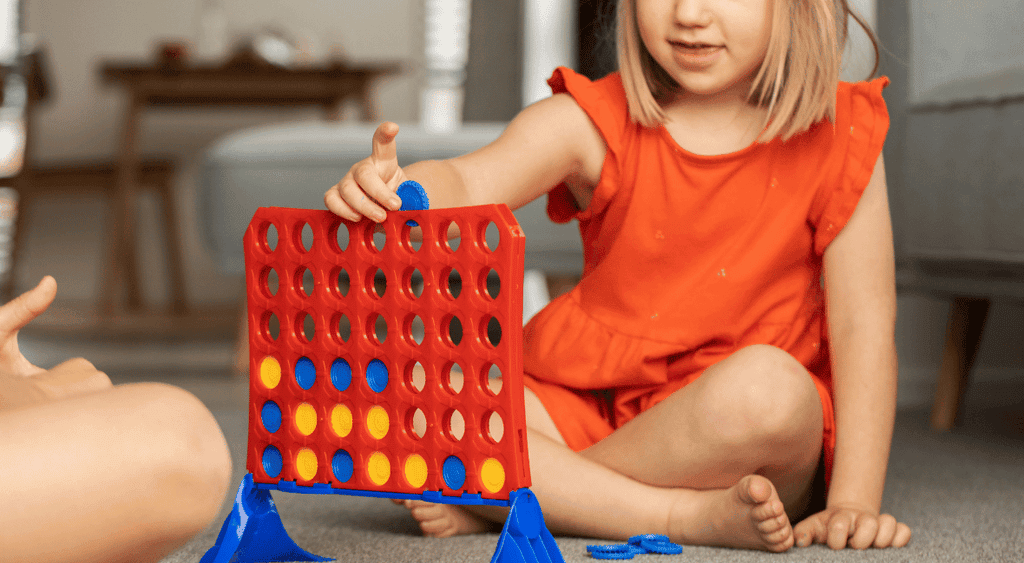
Games can build confidence in a similar way. For young children, following even a simple rule can require concentration and impulse control. They may need to wait while someone else takes a turn, remember what action comes next, or resist reaching for a card too soon. Older children may need to plan, adapt, and pay attention to what other players are doing.
Choose games with rules that are appropriate for the child’s current abilities. The game should give children a chance to practice those skills without becoming too frustrating.
6. Choose Gifts That Let Kids Try, Fail and Try Again
Some of the best gifts give children room to experiment without needing to get everything right the first time. A STEM or coding activity might require several attempts to solve a problem. A book of riddles or brainteasers can encourage kids to work through a question before looking at the answer. Building sets, art projects, and other hands-on activities can give children opportunities to test an idea, change course, and try something different.
When choosing a gift, look for activities where mistakes are part of the process rather than a reason to stop.
Games offer another version of this experience. Every parent knows the moment: the cards are down, the winner celebrates, and another player realizes things did not go their way. Losing graciously is a skill children practice over time. Games provide repeated, relatively low-stakes opportunities to feel disappointed, recover, and try again.
Adults set the tone. Instead of demanding an immediate cheerful response, acknowledge the feeling while holding the boundary: “It is disappointing to lose. You may be upset, but you may not knock over the cards.”
It also helps to model the behavior children are learning. Adults can congratulate the winner, laugh at their own mistakes, and ask for a rematch without making defeat feel humiliating.
The type of game can also make a difference. Consider games that:
- Let everyone work toward the same goal through cooperative play.
- Use teams so children share the outcome.
- Are short enough that another chance to try again feels close.
- Give children opportunities to experience both winning and losing.
- Keep everyone engaged and enjoying the activity.
7. Check the Replay Value
The best gifts do not reveal everything in one sitting. They invite a child to return because the next round, structure, or creation could be different. Replay value can come from many places: changing opponents, multiple ways to build, adjustable difficulty, unpredictable outcomes, or enough creative freedom to invent something new.
Think about how the gift will hold up after the first few uses. A gift with replay value should offer variation over time, give children more ownership as they get familiar with it, and stay interesting after the novelty wears off.
Durability matters here, too. A gift designed for repeated use should survive normal play and be easy to store without losing essential parts.
8. Give the Gift of Time, Too
Some screen-free gifts fail because children get the box but never get help crossing the gap into play. If possible, include time with the gift. Play the first round. Build the first structure. Schedule the museum visit. Put batteries in the flashlight before wrapping it. Clear a spot where the art supplies can actually be used.
For relatives, an experience can be especially meaningful: a baking afternoon, a mini-golf date, a nature walk, game night, or a trip to a children’s museum. Kids Who Play recommends matching experience gifts to the child’s age, interests, location, and the family’s practical constraints. That last point is important. A thoughtful gift should not create an unexpected expense or scheduling burden for the parents.
A simple note can turn an object into an invitation: “This game comes with three game nights at Grandma’s,” or “These binoculars come with a Saturday bird-watching trip.”
A Quick Gift Checklist
Before buying a screen-free holiday gift, ask:
- Does it match the child’s actual interests?
- Can play begin quickly?
- Is it appropriate without being too easy or frustrating?
- Does it allow creativity, choice, or experimentation?
- Can the child use it independently, with others, or both?
- Will it help people take turns, cooperate, or share an experience?
- Is there enough variety to make children want to return?
- Can the family store, maintain, and realistically use it?
- Am I willing to help start the play?
The best screen-free gift may be simple. What matters is that it makes a child curious enough to begin and engaged enough to keep going.
When that gift also creates laughter, conversation, imagination, or a reason to gather around the same table, it offers something even more valuable than a break from screens. It gives children and adults a way to be present with one another.


No Comments