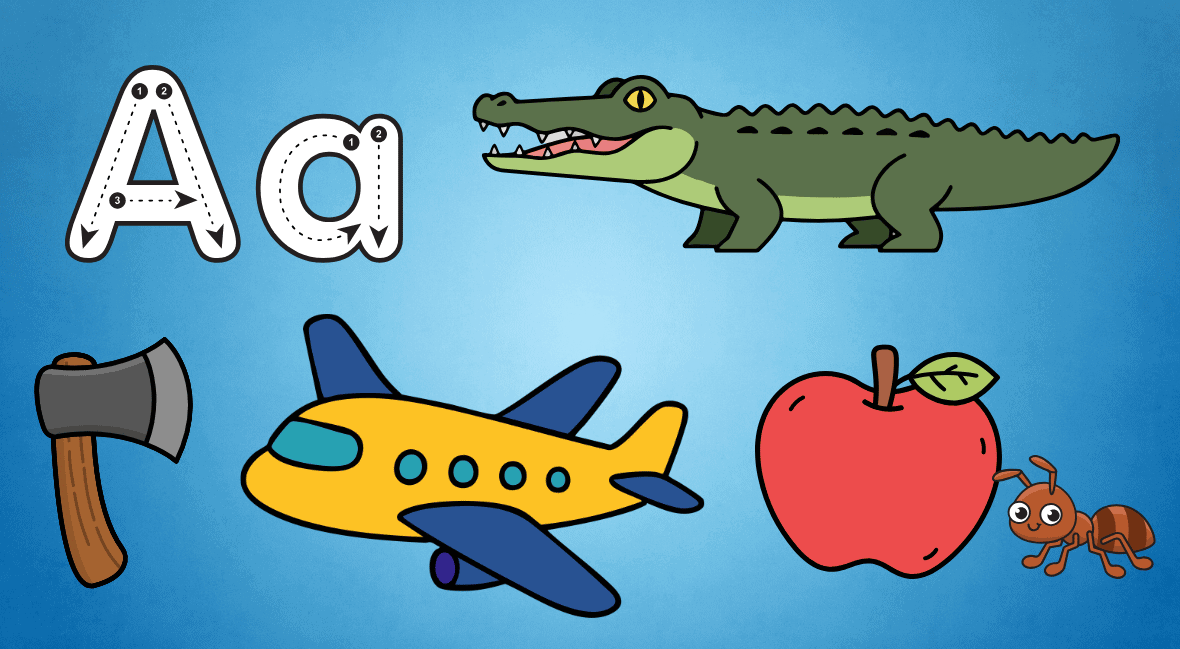
Whether you’re a preschool teacher looking for familiar A words for kids or a parent supporting an early reader, this list is designed to help kids explore the letter A in meaningful ways!
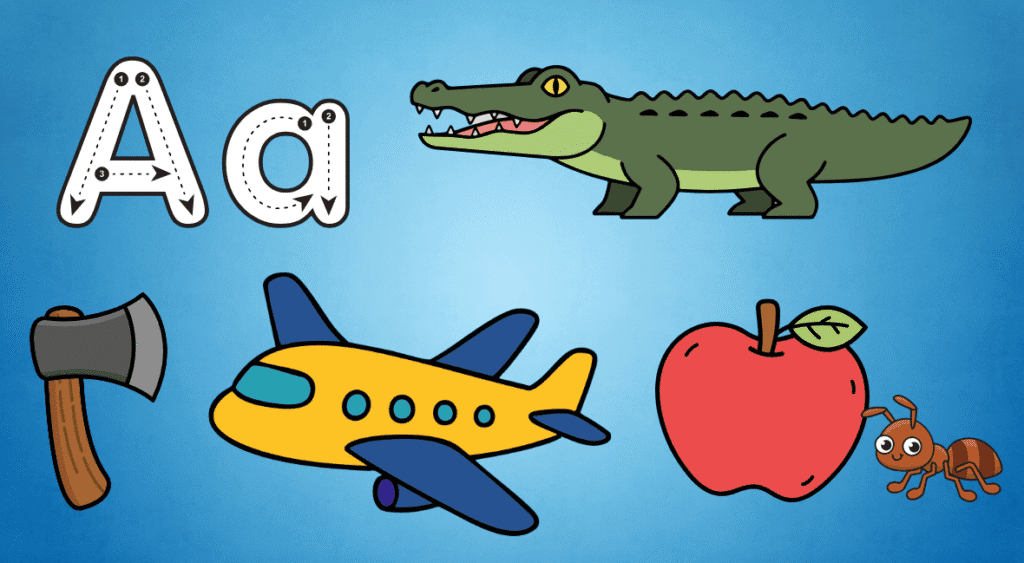
Preschool teachers may use common words such as apple, ant, and alligator to introduce the short A sound, while words such as acorn, ape, and apron can help kids hear the long A sound.
Beginning readers can also practice recognizing common words they’ll frequently encounter in books, including a, and, about, after, and away.
The letter A can be tricky because it can make many different sounds. Compare the A sounds in apple, acorn, about, and all. Kids don’t need to memorize all the different rules at once. Instead, they can begin noticing how A sounds through conversations, stories, songs, signs, play, and everyday experiences.
- Check out this great list of TH words for kids!
Below, you’ll find A words for kids organized into useful categories, including things, foods, animals, common reading words, action words, positive words, descriptive words, and longer words kids may already know.
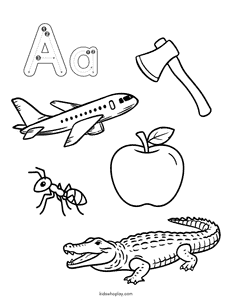
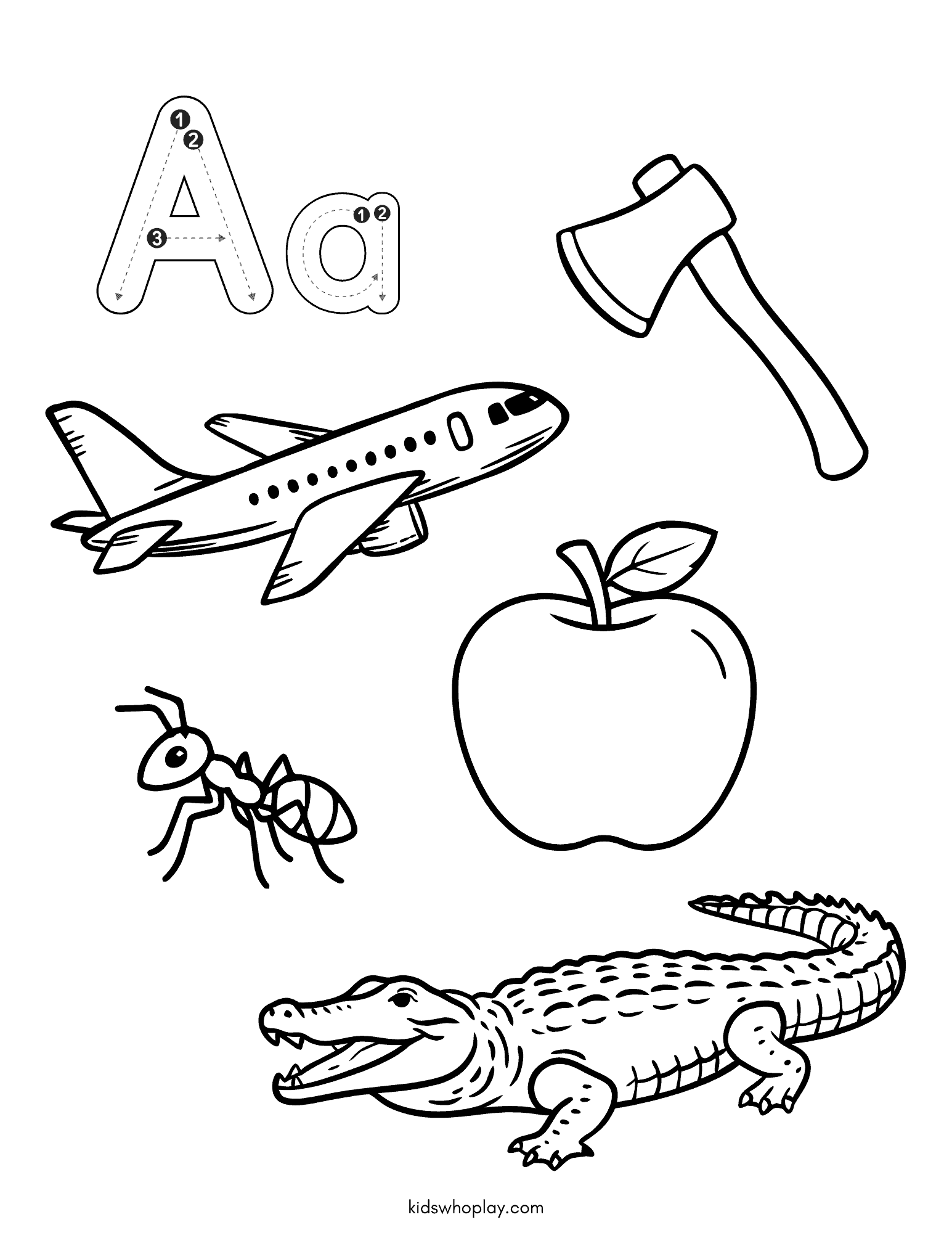
- Download this letter A coloring sheet! ⤵️
- Check out these apple coloring pages for more letter A fun!
108 Letter A Words for Kids
Whether you’re planning a preschool letter activity, introducing the sound A makes, or helping a child learn to read, you can choose words that are familiar and relevant to the kids you’re working with.
Things That Start With A
These are familiar objects, places, people, and other nouns that begin with A.
- Acorn
- Address
- Airplane
- Alarm
- Album
- Alphabet
- Ambulance
- Anchor
- Ankle
- Apartment
- Apron
- Arcade
- Arch
- Arm
- Armor
- Arrow
- Art
- Artist
- Attic
- Aunt
- Award
- Axe
Foods That Start With A
Food words are easy to connect to real objects and experiences. Kids can look for these foods at home, at the grocery store, or on a menu.
- Almond
- Apple
- Apricot
- Artichoke
- Asparagus
- Avocado
Animals That Start With A
Animal names can make reading practice much more interesting, especially for kids who already love learning about wildlife.
- Albatross
- Alligator
- Alpaca
- Anaconda
- Angelfish
- Ant
- Anteater
- Antelope
- Ape
- Armadillo
- Axolotl
Some of these animals may be unfamiliar to beginning readers. Try looking at photos or videos so kids can connect each written word to a real animal.
Common A Words Kids Encounter While Reading
These are some of the most useful A words for kids learning to read. Many appear frequently in picture books, early readers, directions, and everyday writing.
- A
- Able
- About
- Above
- Across
- After
- Again
- Against
- Ago
- Ahead
- All
- Almost
- Alone
- Along
- Already
- Also
- Always
- Am
- Among
- An
- And
- Another
- Any
- Anyone
- Anything
- Are
- Around
- As
- At
- Away
Many of these words can’t be sounded out using only the most basic phonics rules. Instead of practicing the entire list at once, point them out as kids encounter them naturally in books.
Action Words That Start With A
These A words describe actions that are easy and appropriate for kids to act out. Use them for a simple movement game by calling out a word and asking kids to show you what it means.
- Act
- Add
- Answer
- Appear
- Applaud
- Ask
- Attach
- Avoid
You could ask kids to act like an animal, add another block to a tower, answer a question, applaud after a performance, or avoid an imaginary puddle.
Positive A Words
Positive words can help kids describe their strengths, encouraging actions, and the qualities they appreciate in other people.
- Accept
- Achieve
- Admire
- Adventure
- Affection
- Agree
- Amazing
- Appreciate
- Awesome
Talk about what these words look like in everyday life. For example, kids might achieve a goal they’ve been working toward, admire a friend’s drawing, or appreciate someone who helped them.
Descriptive A Words for Kids
Descriptive words help kids add more detail to their speaking, reading, and writing.
- Active
- Afraid
- Alive
- Angry
- Asleep
- Awake
- Awful
- Awkward
Ask kids to use the words to describe a book character, an animal, a picture, or a personal experience. Questions such as “Why was the character afraid?” help kids connect vocabulary practice with reading comprehension.
Longer A Words Kids May Know
Long words can look intimidating, but kids may already know many of these from conversations, books, school, and everyday life.
- Accident
- Acrobat
- Activity
- Addition
- Afternoon
- Airport
- Alphabetical
- Amusement
- Animal
- Aquarium
- Astronaut
- Attention
- August
- Autumn
Encourage kids to look for smaller, familiar parts within longer words. For example, they may recognize noon in afternoon, air in airport, or add in addition.
Ways to Practice A Words With Beginning Readers
You don’t need to drill every word on the list.
In fact, the less drilling, the better! Kids are most likely to learn words they find interesting and encounter as part of their everyday lives. Exploring real apples will probably be more meaningful than looking at a flashcard with an axolotl if they’ve never seen or interacted with one.
Look for natural opportunities to introduce A words through conversations, play, reading, cooking, errands, and time outside.
• Call Attention to Text
This may seem overly simple, but it’s one of the first ways that kids begin to understand that text has meaning; thus, it is great for building early literacy skills!
Point out A words when you naturally encounter them on signs, in books, on food packages, in stores, on menus, or anywhere else kids see print. You might notice apple on a juice container, ambulance on a sign, or and in a favorite book.
There’s no need to stop and quiz kids every time you notice a word. Simply point to it, read it aloud, and continue with what you were doing. These small, repeated interactions help kids understand that written words carry meaning and are part of their everyday lives.
• Sort A Words by Sound
The letter A makes different sounds in different words. Write a few familiar words on cards and sort them by the sound you hear.
For example:
- Short A: apple, ant, alligator
- Long A: acorn, ape, apron
- Other A sounds: all, about, away
Keep it low pressure and do it with kids!
• Act Out the Action Words
Read an action word aloud and invite kids to demonstrate it. I like to have the words written on a card or a small whiteboard so kids can see the words as we say them and act them out.
This combines reading with movement, making each word’s meaning easier to remember.
• Match Words With Objects or Pictures
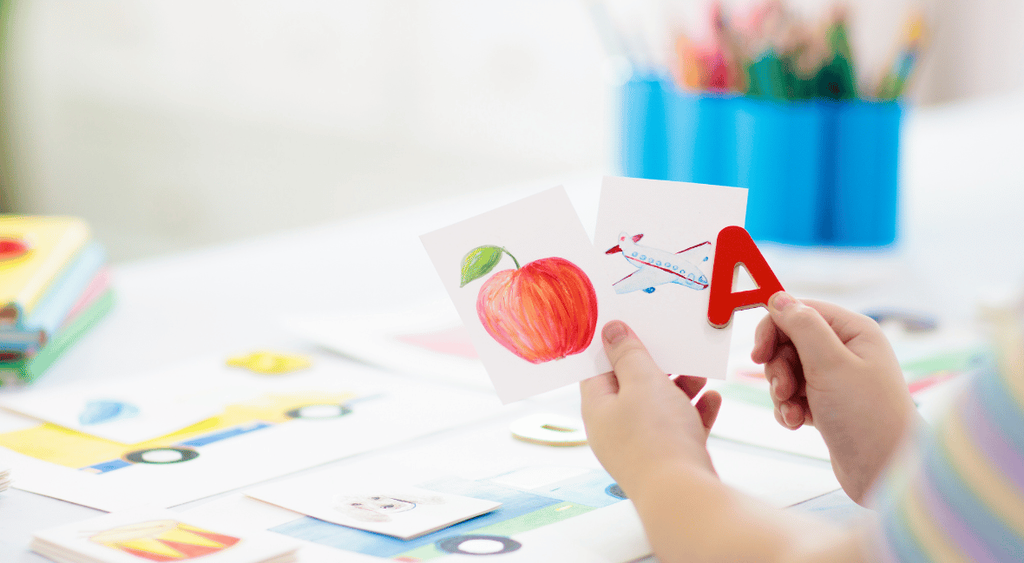
Match written words such as apple, apron, ant, and airplane with real objects or pictures. Whenever possible, use objects kids can hold, explore, or interact with.
Kids who aren’t ready to read the words independently can compare beginning sounds and use the objects or pictures for clues.
• Make Silly Sentences
Choose two or three words and use them in the same sentence. For example:
- An alligator ate an apple.
- An ant went on an adventure.
- The astronaut was asleep.
- My aunt wore an apron.
Silly sentences give kids a reason to read the words more than once, and they’re much more engaging than simply reciting a list. It can be fun to then illustrate the sentences.
Final Thoughts on A Words for Kids
The goal isn’t for kids to memorize one enormous list of A words. It’s to help them recognize useful words, connect letters with sounds, and understand the vocabulary they encounter while reading.
Start with common words such as a, and, at, all, and after. Then add concrete words kids can easily picture, such as apple, ant, arm, and airplane. As their confidence grows, introduce longer words they already know from everyday conversation.
The more kids see, hear, say, and use these words in meaningful ways, the easier they’ll be to recognize when they appear in a book.
Check out these additional letter lists:

No Comments