
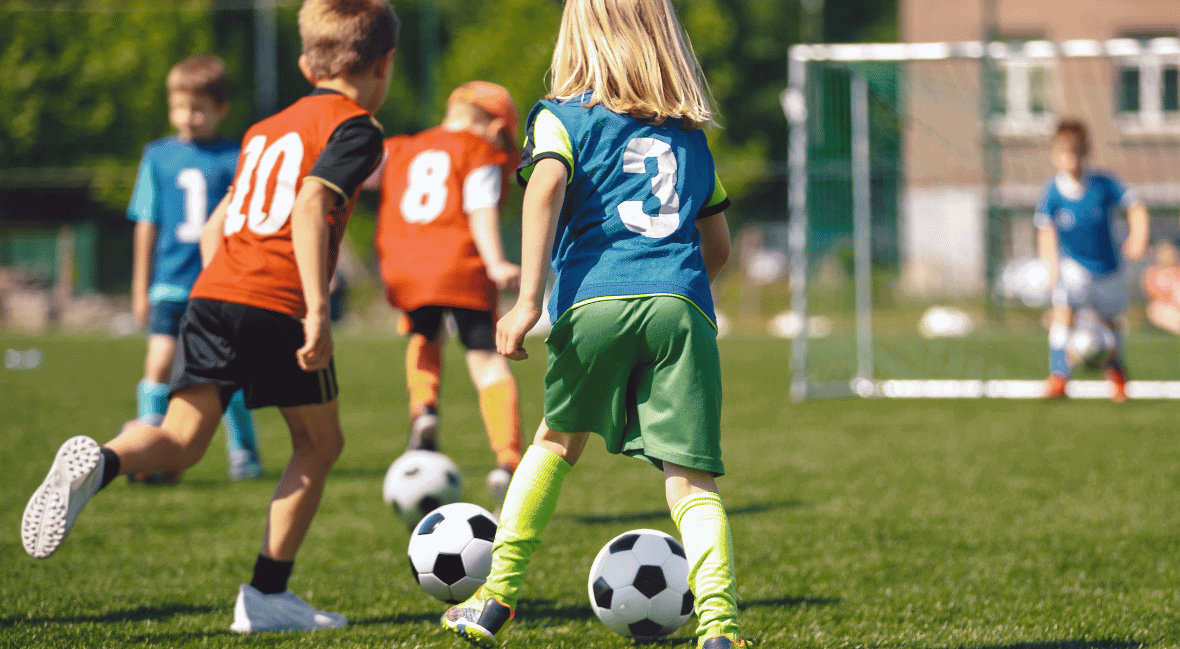
On Monday, it’s soccer. Tuesday is dance. Wednesday is piano. Thursday is swimming.
Friday is finally free, until someone remembers the tournament starts at 8 a.m. Saturday.
Somewhere along the way, what started as one activity became three. Then four. The calendar filled up one season at a time, and suddenly your family’s evenings feel like a relay race of backpacks, water bottles, quick dinners, and rushing out the door.
If this sounds familiar, you’re far from alone. Many parents quietly wonder the same thing:
• How many activities should kids have?
It’s an understandable question, but it isn’t always the most helpful one. The better question might be:
• How many activities can your child and your family enjoy without feeling constantly overwhelmed?
Because every child is different. Every family is different. What works beautifully for one household may leave another feeling exhausted.
Finding the right balance isn’t about chasing a magic number. It’s about paying attention to whether your family’s life still feels sustainable.

Activities Are Wonderful. That’s Why This Is So Hard.
Let’s start with something important: activities are good for children.
Sports build confidence and teamwork. Music teaches discipline and creativity. Dance encourages expression. Theater develops communication skills. Scouts foster independence. Art builds imagination.
Research has consistently shown that participation in extracurricular activities can support children’s social development, confidence, and emotional well-being when those activities remain enjoyable and age-appropriate.
These experiences often become some of childhood’s happiest memories.
Parents don’t sign their children up because they want fuller calendars. They do it because they want fuller lives. They want their children to discover what they love. They want them to make friends. They want them to learn resilience after a tough loss and confidence after mastering something difficult.
Those are beautiful goals. The challenge is that every activity comes with commitments that extend far beyond the hour listed on the schedule.
- Registration
- Uniforms
- Equipment
- Transportation
- Practice reminders
- Team communication
- Snacks
- Carpool coordination
- Weather changes
- Last-minute schedule updates
- Finding someone to watch younger siblings
- Making dinner fit around practice instead of the other way around
None of those things are necessarily bad. But together, they add up. Over time, it’s rarely one activity that overwhelms a family. It’s the accumulation of everything surrounding those activities.
There Isn’t a Perfect Number of Activities
Rather than recommending a universal number of activities, pediatric experts generally encourage families to consider each child’s developmental stage, stress level, sleep, and overall well-being when deciding how much is enough.
One child may happily thrive with four activities. Another may feel overwhelmed by two.
One family may have grandparents nearby who happily help with transportation. Another may be balancing multiple jobs, long commutes, and three children with different schedules.
That’s why experts generally encourage parents to avoid comparing calendars. A child isn’t more successful because they’re busier.
Likewise, a quieter schedule doesn’t mean a child is missing out. The healthiest family schedule is one that leaves room for both growth and recovery.
Children need opportunities to learn new skills. They also need opportunities to simply be children.

Why Families Often Miss the Early Warning Signs
Overscheduling rarely happens all at once. It happens gradually.
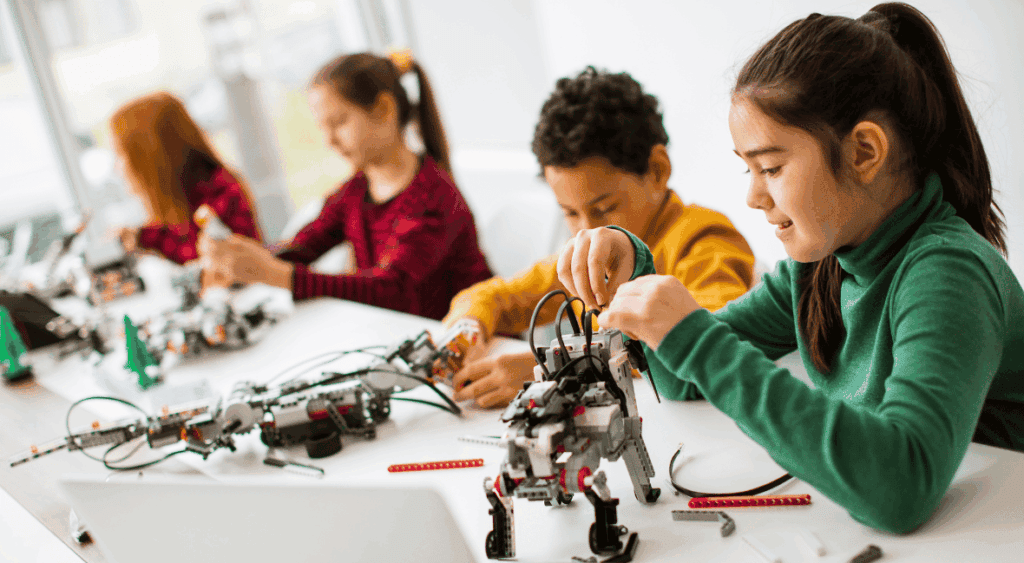
Maybe soccer goes well, so basketball sounds like a good idea. Then your child wants to try piano because a friend is taking lessons. School offers robotics club. Someone mentions summer swim.
Before long, every decision that made sense on its own has cumulatively become too much. The problem isn’t one activity. It’s that no one ever pauses to look at the entire picture.
Parents often become so focused on helping their children enjoy each opportunity that they don’t realize what those opportunities collectively require.
Eventually the family reaches a point where life feels less joyful than it used to. And not because anyone is doing something wrong. Simply because the pace has quietly changed.
7 Signs Your Family May Have Too Many Activities
There’s no universal rule, but there are patterns many parents recognize once they know what to look for.
1. Every Afternoon Feels Like A Race
School ends. Someone changes clothes in the car. Dinner happens in a container. Another child needs to be dropped somewhere else. You arrive five minutes late.
Repeat tomorrow.
Occasional busy days are part of life. Feeling like every afternoon is an emergency isn’t.
When families are constantly rushing, stress becomes the default. Children notice that, even if nobody talks about it.
2. Free Time Disappears Completely
Children don’t always need another structured opportunity. Sometimes they need an afternoon where nothing is planned.
Time to ride bikes, build forts, read, and create imaginary games.
Time to play outside until dinner. Outdoor play offers children opportunities to move, explore, solve problems, and build confidence in ways structured environments often can’t.
Even opportunities for independent play help children practice confidence, creativity, and problem-solving on their own.
Many of those moments happen during child-led play, when children have the freedom to make decisions, solve problems, and create their own adventures.
Free play isn’t wasted time.
Researchers have long found that child-directed play helps develop creativity, executive functioning, emotional regulation, problem-solving, and social skills in ways structured activities alone cannot. It’s where children learn independence, creativity, and problem-solving without adults directing every minute.
When every open space on the calendar disappears, children lose something important that no organized activity can fully replace.
3. Your Child Starts Resisting Activities They Once Loved
Parents sometimes assume this means their child has lost interest. Sometimes that’s true.
But sometimes children still love soccer. Or gymnastics. Or baseball.
They’re simply tired. Not tired of the activity. Tired of always being somewhere. Tired of always transitioning. Tired of constantly being “on.”
The activity hasn’t changed. Their capacity has. That’s an important distinction.
4. Everyone Seems More Irritable
Small problems suddenly feel much bigger.
Someone forgot shin guards, traffic is heavier than expected, practice runs late, and dinner gets delayed.
None of those situations are major on their own. But when everyone is already mentally stretched, even small inconveniences feel enormous. Sometimes what looks like impatience is actually exhaustion.
5. You Spend More Time Managing the Activity Than Your Child Spends Doing It
This is the sign many parents don’t recognize until someone else puts it into words.
The soccer practice lasts an hour.
But before that hour, you’ve packed the bag, washed the uniform, checked the weather, filled the water bottle, coordinated pickup, left work on time, made dinner fit around practice, and answered three messages in the team chat.
After practice, there’s equipment to unpack, laundry to start, schedules to update, and tomorrow’s plan to think about.
Your child remembers scoring a goal. You remember everything it took to get them there.
That’s not a complaint. It’s simply the reality many families experience.
Parents often carry an invisible layer of work that children rarely see. They coordinate transportation, remember equipment, adjust schedules, communicate with coaches, and keep everything moving behind the scenes. Most of that work is invisible, but it still requires time and mental energy.
But if you consistently feel like you’re spending more energy managing the activity than your child spends participating in it, it may be worth asking whether your family’s current pace is still working.
Children experience the activity. Parents experience everything surrounding it.
6. Family Time Begins to Feel Like Logistics
One of the quiet costs of an overfilled calendar is that families can begin spending more time coordinating than connecting.
Conversations become:
- “Who’s picking up?”
- “Did you grab the cleats?”
- “Practice starts at six.”
- “Don’t forget snacks.”
Those conversations are necessary. But if they become the majority of your interactions, it’s easy to lose the moments that matter just as much.
Moments like talking over dinner, playing a board game, taking an evening walk, or watching a movie together without checking the clock.
Children remember those moments too.A healthy family rhythm leaves space for both organized activities and ordinary life.
7. You’re Wondering Whether It’s Still Worth It
Many parents hesitate to ask themselves this question because it feels uncomfortable.If you’ve invested time, money, and energy into an activity, questioning it can feel like you’re letting your child down.
But asking whether something is still serving your family isn’t giving up. It’s being intentional.
Sometimes the answer is absolutely yes. Your child is thriving. They’re excited to go. The schedule works. Wonderful!
Sometimes the answer is more complicated. The activity itself is still valuable, but the overall load has become too much.
Recognizing that doesn’t mean the activity failed. It means your family has changed. And that’s okay.
A Better Question Than “How Many Activities Should Kids Have?”
There isn’t one number that’s right for every child.
Families who are unsure where they stand can use a simple activity balance check to look at the full schedule, including free time, energy, evening commitments, weekend travel, and whether the family’s current rhythm feels sustainable.
Instead of counting activities, try asking questions like these at the beginning and end of every season.
• Is my child still excited?
Not every practice has to be perfect.
But does your child generally look forward to participating?
• Does our family still have margin?
Margin is the space between commitments.
It’s having an evening with nowhere to be. It’s being able to say yes to an impromptu bike ride. It’s not feeling panicked every time traffic slows down.
Margin is where families recover.
Recovery matters just as much as activity. Children and adults benefit from having time between commitments to rest, reconnect, and simply enjoy being together.
• Are we protecting free play?
Children don’t only grow during structured activities. They also develop important life skills through open-ended play, where imagination and curiosity guide the experience rather than adult instruction.
The American Academy of Pediatrics describes play as essential, not optional, for healthy brain development, emotional wellbeing, and lifelong learning. That free play supports creativity, confidence, problem-solving, social development, and emotional regulation.
Some of childhood’s most meaningful experiences happen when children invent their own games, build forts, climb trees, draw, imagine, and explore without adults directing every minute.
Those moments deserve a place on the calendar too, even if they never appear on one.
• Is everyone benefiting?
Sometimes one child’s schedule quietly reshapes life for everyone else.
Siblings spend evenings in gym bleachers. Parents rarely eat dinner together. Weekends disappear into tournaments.
Again, none of this automatically means something is wrong. It simply means it’s worth considering the experience of the entire family, not only the participant.
Healthy decisions consider everyone.

Give Yourself Permission to Adjust
One of the hardest parts of modern
If your child stops taking piano, will they regret it? If they skip a season of soccer, are they falling behind? If they don’t try every club at school, are they missing out?
Those questions can make every decision feel enormous. The truth is that childhood isn’t built on one season. It’s built on thousands of experiences over many years.
Children benefit from trying new things. They also benefit from learning that it’s okay to slow down, reassess, and make choices that fit the season of life they’re in.
Sometimes continuing is the right decision. Sometimes reducing commitments creates room for healthier family rhythms. Sometimes pausing allows a child to rediscover why they loved an activity in the first place.
Flexibility isn’t inconsistency. It’s responsiveness.
Childhood Doesn’t Need to Be Optimized
Modern parents care deeply. That’s a wonderful thing. But caring deeply can sometimes turn into feeling responsible for maximizing every opportunity.
More activities, experiences, enrichment, memories, everything.
The irony is that children rarely remember how full the calendar was. They remember whether childhood felt fun, connected, and unhurried.
They remember how life felt. Did they laugh? Did they have time to play? Did they feel supported? Did they enjoy being together as a family? Those are the memories that last.
Activities can absolutely be part of that story. They just shouldn’t become the whole story.
Final Thoughts
If you’ve been wondering how many activities your child should have, give yourself permission to stop searching for the perfect number.
Instead, pay attention to your family. Notice how your child feels. Notice how you feel. Notice whether your home feels connected or constantly hurried.
The goal isn’t to raise the busiest child. It’s to raise a happy, healthy one.
Experts consistently agree that long-term participation is more valuable than maximizing participation in any single season. Helping children enjoy movement over many years is generally healthier than trying to fit every opportunity into one stage of childhood.
And sometimes the healthiest decision isn’t adding another activity.
Sometimes it’s protecting the time, energy, and relationships that allow your family to enjoy the activities you already love.
Sources
American Academy of Pediatrics. Participating in Organized Sports. HealthyChildren.org.
American Academy of Pediatrics. Making the Most of After-School Activities. HealthyChildren.org.
Yogman M, Garner A, Hutchinson J, Hirsh-Pasek K, Golinkoff RM; American Academy of Pediatrics. The Power of Play: A Pediatric Role in Enhancing Development in Young Children. Pediatrics. 2018;142(3):e20182058.
U.S. Centers for Disease Control and Prevention. Child Activity: An Overview | Physical Activity Basics.
https://www.cdc.gov/physical-activity-basics/guidelines/children.html
Aspen Institute Project Play. State of Play Reports & Research.




No Comments