
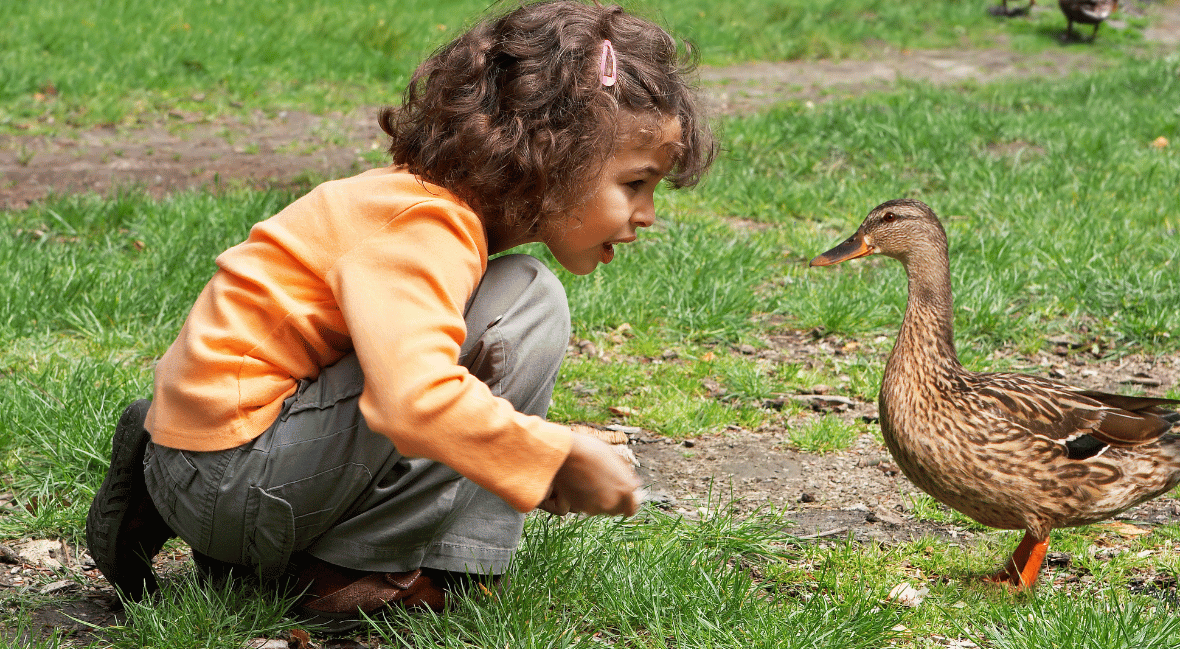
I know, I know this isn’t going to look like your typical list with cute crafts and tons of printables. Buuuuut the best bird activities for preschoolers give kids opportunities to experience actual birds!
Preschoolers learn through firsthand experiences—watching, listening, moving, exploring, and asking questions about what’s happening around them.
A worksheet about birds can’t compare to watching a robin pull a worm from the ground or hearing a woodpecker tapping on a tree. Even a cute bird craft is still an abstract representation of a bird. Kids may have fun making it, but that doesn’t necessarily help them understand how birds move, what they eat, where they live, or how they behave.
- Check out these fun, hands-on bug activities for preschoolers!
If we want preschoolers to learn about birds, we need to help them spend time around real birds. Books, videos, audio recordings, and technology can support these experiences, but observation should remain at the center of their learning.
Why Hands-On Bird Experiences Matter
Preschoolers learn best when they can connect new information to something they’ve actually experienced.
A kid who has watched a duck dive underwater can better understand a book about how ducks find food. A kid who has heard an owl hooting outside will be much more interested in listening to recordings of different owl calls.
These experiences naturally encourage kids to ask questions:
- Why is that bird pecking the ground?
- Where did it fly?
- What is it carrying?
- Why are those birds chasing each other?
- Where do birds sleep?
- Why does that bird have such a long beak?
You don’t need to turn every question into a lesson. Wondering, observing, and forming their own ideas are all important parts of learning.
We get commissions for purchases made through links in this post. As an Amazon Associate, we earn from qualifying purchases.
29 Bird Activities for Preschoolers
1. Watch Birds Closely
Watching birds may seem obvious, but I can’t tell you how many times I’ve seen preschool bird units limited to worksheets and laminated printables. Head outside and see what real birds are actually doing!
Take time to observe birds:
- gathering nesting materials
- searching for food
- taking off and landing
- preening their feathers
- hopping through the grass
- after a rainstorm
Slow down and let kids decide what catches their attention. You might find a nest high in a tree, see a bird carrying a twig, or watch a robin pull a worm from the soil. Kids may notice that some birds hop while others walk or that one bird flaps rapidly while another seems to glide.
You don’t need to know the names of all the birds or explain everything that’s happening. Wonder together about what the birds are carrying, eating, or doing. Always observe active nests from a distance so the parent birds feel safe returning.
You can then research any questions kids had while observing birds.
2. Watch Birds From a Window
You don’t have to visit a nature preserve to observe birds. A window overlooking a yard, tree, sidewalk, courtyard, or parking lot may provide plenty of opportunities.
Let kids stop and watch whenever they notice bird activity. Repeated observations from the same place can help preschoolers notice changes over time.
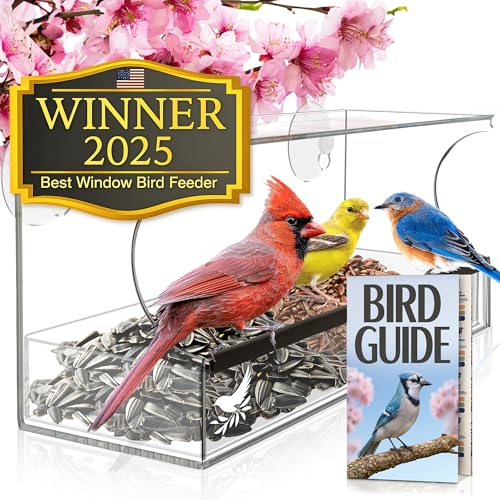
Place a small chair, cushion, or pair of kid-friendly binoculars near the window. It can be fun to have a clear bird feeder on the window. A feeder like this gives kids a great view of any birds that visit.
3. Put Out Food for the Birds
A bird feeder brings bird activity to a place where preschoolers can watch it closely. Kids can help scoop seed, refill the feeder, and check whether any birds have visited.
Try offering different kinds of appropriate bird food in hanging feeders, platform feeders, suet feeders, or safe areas on the ground. Preschoolers may notice that different birds prefer different foods or feeding locations. Some birds may perch at a feeder while others scratch through leaves or peck at seeds on the ground.
Clean feeders regularly and replace wet or moldy food to help keep visiting birds healthy.
4. Make Pinecone and Peanut Butter Bird Feeders
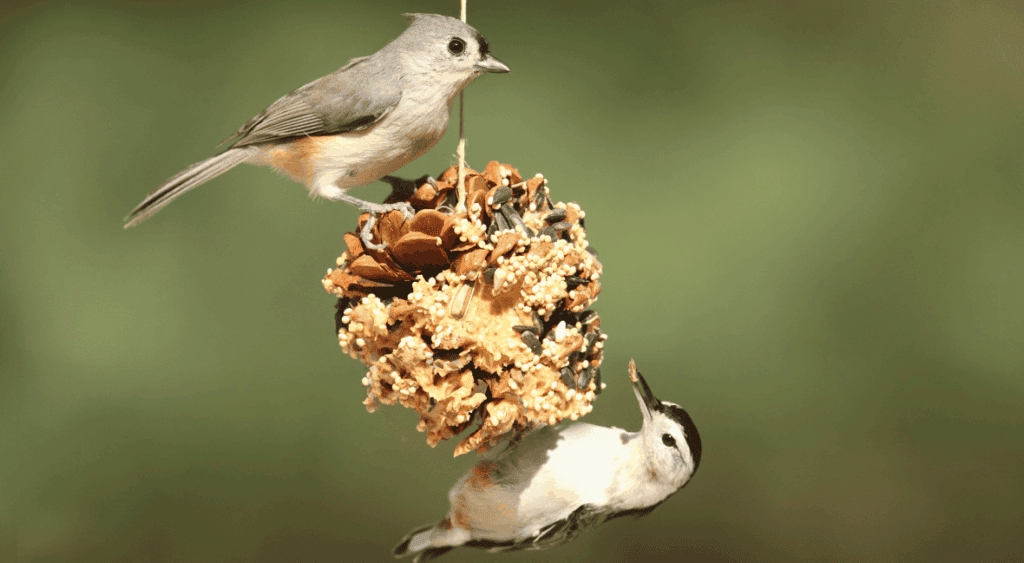
Making pinecone bird feeders is a simple hands-on experience that directly connects kids with the birds they’re learning about.
What you need:
- pine cones or toilet paper tubes
- string
- peanut butter
- bird seed
Let kids spread peanut butter or a suitable alternative onto pinecones and roll them in birdseed.
Hang the feeders outside where kids can see them from a window or outdoor play area. The most important part of this experience isn’t making the feeder; it’s returning to watch how birds interact with it.
Be mindful of peanut allergies and use a safe alternative when needed.
5. Add a Birdbath
A shallow birdbath gives preschoolers a chance to see birds drinking, splashing, fluffing their feathers, and shaking off water.
Kids can help refill the birdbath with clean water and scrub it regularly. Add a few stones if the basin is deep so smaller birds have secure, shallow places to stand. Then step back and give the birds time to feel comfortable visiting.
6. Build or Put Up a Birdhouse
Build a simple birdhouse together or purchase one that’s appropriate for birds in your area. Although an adult will likely need to handle much of the building and installation, kids can help hold materials, choose an appropriate location, and check the birdhouse for activity.
If you have the funds, consider adding a birdhouse camera or purchasing a birdhouse with a built-in camera. It’s incredibly exciting for kids to watch birds build a nest, lay eggs, and care for their babies inside their own birdhouse.
Keep viewing child-led and observational rather than turning every update into a formal lesson.
7. Visit a Pond to Watch Ducks and Geese
Ponds are wonderful places to observe birds because ducks, geese, and other waterbirds are often large, visible, and active.
Watch them paddle, dive, tip forward, preen their feathers, climb onto land, or take off from the water. Give kids plenty of time to follow whatever interests them most.
Avoid feeding birds bread. It’s usually best to observe them eating the food naturally available in their environment.
8. Listen to Bird Sounds
Sometimes you’ll hear a bird long before you see it. Sitting quietly outdoors and listening is a relaxing and simple bird activity for preschoolers. You might hear chirping, singing, squawking, tapping, rustling, or wings flapping overhead.
Try listening at different times of day. A morning walk may be filled with birdsong, while the afternoon may be quieter. In the evening, kids may hear completely different calls.
You can also listen to recordings of birds you’ve already encountered.
If you frequently notice crows nearby, listen to several crow sounds. If you heard an owl at night, find recordings of local owls and compare them. Recordings are most meaningful when kids can connect them to real experiences.
9. Introduce Kids to the Merlin Bird ID App
There’s a time and place for technology, and this is it! Introduce preschoolers to the Merlin Bird ID app and show them how it can help you learn more about the birds you hear and see.
Take the app outside and let kids take turns using it with you. Then see if you can find the bird making the sound. Kids love seeing what birds may be nearby, especially when the technology is connected to something happening in the real world.
The app shouldn’t replace watching and listening. Instead, it can help kids and adults pay closer attention to birds they may have otherwise overlooked.
10. Use Binoculars
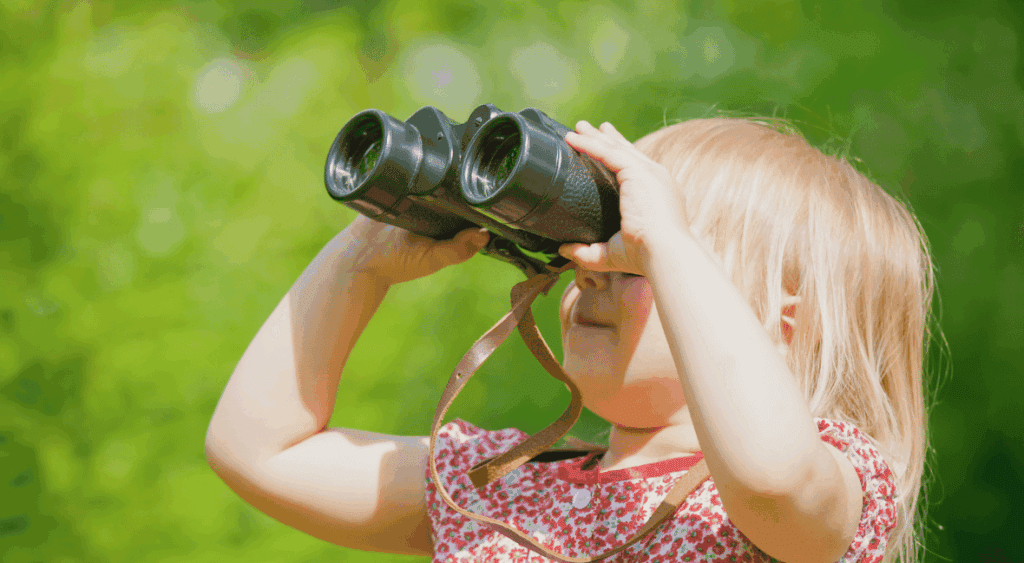
Real, kid-friendly binoculars can help preschoolers see birds without getting too close. Kids may need time to figure out how to hold the binoculars, look through them, and locate a moving bird.
Let using the binoculars be part of the exploration. They don’t need to become proficient bird-watchers immediately. Looking at trees, squirrels, clouds, and faraway objects is all useful practice.
- Check out all the best adventure toys for kids!
11. Observe a Live Nest Camera
A live nest camera or a live camera trained on bird feeders can offer a view that wouldn’t be safe or responsible to get in person. Kids may see birds building a nest, laying eggs, feeding hatchlings, or caring for fledglings.
Watch for short periods and return regularly to see what has changed. Live footage is especially engaging because kids know the birds are doing those things right now.
12. Compare the Sizes of Different Bird Eggs
Bird eggs come in an incredible range of sizes, but that can be difficult for preschoolers to understand from numbers or photographs alone.
I made pretend eggs in various sizes from air-dry clay and paired them with laminated photos of the birds that lay them. Kids love holding the eggs and seeing how tiny some of them are compared with the eggs of larger birds.
This gives kids something concrete to see and feel. Instead of merely being told that a hummingbird egg is tiny, they can hold a model of one and compare it with larger eggs.
Make sure the clay eggs are large enough not to present a choking hazard, or provide close supervision when using smaller models.
13. Compare How Different Birds Move
Spend time watching how different birds get around. Some birds hop through the grass, while others walk, waddle, climb tree trunks, paddle across the water, dive, soar, or rapidly flap their wings.
Videos can be especially helpful for making comparisons and seeing birds up close. Kids can watch a duck paddle, a woodpecker climb, a penguin waddle, and an eagle soar, even if those birds aren’t easy to observe where you live.
Slow-motion videos can also reveal movements that happen too quickly to see clearly in real life.
14. Move Like Different Birds
Turn your bird observations into a fun movement activity! Invite kids to waddle like penguins, hop like robins, soar like eagles, flap quickly like hummingbirds, balance like flamingos, swim like ducks, or peck like woodpeckers.
Start by watching real birds outside or looking at short videos so the movements are connected to how birds actually behave. Then give kids plenty of room to experiment with their own interpretations.
This is a playful way to explore bird behavior while building balance, coordination, body awareness, and gross motor skills.
15. Collect and Examine Abandoned Bird Nests
Over the years, I’ve collected several abandoned bird nests that I’ve found on the ground. Kids love seeing them up close and discovering how different they can be. They can look at the twigs, grass, moss, mud, hair, and other materials birds carefully wove together.
Only collect nests you’re certain are abandoned, and never remove an active nest or disturb nesting birds. Be aware that laws may prohibit possessing nests from many native bird species, so check the rules where you live.
If you can’t legally collect one, observe it where you found it or take close-up photos for kids to revisit.
16. Look for Feathers
Keep an eye out for naturally shed feathers during walks. Observe their colors, patterns, shape, and size without turning the experience into a directed project.
Because feathers can carry germs, it’s safest to look without handling them or, at the very least, be diligent with hand washing afterward!
In the United States, keeping feathers from many native wild birds is also prohibited. A photograph allows kids to revisit an interesting feather without taking it home.
17. Look for Other Signs of Birds
Even when birds aren’t visible, they leave clues behind.
Preschoolers may find:
- Tracks in mud or snow
- Holes made by woodpeckers
- Cracked seeds
- Dropped nesting materials
- Feathers
- Bird droppings
Let kids investigate these clues and wonder about what may have happened.
Mud, sand, and snow can preserve bird footprints. Follow the tracks to see where the bird walked, stopped, or changed direction. Kids may notice webbed feet near the water or tiny three-toed prints beneath a feeder. Tracks provide a visible record of an animal’s movement, even after the bird has flown away.
It can be fun to get a kid-friendly camera so kids can take photos of what they discover.

18. Observe Seasonal Changes in Bird Activity
Return to the same outdoor space throughout the year. Kids may notice that certain birds disappear, new birds arrive, songs change, or flocks become larger.
You don’t need to begin with an abstract explanation of migration. Let kids first experience the changes themselves. Their observations provide a concrete foundation for learning more later.
19. Watch a Flock of Birds
A flock offers all kinds of interesting movement to observe. Preschoolers may see birds turn together in the sky, gather on a wire, follow one another across the water, or call back and forth.
Pause and watch until the flock leaves or the kids are ready to move on. These spontaneous moments are often more memorable than planned activities.
20. Visit a Bird Sanctuary or Wildlife Refuge
If at all possible, take a class field trip! A bird sanctuary, wetland center, or wildlife refuge can provide opportunities to see birds that don’t commonly visit neighborhoods.
Keep the visit relaxed. Preschoolers don’t need to walk every trail, identify every species, or listen to a long presentation. One close look at a heron fishing or a bald eagle may be plenty.
Meet a Bird With A Wildlife Educator
Plan your visit around an educational program if possible, or schedule a private experience if one is offered.
Seeing an owl, hawk, parrot, or other bird up close can be incredibly memorable. A knowledgeable handler can also help kids observe features that would be difficult to see safely in the wild.
Choose programs that prioritize the bird’s well-being and allow kids to observe calmly rather than touch or handle the animal.
21. Visit an Aviary
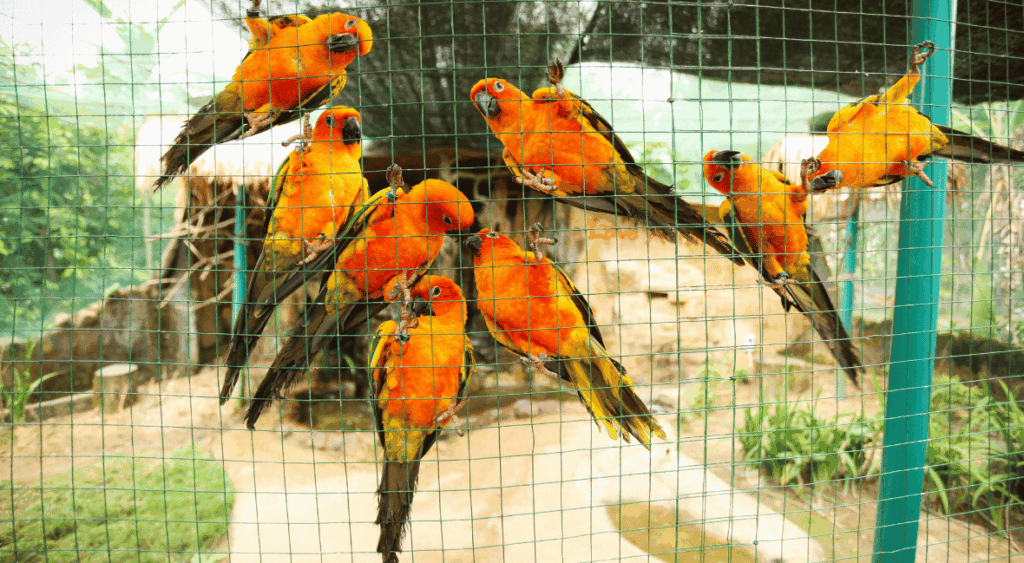
An aviary offers a different experience from a wildlife refuge. At a refuge, kids observe native birds. An aviary may house birds from many parts of the world, including tropical or non-native species kids wouldn’t encounter locally.
Kids can usually see the birds much closer and may even walk through an enclosure where birds fly and perch nearby. This gives preschoolers a chance to notice details such as beak shapes, colorful feathers, feet gripping branches, and the ways different birds move.
Simply observing real birds up close can be an incredibly memorable learning experience.
22. Watch Short Videos of Bird Behavior
Videos can help preschoolers see experiences that aren’t available locally, such as a hummingbird feeding in slow motion, a penguin swimming underwater, or a bird hatching from an egg.
Keep videos short and connect them to kids’ real experiences whenever possible. After watching neighborhood birds search for food, for example, you might watch a brief video showing how a woodpecker or pelican finds food.
23. Read Books About Birds
Books can extend kids’ real-life discoveries. Look for books with clear photographs, realistic illustrations, engaging stories, and information that connects to what kids have observed.
Place bird books near a window, beside the binoculars, or somewhere kids can revisit them independently. A kid who has just watched a bird at the feeder may be eager to find a similar bird in a book.
24. Use a Simple Bird Field Guide
Keep an illustrated field guide of your area available without making identification the goal of every bird encounter. Preschoolers may enjoy flipping through the pages and looking for a bird that resembles one they saw.
It’s okay if you can’t identify it. You might narrow it down together based on its color, size, beak, or location. Looking closely matters more than finding the correct name.
25. Help Care for Backyard Birds
Preschoolers can participate in meaningful, real-life care by helping refill a feeder, rinse a birdbath, or check that the water hasn’t frozen.
These are genuine contributions rather than pretend tasks created for a lesson. Kids can see that their actions affect the space and the animals that visit it.
26. Make Your Outdoor Space Friendlier to Birds
Planting native trees, shrubs, flowers, and grasses can provide birds with food, cover, and nesting places. Kids can help water plants, spread seeds, dig in appropriate areas, and watch to see whether birds visit.
This isn’t a quick activity with a finished product. It’s an ongoing experience that allows preschoolers to see how a living environment changes over time.
27. Hold and Observe Pet or Domesticated Birds
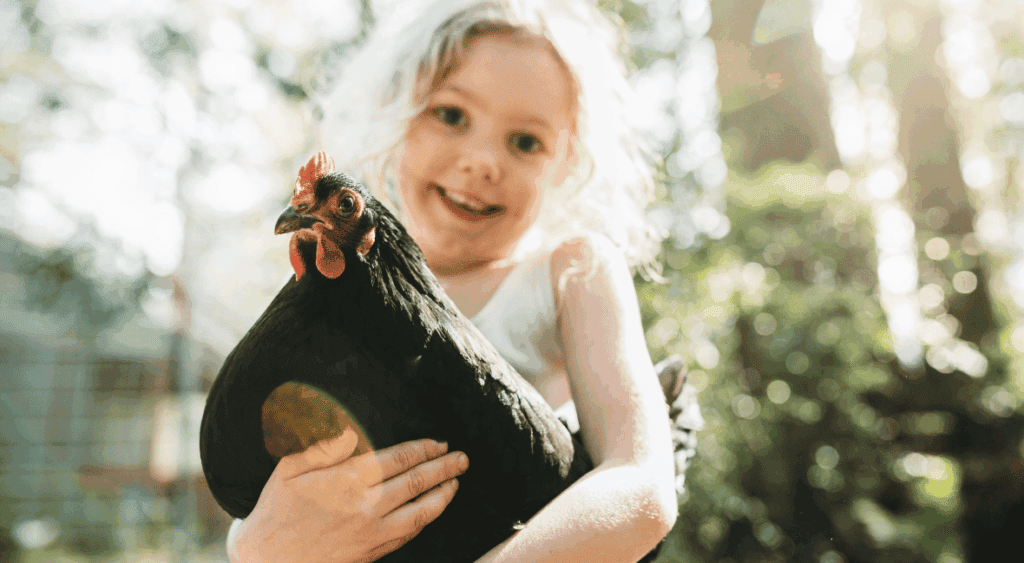
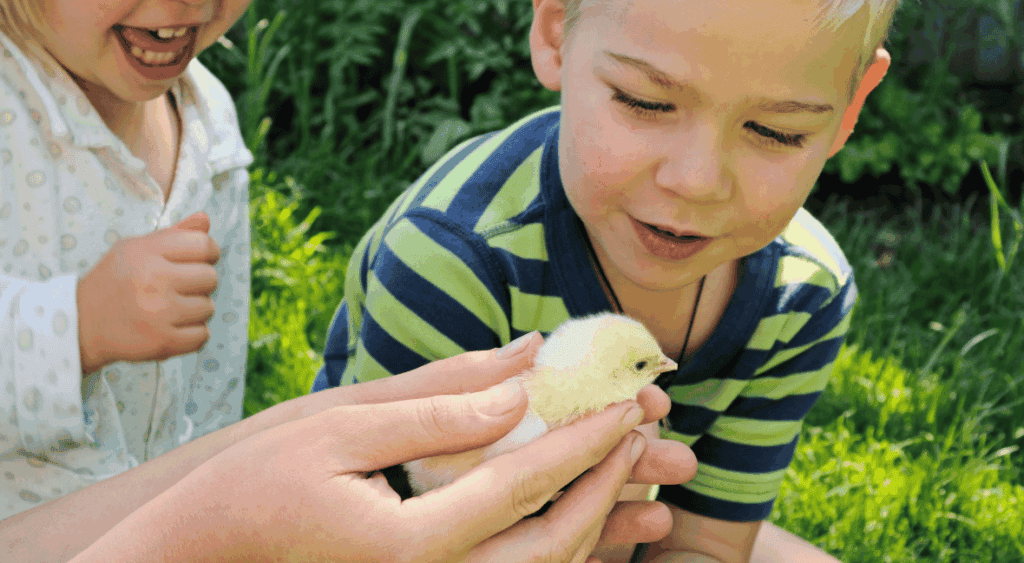
If you have access to a calm pet or domesticated bird, let kids observe it up close and gently hold or pet it when appropriate. Parakeets, chickens, ducks, and other accustomed birds can help kids notice feathers, feet, beaks, movements, and sounds in a way they can’t from a distance.
Always have an experienced adult supervise, show kids how to use gentle hands, and respect the bird’s signals when it needs space.
28. Hatch Baby Chicks
Hatching baby chicks lets preschoolers observe the process from egg to chick! This is the perfect hands-on way to explore the life cycle of a chicken.
Some farms rent families and classrooms an incubator, fertilized eggs, and all the necessary equipment, then take the chicks back afterward, perfect if you’re not looking to have chickens permanently.
You can generally find a participating farm near you by searching online for “rent a chick kit.” Kids can help check the incubator, listen for peeping, watch the eggs hatch, and observe how quickly the chicks change during their first days.
29. Spend Plenty of Unplanned Time Outside
Many of the bird activities for preschoolers on this list come back to this: spending as much time outside as possible! One of the simplest ways to help preschoolers learn about birds is to give them lots of time outdoors without filling every minute with activities.
When kids aren’t being rushed from one adult-planned task to another, they have time to notice the sparrow hopping under a bench, the raven calling from a rooftop, or the tiny bird disappearing into a bush.
Bird learning doesn’t always need to look like a lesson. Often, it begins with a kid stopping in the middle of play and saying, “Look!”
Final Thoughts on Bird Activities for Preschoolers
The most meaningful bird activities for preschoolers aren’t worksheets, decorative crafts, or heavily adult-directed projects. They’re real experiences with living birds.
Go outside, listen, watch, and return to the same places! Put out food and water. Install a birdhouse. Visit ponds, parks, wildlife refuges, and aviaries. Use books, bird-call recordings, live cameras, short videos, and helpful technology to deepen the experiences kids are already having.
Preschoolers don’t need to memorize bird names or repeat facts to learn. They need time to notice birds, become curious about them, and develop their own relationship with the natural world.
No Comments