
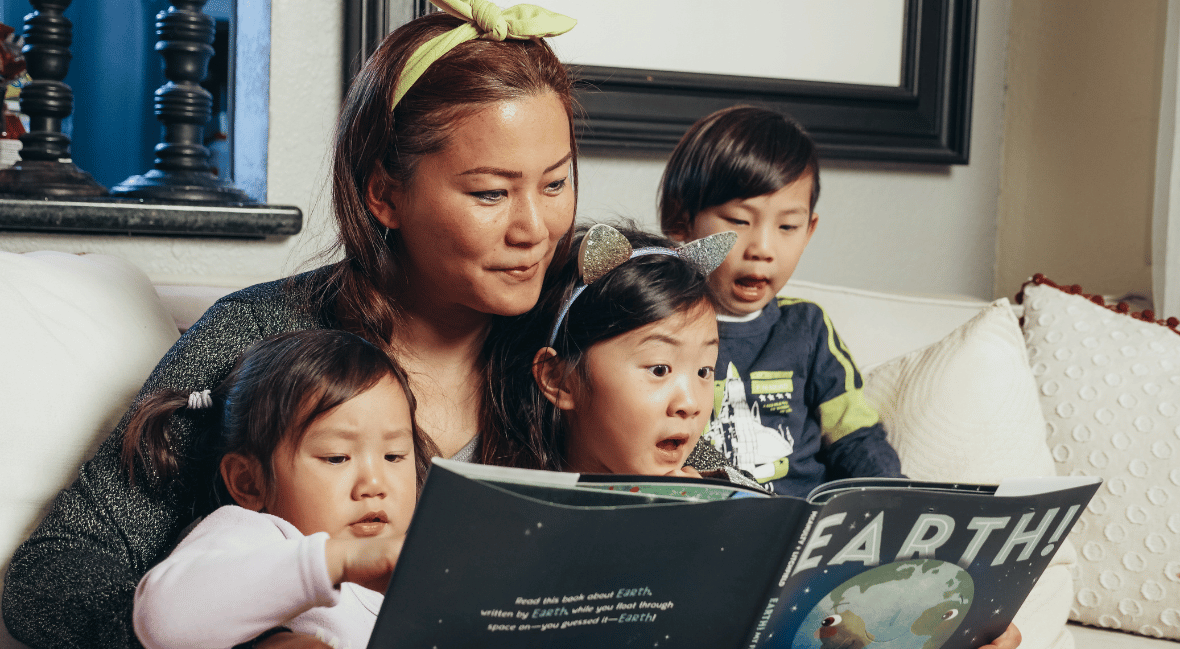
There’s something so magical about space books for kids. Stars, planets, moons, comets, astronauts, black holes — astronomy is one of those topics that naturally pulls kids in because it is so big and mysterious.
I love picture books for introducing astronomy because they don’t have to turn into a full science lesson. Sometimes the best thing a book can do is spark a question. Why does the moon change shape? How far away are the stars? What is Saturn made of? Could people live on Mars someday?
Whether you are putting together a space unit, following your child’s current obsession with planets, or just looking for a beautiful bedtime read, these picture books for kids about astronomy are a wonderful place to start.
I divided the books up by age so you can find the best fit for toddlers, preschoolers, early elementary kids, and older children ready for a little more information.
In this post:
- Picture Books About Astronomy for Toddlers
- Picture Books About Astronomy for Preschoolers
- Picture Books About Astronomy for Ages 5–8
- Picture Books About Astronomy for Ages 8–12
- How to Use Astronomy Picture Books with Kids
We get commissions for purchases made through links in this post. As an Amazon Associate, we earn from qualifying purchases.
Picture Books About Astronomy for Toddlers
For toddlers, I like astronomy books that are simple, colorful, and not too overloaded with facts.
At this age, the goal is mostly exposure: naming the moon, noticing stars, pointing to planets, and building wonder.
- Check out more of my favorite books for toddlers!

This is a great first astronomy book for toddlers. It introduces the planets in a simple, bright, baby-friendly way without getting too wordy. It is a board book, which makes it perfect for little hands, and it gives toddlers a first look at the solar system.
I love that it introduces lots of vocabulary, such as the solar system, astronauts, and planet names, while remaining simple and age-appropriate.

Here is another great nonfiction book in the Hello, World series!
This one is a nice pick if your toddler is interested in rockets, astronauts, or the moon. It keeps the moon landing simple and accessible, which makes it a good introduction for very young kids.

This is a fun, rhyming board book that introduces the planets in a playful way. It’s not meant to be a deep astronomy lesson, but it is great for building familiarity with planet names and the idea that each planet is a little different.
This is a good choice for kids who like books with rhythm and repetition.

ABCs of Space is a great astronomy board book because it is so easy to scale for different ages!
With younger kids, you can simply explore the illustrations and read the simple alphabet text, like “A is for asteroid” and “B is for binary star.” As kids get older, you can add the short one-sentence explanation for each term, and eventually read the two additional sentences for even more detail.
I love that it grows with kids instead of being a book they outgrow right away.
Picture Books About Astronomy for Preschoolers
Preschoolers are often fascinated by space because it feels both real and imaginative. They can look up and see the moon and stars, but they can also imagine blasting off in a rocket or walking on another planet.
For this age, I like a mix of factual books, beautiful books, and story-based books that leave room for wonder.

This is a really approachable space book, and I love the question-and-answer format!
In the book, a child asks their mom all the random things kids actually wonder about space, and then gets simple, clear answers.
The main text is easy to read, but each section also has an extra little detail blurb, so you can keep it simple or go a bit deeper depending on your child’s interest.

Here is a really fun choice for preschoolers, even though it does have a lot of words.
The lift-the-flap format makes it feel interactive and playful, so kids can explore rockets, planets, astronauts, and the solar system without needing to sit through every bit of text.
I like that you can keep it simple by just lifting flaps and talking about the pictures, or read more of the details as kids are ready.
- Detailed illustrations to help make concepts clear!
- A bit word-heavy for young preschoolers

Gail Gibbons books are classic nonfiction picture books, and The Moon Book is a helpful introduction to the moon, moon phases, eclipses, and moon exploration.
This one has more information than a toddler board book, but the great illustrations make it accessible to preschool and early elementary kids.
You can read the whole thing or just pause on the pages that interest your child.

This story is fiction, but I love it for kids who are interested in stars! It follows a child who wants to catch a star of his own, and it has that dreamy, playful feeling that works beautifully for preschoolers.
Not every astronomy book needs to be packed with facts. Sometimes a story that builds curiosity and affection for the night sky is just as valuable.

This is a funny and engaging book told from the moon’s point of view. It presents factual information about the moon in a playful voice, which makes it especially good for kids who like personality and humor in their nonfiction.
It is a great read-aloud for preschoolers and early elementary kids.

This companion book gives the sun a big personality while introducing kids to basic facts about our star. It’s funny, bright, and full of interesting information without feeling dry.
This is a great reminder that astronomy is not only about planets and rockets. The sun is a star, and it is one of the most important astronomy topics kids can begin to understand.
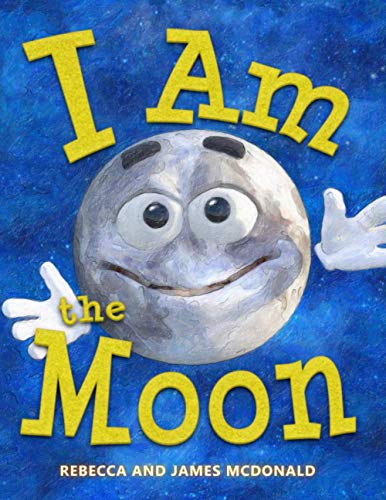
This nonfiction-style picture book introduces children to the moon in a gentle, easy-to-follow way. It may be a bit wordy for some young preschoolers, but you can always just read sections.
It’s especially nice to pair with real-life moon watching. Read the book, then go outside in the evening and see if you can find the moon together.
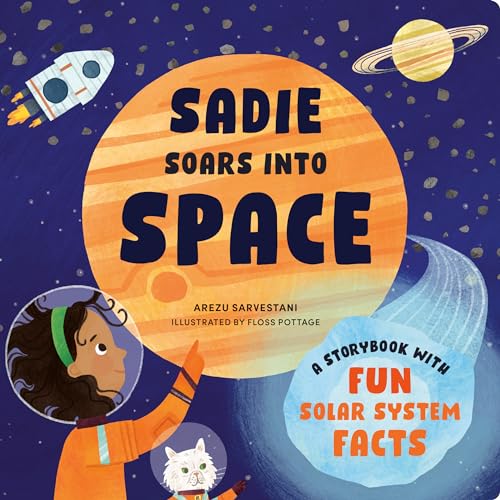
This picture book is a sweet, imaginative space story for younger kids!
It follows Sadie as she dreams big and heads off on a space adventure. It’s more story-based than fact-heavy, which makes it a nice balance to some of the more information-packed astronomy books.
Picture Books About Astronomy for Ages 5–8
Kids in this age range are often ready for more detailed information. They still benefit from picture books, but they can handle bigger ideas like gravity, galaxies, famous scientists, space exploration, and the scale of the universe.
These are great for kindergarten, first grade, second grade, and third grade readers — or as read-alouds for younger kids who love space.

This book is a really engaging space book for ages 5–8, especially because the illustrations are so fun to explore.
There is a lot happening on each page, which gives kids plenty to notice and talk about. It does have a good amount of text, but you do not have to read every bit on every page, so it still works well for younger kids who want to dip in and out.
- Beautifully written biography of Neil deGrasse Tyson!

This picture book introduces kids to Neil deGrasse Tyson and his childhood love of the stars. It is a wonderful choice for showing children that scientists often start out as curious kids asking big questions.
I love books that connect science to real people because they help kids see astronomy as something humans do, study, and wonder about.

Here’s another great picture book that connects science to real people!
This is a beautiful picture-book biography of Carl Sagan. It begins with his childhood curiosity and follows his love of the stars and the universe.
It’s a lovely pick for kids who ask big questions and like learning about real scientists. The book also does a good job showing that wonder is part of science.

This is a gorgeous, poetic book about the beginning of the universe and how everything (including us) is made from star stuff.
It’s not a straightforward “planets and facts” kind of astronomy book. It’s more lyrical and awe-filled, which makes it a beautiful read for kids who love big ideas, art, and wonder.
- Uncluttered illustrations and just the right amount of text!

This book is all about huge numbers, which makes it a fun crossover between math and astronomy. It introduces kids to the scale of the universe in a way that feels playful and mind-stretching. I absolutely love the illustration style!
It’s a great book for kids who like facts, numbers, and big questions like, “How many stars are there?”

Written by astronaut Chris Hadfield, this picture book tells the story of a child who is afraid of the dark but dreams of space. It is inspired by Hadfield’s own childhood and the Apollo moon landing.
I love that it has a bit more of a story than many of the books on this list.
It’s a great choice for kids who are interested in astronauts, space travel, or overcoming fears.

Gotta love a space book that features a woman!
This picture book is inspired by Mae Jemison, the first Black woman to travel into space. It’s more focused on dreaming big and becoming an astronaut than on astronomy facts, but it belongs on a space book list because it is inspiring and accessible.
It’s a wonderful book for reminding kids that curiosity, persistence, and imagination matter.
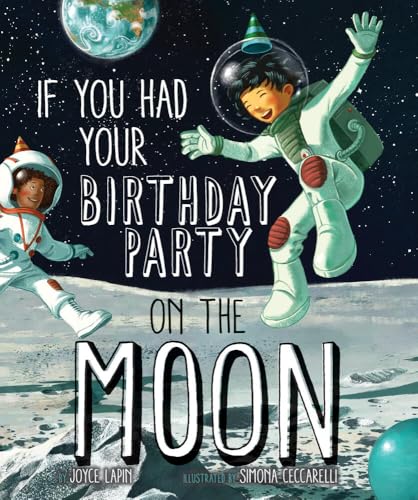
I love how this book makes astronomy relevant by tying birthday parties to facts about the moon! Instead of just listing facts, the book explains how different parts of a birthday would play out in space.
Books like this are great because they help kids understand astronomy through something they already know.

This is a beautiful picture book biography about Maria Mitchell, America’s first professional female astronomer. It tells the story of her discovery of a comet and her work as a scientist at a time when women had far fewer opportunities in science.
This is a wonderful astronomy book for kids who enjoy history, biography, and stories about determined observers of the natural world.

Here’s another great book featuring a female protagonist!
This picture book tells the true story of Venetia Burney, the girl who suggested the name Pluto. It’s a great pick for kids who love planets, space history, and stories about children making meaningful contributions.
It also opens the door to interesting conversations about Pluto, dwarf planets, and how scientific understanding changes over time.

This book takes readers upward through the layers of the sky and into space. It is visually engaging and packed with information, making it a good fit for older kids who like detailed illustrations and nonfiction.
It is especially fun for kids who want to understand how Earth connects to the wider universe.
- Bold illustrations, lots of great details about Mars missions!

This beautifully illustrated book tells the story of NASA’s Curiosity rover and its mission to Mars. It’s a great choice for kids who are interested in Mars, robots, engineering, and space exploration.
I like this one because it shows that astronomy and space science are not just about looking through telescopes. They also involve design, problem-solving, exploration, and technology.
Picture Books About Astronomy for Ages 8–12
Older kids can still get so much from picture books, especially when the books include richer language, deeper science, biographies, timelines, or more complex ideas.
These books are wonderful for independent reading, homeschool studies, classroom units, or family read-alouds.
- Biography of Edwin Hubble!

The Boy Whose Head Was Filled with Stars: A Life of Edwin Hubble is a really lovely picture book biography, and I actually like that it has a good amount of text. It makes it feel more like a real story than a quick overview, which is perfect for slightly older kids who are ready for a richer read.
The book does a beautiful job showing Hubble’s curiosity as a child and how his work changed what we know about the universe.
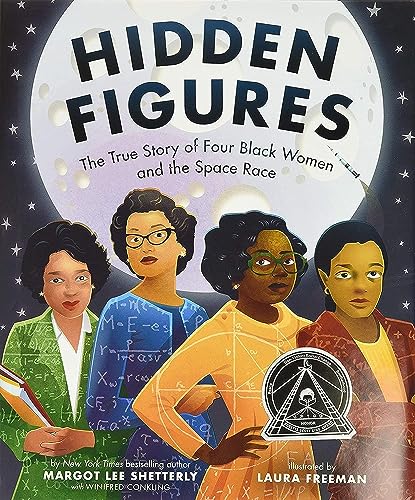
This picture book version of Hidden Figures introduces kids to the female mathematicians who helped make space travel possible!
It’s not an astronomy book in the narrowest sense, but it is an important book on space science because it shows the human work behind space exploration.
It is a great pick for older elementary kids who are ready for more history and biography.

Glow: A Family Guide to the Night Sky is a beautiful astronomy book with gorgeous illustrations and a thoughtfully designed layout. It has plenty of text and interesting facts, but the pages never feel dense or boring.
It’s the kind of book that invites kids and families to slow down, look up, and wonder together.

I absolutely love this book, but it is very text-heavy, so I would save it for older kids who are ready to sit down and read a full-on chapter book.
It still has beautiful illustrations throughout, but it reads much more like an in-depth guide to constellations, planets, stars, and the night sky than a traditional picture book.
- Lots of detailed information on stars, planets, and constellations!

Here is another text-heavy option, but it still has illustrations throughout, so it does not feel like a straight chapter book.
It’s a great pick for kids who really want to learn about stars, planets, constellations, and the wider universe, especially older kids who are ready for a longer, more detailed read.

Here’s another great pick for kids who are ready for a little more detail but still want plenty of illustrations to break things up. It covers lots of big astronomy topics in a way that feels engaging and kid-friendly.
I would save this one for curious older kids who love facts and want a book they can sit with, flip through, and come back to again.
How to Use Astronomy Picture Books with Kids
The best thing about picture books for kids about astronomy is that you do not have to turn them into a big formal lesson. In fact, I think they ‘re often more powerful when they stay simple and connected to real life.
Here are a few easy ways to extend the books:
- Go outside and look for the moon after dinner.
- Notice whether the moon looks full, half, or like a crescent.
- Look at stars in the evening sky using a stargazing app.
- Paint planets with watercolors.
- Visit a planetarium if you have one nearby.
- Keep a moon journal for a week.
- Look at NASA photos together.
- Read the same book before and after looking at the night sky.
Kids do not need us to have all the answers. It is okay to say, “I wonder,” “Let’s look that up,” or “That is such a good question.”
Astronomy is full of questions even adults cannot fully wrap their minds around, which is part of what makes it so exciting.
Final Thoughts on Astronomy Picture Books
Picture books for kids about astromony are such a beautiful way to introduce the wonders of space! These books make big topics like stars, planets, moons, galaxies, astronauts, and the universe feel accessible and exciting.
For toddlers, start with simple board books about the moon, stars, and planets. For preschoolers, look for playful stories and basic nonfiction.
For early elementary kids, add picture-book biographies, solar-system books, and books that explain broader concepts.
For older kids, choose books with richer science, space history, and real stories of astronomers, astronauts, and space exploration.
Most of all, let the books lead to wonder. Read about the moon, then go outside and find it. Read about Mars, then build a rover from blocks. Read about stars, then lie on a blanket and look up.
Astronomy is one of those subjects that reminds kids how big the world is and how much there is still to discover.



No Comments