
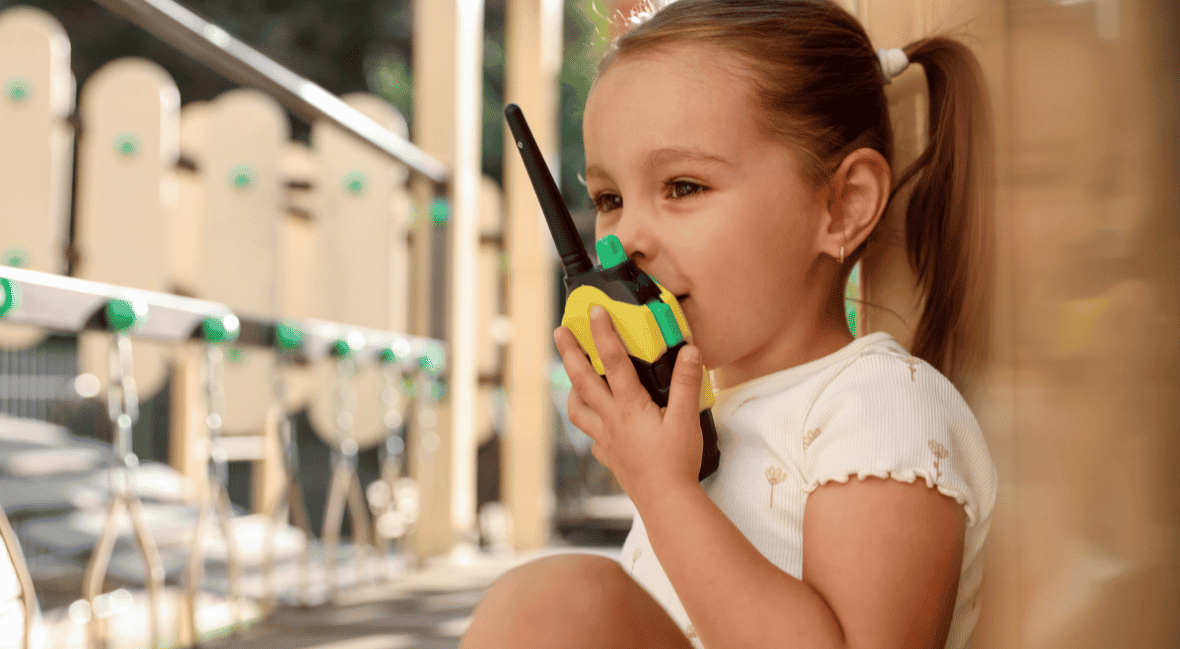
Some kids are natural adventurers. They want to explore every trail, climb every rock, investigate every bug, and see what is hiding behind every tree. The best toys for kids who like adventuring encourage that curiosity without deciding exactly how the adventure should unfold.
In fact, many of the best adventure toys for kids are not really toys at all. They are real, functional tools that help kids explore, observe, document, build, and move.
Whenever possible, I recommend skipping the cheap kids’ versions of binoculars, headlamps, magnifying glasses, compasses, and other outdoor gear. Kids quickly become frustrated when binoculars do not focus, compasses point in random directions, and headlamps barely produce enough light to see. Children are capable of using real tools—and real tools actually work!
We get commissions for purchases made through links in this post. As an Amazon Associate, we earn from qualifying purchases.
21 Best Adventure Toys for Kids
1. Deuter Kids’ Backpack

Kids absolutely love having their own bag! Every adventurer needs a backpack for carrying water, snacks, extra clothes, binoculars, and any interesting treasures discovered along the way.
And you’ll probably find that sometimes they pack it up with a few last things they don’t need, but that’s fine too!
I really like the Deuter kids’ backpacks because they offer different sizes for different stages:
- Deuter Pico 5-liter backpack: A good size for ages 2–4
- Deuter Schmusebär 8-liter backpack: A little more room for ages 3–5
- Deuter Junior 18-liter backpack: A larger option for ages 5–8
Giving kids their own properly sized backpack lets them help prepare for an adventure and carry some of their own gear. Just be careful not to overload it. Younger children, especially, only need a water bottle, a snack, and one or two exploration tools.
2. Headlamp

A headlamp instantly makes everything feel more adventurous! Kids can wear one while camping, exploring the backyard at dusk, looking underneath logs, reading in a tent, or navigating a blanket fort.
I prefer headlamps to handheld flashlights because kids can still use both hands to climb, build, or investigate. Choose an actual outdoor headlamp with an adjustable strap instead of a junky toy version that produces very little light.
- Check out all my favorite headlamps for kids!
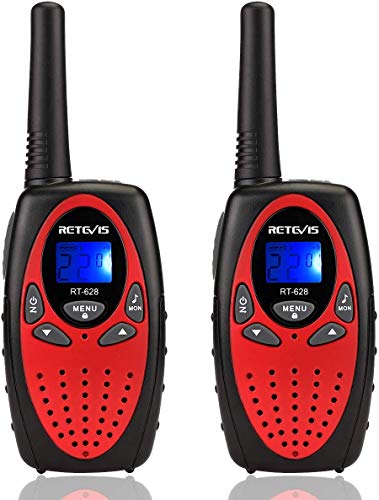
3. Retevis Walkie-Talkies for Kids
Walkie-talkies are among the best toys for kids who like adventuring with siblings or friends! Kids can communicate from opposite sides of the yard, coordinate a rescue mission, report wildlife sightings, or stay in contact while exploring a campground.
They also inspire all sorts of pretend play. One day, kids are explorers, the next, they’re park rangers, and the day after that, they’re searching for a mysterious creature in the bushes.
The Retevis RT628 Walkie-Talkies are less junky than most kids-specific versions, making them great for backyard missions, camping trips, hikes, and neighborhood adventures! Kids can communicate from different parts of the yard, coordinate a rescue mission, or report what they have discovered.
These walkie-talkies are lightweight and have 22 channels, a keypad lock, and multiple call tones. I love the keypad lock. It’s especially helpful because kids cannot accidentally change the settings in the middle of an adventure.
Unfortunately, they aren’t rechargeable, so you’ll need to use 3 AA batteries per radio. They also aren’t waterproof, so you will want to bring them inside when the adventure gets particularly wet or muddy.
4. Celestron Outland X Binoculars

Kids find binoculars super novel and enjoy slowing down to notice things they might otherwise miss!
Instead of buying toy binoculars that do not focus properly, I would go with a real pair like the Celestron Outland X 8×25 Binoculars.
The compact size makes them easier to take hiking, camping, birdwatching, or simply exploring around the backyard. The 8x magnification is powerful enough to help kids see birds, wildlife, and distant landmarks without being excessively difficult to hold steady.
Real binoculars give kids the chance to observe something firsthand. They can watch a bird without getting too close, examine the top of a tall tree, or scan the opposite side of a lake.
Younger kids may need help learning to focus them, but that’s much better than giving them binoculars that never produce a clear image.
5. Real Magnifying Glass

A magnifying glass turns tiny outdoor discoveries into something fascinating. Kids can examine leaves, bark, rocks, feathers, flowers, and insects more closely.
Choose a real magnifying glass with clear glass and actual magnification. Many plastic explorer-kit magnifiers distort everything so much that they’re almost impossible to use!
You don’t need to give kids a lesson or tell them what to examine. Hand them the magnifying glass and let their curiosity lead the way.
- Check out all the best magnifying glasses for kids!
6. Guidecraft Treasure Tubes

Guidecraft Treasure Tubes are perfect for kids who enjoy collecting fun little treasures on an adventure. They may seem overly simple, but kids love them, trust me!
The clear tubes let kids safely store and examine rocks, shells, seeds, leaves, feathers, and other small treasures.
They can sort discoveries, compare objects, or bring something home for a closer look. I love that the tubes don’t tell kids what to collect or how to use them. They’re simply useful containers that can support whatever the child is currently interested in exploring.
As always, make sure kids know which natural materials may be collected and which should be left where they were found.
7. Bug Observation Container

If you know a kid who’s fascinated by bugs, this is for them!
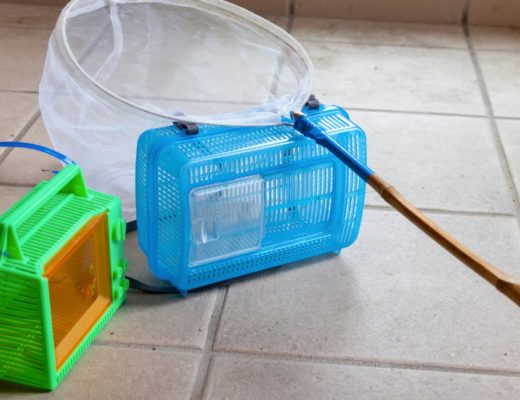
A ventilated bug observation container lets kids briefly take a closer look at insects they find outside. They can watch how a beetle walks, count a caterpillar’s legs, or notice the patterns on a moth’s wings.
Teach kids to handle living creatures gently and return them to the same place where they were found. The goal is observation, not collecting as many bugs as possible.
- Check out these fun, hands-on bug activities for preschoolers!
8. Real Compass
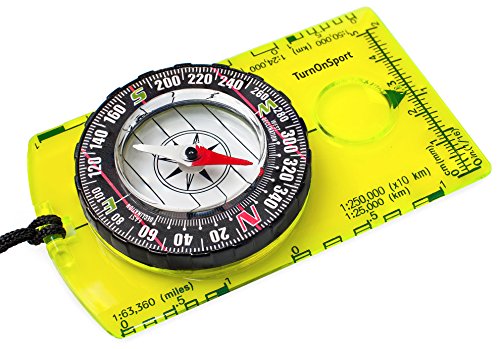
Here’s another novel tool that kids don’t always get the chance to play around with: a compass!
Learning to use a compass can take time, but kids don’t need to master navigation before they begin exploring with one (or even just playing with one). Simply noticing which direction they’re traveling introduces a new way of thinking about space and movement.
This is another item where I recommend avoiding the cheap plastic version included in many kids’ explorer kits. Give kids a real compass that reliably points north! Even if they aren’t really using it yet, there’s something special about having a real tool instead of a toy.
Older children can use it to follow directions, create navigation courses, read maps, or practice finding their way back to a starting point. Orienteering can be a fun way for kids to build and practice their compass and navigation skills.
9. Maps
![National Geographic Road Atlas 2024: Adventure Edition [United States, Canada, Mexico]](https://m.media-amazon.com/images/I/51So3-cTqKL._SL500_.jpg)
Maps are an underrated adventure toy. Give kids a trail map, a campground map, a local park map, a road atlas, or even a hand-drawn map of the backyard.
Kids can follow real maps or create their own. They might mark the location of a giant rock, draw a path to a favorite climbing tree, or make a treasure map for someone else to follow.
I love gifting kids a road atlas and letting them take notes, mark routes, and highlight places they’ve been. Kids seem to love having a map book that’s all their own!
10. KOKODI Kids’ Camera

It’s super fun for kids to have access to a camera they can use on their own! They love going around taking pictures, and this can be an especially fun adventure toy for kids.
The KOKODI Kids’ Digital Camera gives younger kids a camera they can carry on their own adventures without an adult worrying about them dropping an expensive phone or camera. Ours has held up through some pretty rough and tumble adventures!
It includes front and rear cameras, a silicone protective case, a rechargeable battery, and a 32GB memory card. Kids can take regular photos, selfies, and videos while documenting plants, animals, interesting rocks, favorite climbing spots, or anything else they notice.
I especially like cameras as adventure toys because they let us see the experience through a child’s eyes. Kids often photograph details that adults would walk right past.
11. Rite in the Rain Nature Journal

A blank notebook is one of the most open-ended adventure supplies you can offer. Kids can draw what they see, make maps, record questions, press leaves between the pages, or write stories about their expeditions.
There is no need to turn a nature journal into schoolwork (in fact, please don’t!). Spelling, labeling, and completing a certain number of pages are not the point. It’s simply another tool kids can use when and how they choose, and they often engage in much deeper, more meaningful exploration when it’s self-chosen.
My favorite weatherproof notebooks are from Rite in the Rain. They stand up to just about anything kids put them through.
12. Camelback Water Bottle

Every adventurer needs water. A durable water bottle with a handle or carrying loop works well for backyard explorations, family hikes, bike rides, and trips around the campground.
Having their own supplies helps kids begin learning how to prepare for an outing. Before leaving, ask, “What do you think we should bring?” Water is always a good place to start.
Some of my favorite kids’ water bottles are from Camelback. They last FOREVER, are BPA-free, and come in many fun designs. It can also be fun to get a blank water bottle and let kids decorate it with water bottle stickers.
13. Tarp

This one may seem a bit odd, but a small tarp is one of my favorite open-ended outdoor play materials! It really can be one of the best toys for kids who like adventuring.
Kids can spread it on the ground, create a rain shelter, protect their supplies, build a fort, or pretend they are camping in the wilderness. It’s super fun to see the creative ways kids use a tarp day after day.
I like to tie rope to each corner and sometimes even to several grommets on the sides. This makes it easy for kids to tie the tarp to things.
You can also add large clips or clothespins for kids to have even more ways to experiment with attaching the tarp to fences, branches, or outdoor furniture. I just find that clips can be a bit tricky and frustrating for kids sometimes.
14. ENO DoubleNest Hammock

A hammock creates a cozy home base between adventures! Kids can rest, read, look up into the trees, or use it for pretend play.
I have used an ENO DoubleNest Hammock for years, and it has held up incredibly well. It’s easy to set up, packs down small, and creates the perfect resting spot during outdoor adventures.
I also like that the DoubleNest is roomy enough to fit multiple children, or a child and an adult, while everyone reads, relaxes, or looks up at the trees.
The hammock has a listed weight capacity of 400 pounds, but you should always supervise children and follow the manufacturer’s setup limits. ENO recommends hanging its hammocks no more than 18 inches above the ground.
Make sure you also buy the straps for hanging the hammock, crazy enough, they aren’t included!
15. Strider Balance Bike

For younger adventurers, a balance bike opens up an entirely new way to explore. There are no pedals, complicated parts, or unnecessary extras. Kids simply use their feet to walk, run, coast, and gradually learn to balance.
A balance bike is less about completing a planned activity and more about giving kids another way to move through their environment.
The Strider 12 Inch Balance Bike is an ever-popular choice for a reason. It’s simple, lightweight, and durable. Seriously, they seem to keep going even after years of riding!
The adjustable seat and handlebars allow it to grow with kids, while the flat-free foam tires require practically no maintenance. It’s designed for ages 1–4 and weighs just 6.7 pounds, making it manageable for young kids (and easy for me to carry when my kid suddenly decides they’re done riding).
- Check out all my favorite wooden balance bikes!
16. Scooter

A scooter is another great choice for kids who want every trip down the sidewalk to feel like an expedition. Kids can ride to the park, explore a campground, follow a simple map, or pack a small backpack and set off on a neighborhood adventure with an adult.
Choose a scooter that fits your child’s current size and skill level, and always add a properly fitted helmet. I really love the 3-wheeled lean-to-steer scooter for kids who are just starting out. I’ve had several of the scooters from Micro and really like the quality and kid features.
- Check out all my favorite scooters for toddlers!
17. Wagon

A wagon lets kids transport everything an adventure might require: sticks, rocks, blankets, snacks, buckets, stuffed animals, and an astonishing amount of “important” debris.
Moving supplies is often a major part of children’s play. A wagon gives them the power to plan, gather materials, and set up camps in different parts of the yard.
Favorite wagon for toddlers and young kids! Seriously, this thing is so great.

Big wagon, perfect for older kids looking to haul lots of things!
18. Buckets

Buckets are incredibly simple, but kids love them. They can use a bucket to collect rocks, carry water, gather sticks, make mud pies, transport supplies, or bring important treasures back to camp.
There is no need to buy anything fancy, but thick, durable buckets will hold up best. Plastic buckets, metal buckets, old sand buckets, and sturdy household buckets can all support countless adventures. Give kids access to a few different sizes, and they will almost always find something to do with them.
Avoid overly deep buckets, and always supervise children when buckets are used around water.
19. Rope

A length of sturdy rope offers countless possibilities for older children who can use it safely. It can become a boundary around a pretend campsite, a tow rope for supplies, part of a fort, or a tool for measuring the distance between trees.
Rope can be especially fun because it’s not something that kids normally play with.
Rope play should be supervised, particularly with younger kids! Establish clear rules that ropes never go around necks or people’s bodies and are not attached to unstable objects.
20. Metal Detector

A kid-friendly metal detector adds a real sense of mystery to outdoor adventures! Kids love hunting for treasure. Kids can search the backyard, beach, campground, or other permitted areas for coins and other hidden objects.
Look for one that is lightweight enough for kids to carry but still functions as a real metal detector, not just a plastic toy that beeps randomly. It gives kids a reason to move slowly, investigate an area closely, and wonder about the stories behind everything they discover.
Always check local rules before searching or digging, especially in parks, historic areas, and protected spaces.
- Check out all my favorite metal detectors for kids!
21. Child Pocket Knife

Yes, I use knives with kids as young as 3! That may sound scary, but they are more than capable of using them safely with clear guidelines, practice, and supervision.
Kids love having access to real tools. Depending on their age and maturity, this might be a child-safe pocketknife or a simple multi-tool.
Real tools can give kids a meaningful sense of responsibility, but they require direct teaching and supervision. Choose something appropriate for your individual child rather than relying only on the age printed on the package.
- Check out my full guide on pocket knives for kids!
Create an Adventure Kit for Kids
You don’t need every toy and tool on this list. Choose a few favorites and store them together in your child’s backpack. It’s often more fun if you let kids pack up what they would like.
A simple adventure kit might include:
- Binoculars
- Magnifying glass
- Guidecraft Treasure Tubes
- Notebook and pencil
- Compass
- Bug observation container
- Water bottle
A few high-quality tools that actually work are far more useful than a giant explorer kit filled with flimsy plastic pieces. Please, please, please avoid giant sets filled with lots of junky plastic pieces. Trust me, all those pieces get lost, broken, and quickly become trash.
Final Thoughts on the Best Toys for Kids Who Like Adventuring
Gear can be fun, but kids do not need an elaborate collection of adventure toys. What they need most is time, space, and permission to explore.
Try not to organize every outing around a scavenger hunt, checklist, or adult-created lesson. Those things can be fun occasionally, but children also need opportunities to decide where to go, what to investigate, and what counts as an adventure.
Sometimes adventuring means hiking a new trail. Other times, it means spending 40 minutes examining one muddy corner of the backyard. Both are worthwhile.
The best toys for kids who like adventuring help them do more of what they already want to do: move, observe, wonder, experiment, and discover what is waiting just beyond the next tree.

No Comments