
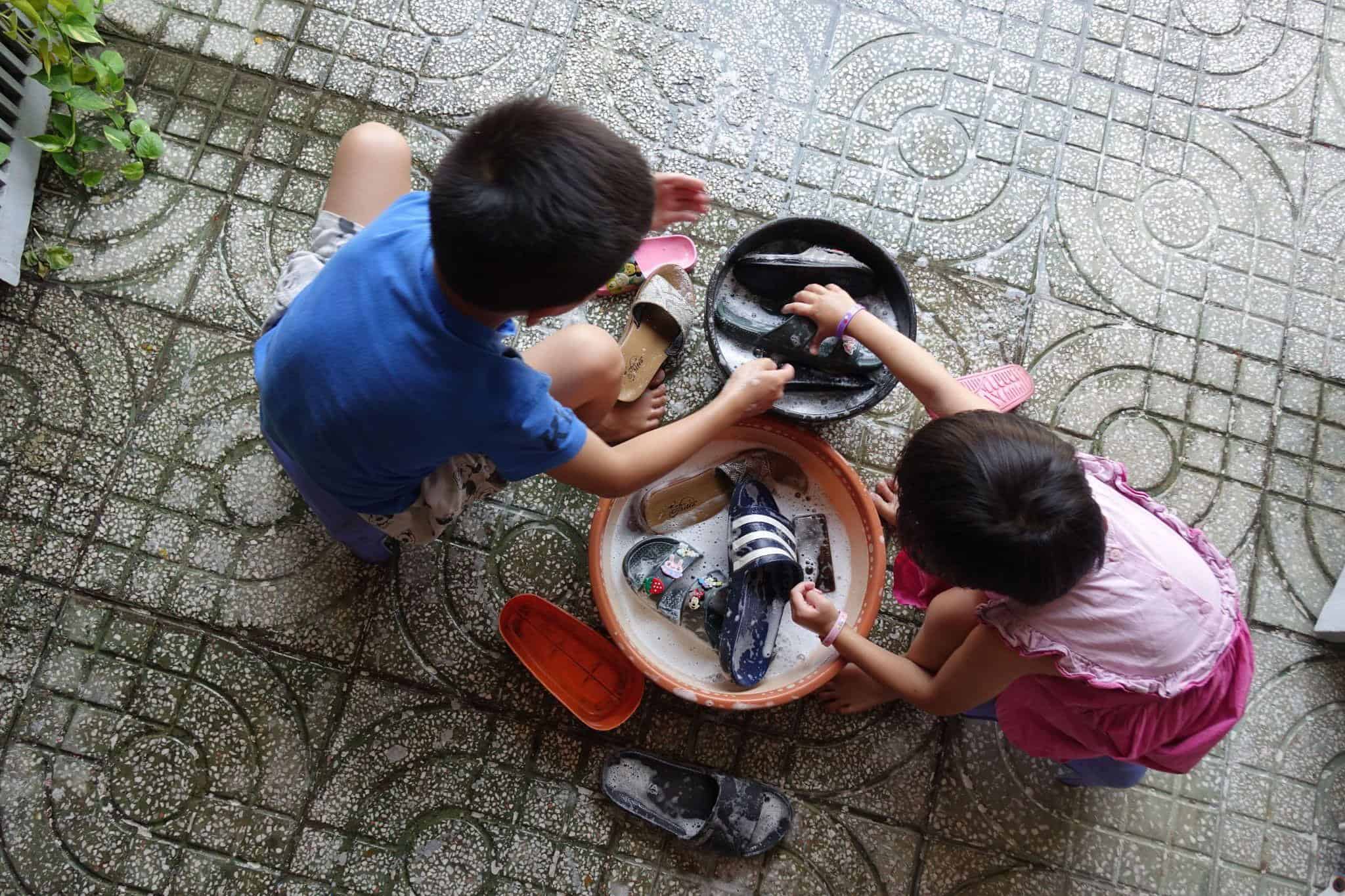
Many people question the extent of parents’ influence over their children’s attitudes and behaviors as they grow up. While there are several other factors involved, behaviors picked up from parents are often among the most influential in shaping a child’s development. From a young age – even when you might not notice – your children are watching and processing everything you do and say.
Of course, you can encourage certain behaviors using reinforcement and punishment methods, but what you naturally do, especially when you think they’re not watching, is often what shapes their behaviors the most.
After all, you’re their biggest hero – or villain on a bad day – but whether they communicate it or not, you’re their role model and someone they look up to. Although your actions and behaviors are crucial to their development, you too can’t be perfect all the time, so there are other methods and techniques used to encourage certain behaviors in young children.
In this post:
- Behaviors and Attitudes Most Beneficial for Children to Develop
- 3 Tips for Raising Confident and Independent Kids
Behaviors and Attitudes Most Beneficial for Children to Develop
There are thousands of different skills, both social and academic, that you might consider important, and unfortunately, you can’t guarantee all of them. In this article, we will specifically look at confidence and independence.
Why?
Confidence is an important trait at any age, as it encourages you to pursue more challenging goals and reduces the impact of anxiety. Independence, on the other hand, builds self-confidence and creates opportunities for problem-solving and learning. In this article, we will discuss how to raise confident and independent children.
3 Tips for Raising Confident and Independent Kids
1. Encourage New Activities & Experiences
It’s no secret that children enjoy predictability. They know what they love and what they don’t, and these preferences often stick with them as they grow older.
The problem with only ever experiencing these favored activities and experiences is that children can start to perceive other experiences negatively, without ever trying them. They start to build a comfort zone around these choices, and anything that falls outside it can feel scary and uncomfortable.
Even as adults, every day we use and refer to our comfort zones – mostly without even realizing. You could say they’re what makes us, us, but you could equally argue that they’re biased and based on previous experiences that aren’t representative of reality. Whatever your opinions of comfort zones might be, it’s important to recognize that we need them, even if they exist solely to challenge.
Encouraging your children to try new hobbies and activities beyond those they’d choose first can be hugely beneficial to their self-confidence. It’s easy and effective to start by encouraging them to take up a new sport or physical activity at a young age, as they can try it out with their friends or in a comfortable environment, like at school.

Sports and hobbies can be expensive at a young age, and your children mustn’t overdo the number of activities they’re involved with at a young age, which is why participating in a variety of sports is a great way to allow them to have a go at everything.
So what do new activities and experiences have to do with self-confidence?
As a parent, it’s easy to view confidence as something that some people are lucky enough to be born with, and others without. In fact, confidence is a learned trait that anyone can develop. It comes from trial and error, and can take time to progress.
When kids try a new activity, especially one they were initially reluctant to try, they slowly build self-confidence as they are encouraged to believe they are capable of doing something they dislike or fear. They may also discover strengths in their skills and abilities through these new activities that they would never have discovered otherwise.
2. Set Goals
Setting goals can be easily integrated into your family’s routine, as they can be tailored to everyday tasks throughout your week, making them easier to set up and track. Setting your children’s goals delegates responsibility to them and often encourages them to be more focused on and motivated by the task they’ve been set.
Let’s not forget that we’re talking about energetic and easily distracted young children here; where there’s a task set, there has to be a reward. Start by setting them a small task to complete every morning. It could be packing their own lunchbox or making their bed before coming down for breakfast. It’s good practice to choose something simple and easily achievable to start with; this way they’re more likely to stick with it and not feel demotivated in the first instance.
Then, choose a desirable reward to attach to the task they’re responsible for. It doesn’t have to be letting them indulge in ice cream for pudding every time; that isn’t a sustainable reward, as it’s unhealthy to consume in large amounts.
Here are some ideas of rewards you can choose:
- An extra hour of screen time after school
- A sleepover with a friend at the weekend
- Watching their favorite film together
- A meal out at their favorite restaurant
Another good way to keep track of their progress is to organize a sticker tally or jar system, where a gold star or marble is added each time a task is completed. This way, you won’t be required to think of a different reward every day, and instead you can set a bigger reward like a trip to a water park once they reach a certain number of stars and marbles.

3. Embrace And Normalise Mistakes
No one likes to fail or make mistakes; it’s hard to let go of even as you mature. But especially for children, failing can feel like the worst thing in the world, and it’s your responsibility as a parent to make mistakes feel a little less terrifying.
Luckily, mistakes as a young child are inevitable, and there will be plenty of opportunities to change how they perceive them, whether it’s in sports, schoolwork, or friendships. When the time comes, and your child gets upset after a mistake they’ve made, prioritize staying calm and praising their effort over the result. You may want to highlight positive skills they have demonstrated in the process of failing and explain why these are equally as important.
Above all, you should encourage positive self-talk in your children by motivating them to see their mistakes differently. In the same way that we discussed the importance of your own actions and behaviors as a parent earlier in the article, the same applies when it comes to embracing failure. You too should take your own mistakes and errors on board, instead of shouting things like ‘I’m such an idiot’ when they’re in the room next door.
Final Thoughts
Being consistent with the methods and techniques we’ve discussed in this article will improve your child’s capabilities to be independent and have confidence in everything they do.
It might take time, and progress may seem slow, but you will notice an improvement, and in the process, you can strengthen your independence and self-confidence, too.



No Comments