
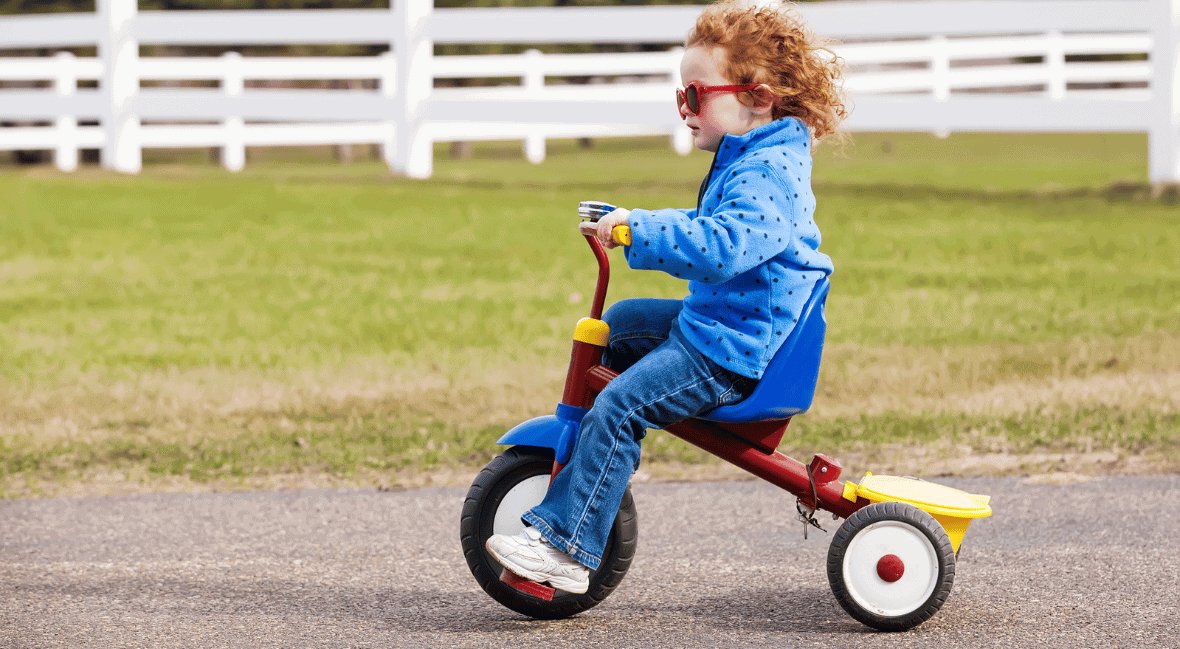
Bilateral coordination is the ability to use both sides of the body together in a coordinated way. Kids rely on it when they get dressed, cut with scissors, climb, catch a ball, build with blocks, and complete countless everyday tasks.
The good news is that most kids don’t need adults to walk them through specific bilateral coordination activities. When kids have plenty of time and space to play, they’ll naturally crawl, climb, dig, build, carry, pull, create, and experiment. All of that play provides meaningful practice using both sides of the body.
That doesn’t mean you can’t offer materials or introduce new play ideas. I love having a few simple ideas ready when kids need inspiration. However, you don’t need to turn playtime into a series of adult-led exercises. Offer the opportunity, then step back and let kids decide what to do with it.
Protip: kids engage longer (and thus build more skills) when they choose activities themselves rather than ones they are forced to complete!
In this post:
- What Is Bilateral Coordination?
- How Play Supports Bilateral Coordination
- Gross Motor Bilateral Coordination Activities
- Fine Motor Activities for Bilateral Coordination
- Everyday Activities for Bilateral Coordination
- Crossing-the-Midline Activities
- You Don’t Have to Turn Play Into Therapy
What Is Bilateral Coordination?
Bilateral coordination means using the left and right sides of the body together.
There are three main ways kids do this:
- Symmetrical movements: Both sides perform the same action, such as catching a large ball or jumping with two feet.
- Alternating movements: The sides take turns, such as when crawling, walking, climbing, or pedaling.
- Supporting-hand movements: One hand stabilizes an object while the other does more precise work, such as holding paper while cutting it.
Kids develop these movement patterns gradually through everyday play and participation in real tasks.
How Play Supports Bilateral Coordination
Play is one of the best ways for kids to develop bilateral coordination because it gives movement a purpose!
A kid isn’t climbing a ladder because an adult said it’s time to practice alternating their arms and legs; they’re climbing because there’s something interesting at the top. They aren’t holding a block tower steady to complete a coordination exercise. They’re trying to keep their castle from falling over.
Those meaningful goals motivate kids to repeat movements, solve problems, and adjust what they’re doing. Repetition happens naturally because kids are invested in the play.
For most kids, you don’t need to directly teach every movement or plan a special bilateral coordination activity each day. Make active play part of the routine, offer open-ended materials, include kids in everyday work, and give them plenty of uninterrupted time to explore.
Gross Motor Bilateral Coordination Activities
Whole-body play gives kids lots of opportunities to coordinate their arms, legs, and both sides of their bodies. These are some of my favorite easy ways to encourage it.
1. Crawl Through Tunnels
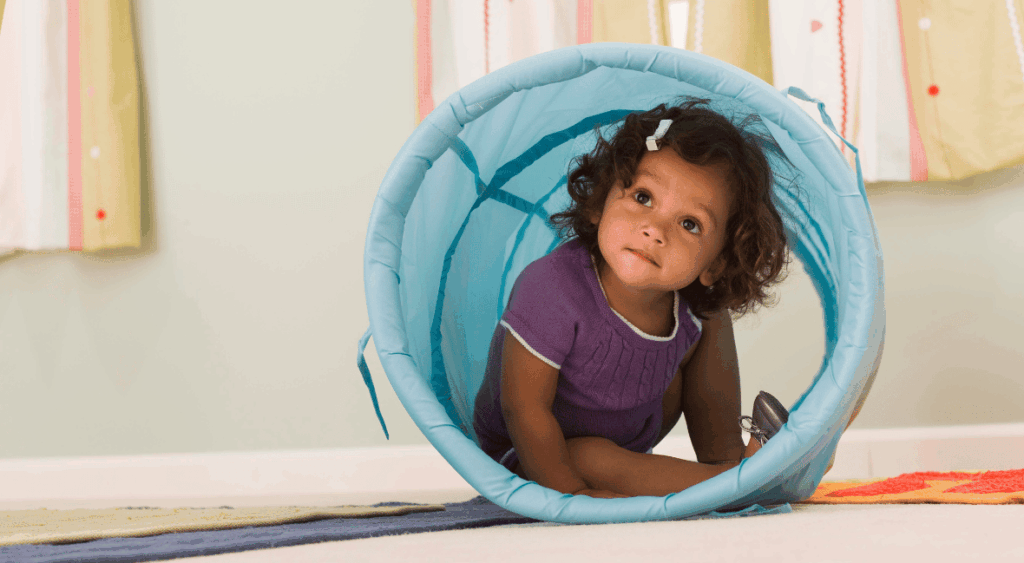
I love play tunnels because kids can use them in so many ways. Crawling naturally requires them to coordinate their opposite arms and legs, and remains fun for kids even after they learn to walk.
If you don’t have a tunnel, try a large cardboard box or a row of chairs with a blanket draped over the top.
2. Climb on Playground Equipment
Climbing might be one of the best bilateral coordination activities because kids rarely see it as something they’re supposed to practice. They’re simply playing! Invite friends for a park playdate to further motivate kids to run around and play.
Ladders, climbing walls, jungle gyms, and other playground structures all encourage both sides of the body to work together.
3. Play Catch
I’d start with a large, soft ball that’s easy to hold with two hands. As catching gets easier, kids can experiment with smaller balls, bouncing the ball, or moving farther apart.
4. Roll a Ball Back and Forth
For younger kids, sitting on the floor and rolling a ball back and forth is a wonderfully simple option. A large playground or sensory ball encourages them to push with both hands.
It’s also a really lovely time for parent-child connection.
5. Ride a Bike or Tricycle
Pedaling requires alternating the legs while the arms work together to steer. I also love balance bikes because kids use their feet to push while coordinating their hands, eyes, and the rest of their bodies.
You can find many great used bikes on Facebook Marketplace at quite low prices.
6. Try Animal Walks
Bear walks, crab walks, frog jumps, and inchworm movements are fun ways to get the whole body working. I’d introduce a few ideas and then let kids make up their own animals and movements.
Try: walking like a bear, waddling like a penguin, hopping like a frog or bunny, crawling like a crab, stomping like an elephant, slithering like a snake, or galloping like a horse.
7. Play Tug-of-War
All you need is a sturdy rope and plenty of safe space. Kids use both hands to grip and pull while coordinating their entire bodies. It’s also fantastic heavy work.
And kids find it just plain fun! I love seeing them break out into giggles as they play.
8. Jump with Two Feet
Kids can jump over a line, across sidewalk cracks, between floor markers, or into a pile of pillows. You don’t need to set up a formal jumping activity. Most kids will create their own challenges if they have space.
9. March and Dance to Music
Turn on music and see how kids move. They might march, clap, stomp, spin, or wave scarves. Follow-the-leader can be fun, but I also like giving kids the freedom to invent their own movements.
You also add musical instruments like shaker eggs, small drums, bells, or tambourines.
- Check out all my favorite music-and-movement activities for kids!
10. Climb Stairs
Stairs provide natural practice with alternating movements. Young kids may start by using the same foot on each step and gradually move toward alternating their feet.
You can make stair climbing more playful by finding a playground with stairs leading up the play equipment. Just doing laps on your stairs at home would be quite boring!
11. Play Balloon Volleyball
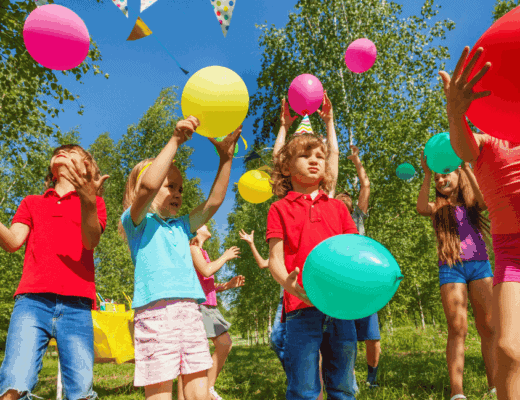
I love balloons for early catching and hitting games because they move slowly and in slightly irregular ways. Kids have more time to plan their movements and can use both hands or alternate between hands.
Supervise carefully and immediately remove any pieces from popped balloons.
12. Swing
The swings were always my favorite thing at the playground growing up! I spend hours going back and forth.
Holding the chains with both hands while coordinating the legs and core makes swinging a great whole-body activity. Kids also practice timing their movements as they learn to pump independently.
And again, kids really love swings, so it makes movement fun instead of forced!
13. Row a Pretend Boat
Sit on the floor facing a partner, hold hands, and rock back and forth while singing “Row, Row, Row Your Boat.” It’s simple, social, and especially fun for younger kids.
14. Pull a Wagon
Wagons are one of my favorite outdoor play materials. Kids can load them with rocks, sticks, toys, or whatever else they discover, then use both hands to pull and steer. There are a variety of play wagon sizes for kids of all ages.
15. Play with a Parachute or Sheet
You don’t need a real play parachute; a bedsheet works well. Try lifting it high and ducking underneath, making both fast and slow waves, bouncing lightweight balls on top, or gently pulling it from side to side.
Holding, lifting, shaking, and pulling the parachute requires both hands and arms to work together in coordinated movements.
Fine Motor Activities for Bilateral Coordination
Many fine motor tasks require one hand to do the detailed work while the other holds or stabilizes an object. These are some of my favorite materials and play opportunities.
16. Cut with Scissors
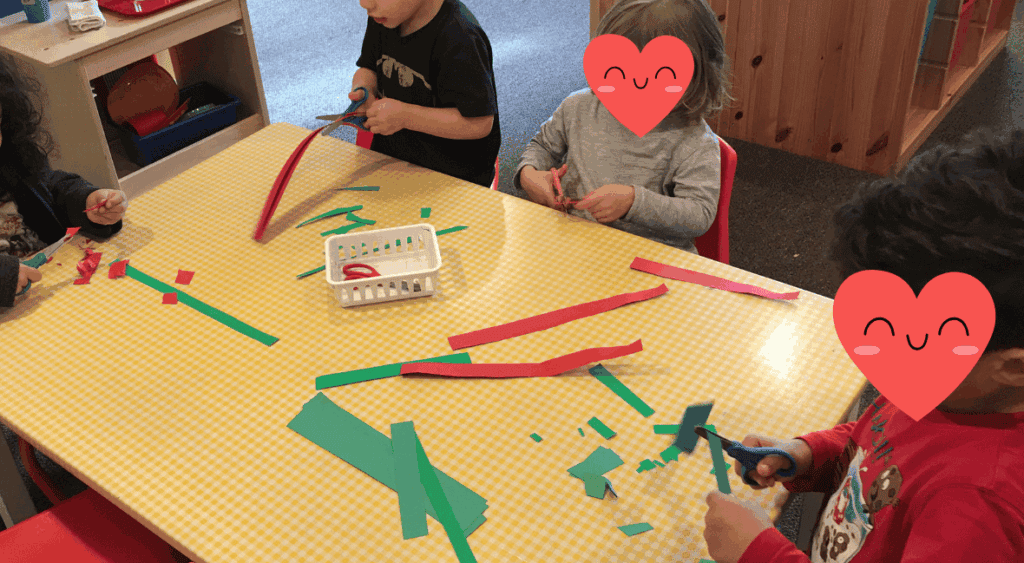
One hand operates the scissors while the other holds and turns the paper. I like starting with playdough or strips of scrap paper that kids can simply snip without trying to follow a particular line.
17. Play with Playdough
Playgough is one of my favorite open-ended play materials for kids! It encourages creativity while building muscles and coordination.
Playdough is one of the easiest materials to offer for bilateral coordination. Kids can roll balls between their palms, make long snakes with both hands, use a rolling pin, or hold the dough steady while cutting it with a tool.
18. String Beads
Beading may seem repetitive, but that’s often what draws kids to it! I’ve watched toddlers and preschoolers happily string beads, dump them, and string again.
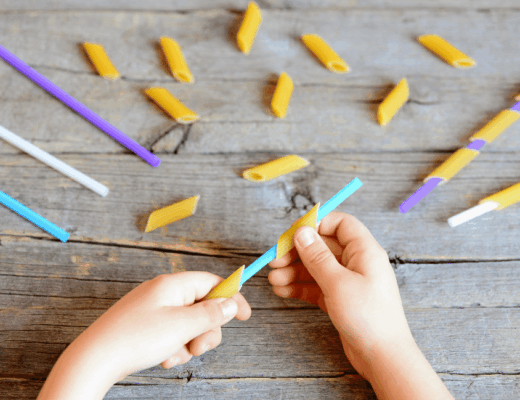
One hand holds the string while the other threads the bead, making it an amazing bilateral coordination activity for kids. I find that large wooden beads, or beads with pipe cleaners, are often easier for younger kids.
19. Tear Paper
Gather up lots of scrap paper or newsprint and let kids tear away. I promise they will love it!
Tearing paper requires a coordinated effort as the hands need to pull in opposite directions. Kids can use the pieces for collages, sensory play, or pretend food, or just enjoy tearing paper for its own sake. Simply toss any scraps of paper in the recycling bin when done.
20. Build with Blocks
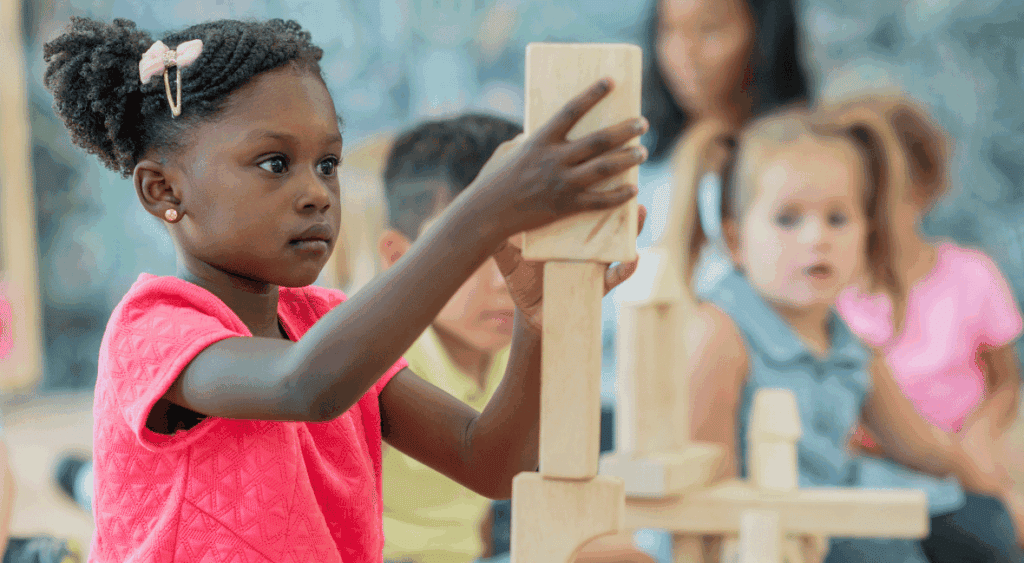
Blocks are another of my favorite toys for kids, and I recommend them to all families!
Block play offers endless practice without adults directing every movement. Kids carry blocks with both hands, hold structures steady, balance pieces, and use one hand to support what the other is building.
Unit blocks, magnetic tiles, and large cardboard blocks are some of my favorites.
- Check out all my favorite block sets for kids!
21. Open and Close Containers
I like adding jars, reusable food containers, zippered bags, boxes, and bottles to play spaces. Kids will often spend a surprising amount of time figuring out different lids and closures.
It’s fun to see kids’ focus, concentration, and excitement when they figure out how to open and close a container.
Simply begin saving bottles and jars for this purpose.
22. Use a Rolling Pin
Kids can use a rolling pin with playdough, clay, mud, or real dough. Pushing and pulling it encourages both hands to move together. Simple yet effective!
23. Try Lacing
Lacing requires quite a lot of coordination! Kids must hold the lacing card, thread the lace through, and pull it from the opposite side before it falls out. You can begin by holding the card for kids and have them practice pulling the string tight. Progress from there as their skills develop.
Lacing cards are one option, but you can also punch holes around a piece of cardboard or even a paper plate. One hand holds the material while the other guides the lace.
24. Play with Stickers
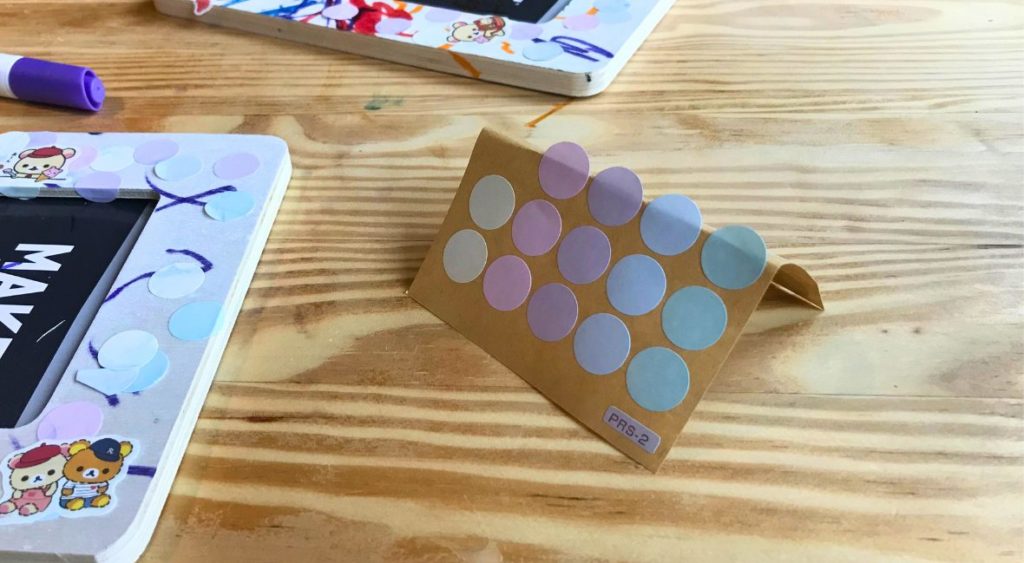
All kids love stickers! Kids hold the sticker sheet with one hand while peeling with the other.
I’d choose large stickers or reusable window clings for kids who are just starting. I like to offer dot labels because they’re easy to peel and super inexpensive, so kids can use a massive number of them.
- Check out some fun sticker crafts for kids!
25. Use a Hole Punch
A hole punch is an amazing art tool for kids! It requires a LOT of hand strength, but because it’s novel and fun, kids are usually pretty willing to work hard at it (again, the power of self-directed and self-motivated activities!).
A kid can hold the paper with one hand while operating the hole punch with the other. Some punches require both hands to press, offering a different type of coordination.
26. Twist Nuts and Bolts
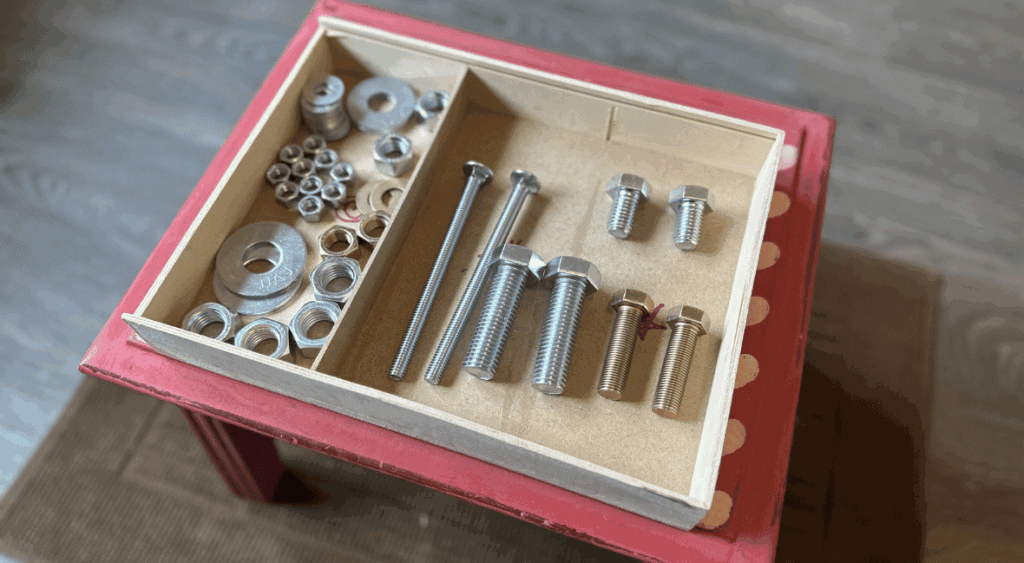
Large toy nuts and bolts (or even just some from the hardware store) are great for twisting and stabilizing. Kids often enjoy seeing how many nuts they can fit on a single bolt, taking them all off, and then starting the process over again.
Kids get lots of great practice because they find it fun and engaging, and play with nuts and bolts for extended periods.
27. Fold Paper
Just offer paper and let them fold, press, crumple, unfold, and experiment with it. I love how open-ended this activity remains. Save the paper scraps for future process art.
Kids don’t need to complete a specific craft. In fact, observe first and see what kids do and only step in if they need a bit of support getting started!
28. Build with Cardboard and Tape
I love setting out cardboard boxes and painter’s tape for kids to build with. Holding the cardboard steady while pulling, tearing, cutting, and pressing down the tape gets both hands working together. I like blue painter’s tape for projects like this.
It’s always so cool to see how much joy kids experience as they use as much tape as they like. It probably won’t end up being anything, but that’s okay; it’s about the process, not the product.
29. Build with Interlocking Toys
LEGO bricks, LEGO Duplo, connecting discs, and other interlocking building toys are great for bilateral coordination. Kids often use one hand to hold their creation steady while the other adds, adjusts, or removes pieces.
Pulling tightly connected pieces apart also requires both hands to work together, all while kids focus on creating something meaningful to them.
30. Put Together Puzzles
Puzzles naturally get both hands working together as kids hold the board or surrounding pieces steady with one hand while turning and placing a piece with the other.
I especially love large floor puzzles because kids also crawl, reach across their bodies, and move around the entire puzzle as they work.
Everyday Activities for Bilateral Coordination
Kids don’t need every skill-building opportunity to come from a planned activity. Real household tasks offer some of the most meaningful activities for bilateral coordination.
31. Get Dressed
Let kids do it themselves. Yes, it will take longer to let kids do it themselves, but that extra time is where so much learning happens! Just take a deep breath and plan some extra time into your day so you don’t feel rushed.
Pulling on pants, putting on socks, fastening buttons, zipping a jacket, and tying shoes all require two-handed coordination.
32. Wash Hands
Even washing hands provides bilateral coordination practice as kids operate the soap pump, rub their hands together, turn the faucet, and hold and move a towel while drying. It’s a simple, everyday routine that gets both hands working together without needing to plan a separate activity.
I like to count to 20 with kids as we scrub the fronts and backs of our hands and between our fingers. I’ve found that it’s a great in-context way to get counting practice multiple times a day!
33. Help with Cooking
I love inviting kids into the kitchen. They can hold a bowl while stirring, knead dough, peel a banana, spread toppings, or carry lightweight ingredients with both hands. Kids love being involved in real work and taste testing ingredients along the way.
Having a toddler tower can help kids easily reach the counter.
34. Sweep the Floor
Sweeping is a practical way for kids to work on bilateral coordination, especially when they use a hand broom and dustpan. One hand holds the dustpan steady while the other carefully sweeps dirt into it, requiring both hands to perform different jobs while working together.
Kids also find sweeping surprisingly fun. I can’t tell you how many times my preschool students have fought over the broom and dustpan!
35. Wash Toys
I love setting out a basin of soapy water, a scrub brush or sponge, and a pile of washable toys, especially on a warm day outside.
Kids use one hand to hold and turn each toy while the other scrubs, then use both hands to rinse, squeeze out the sponge, and dry everything.
36. Wring Out a Sponge
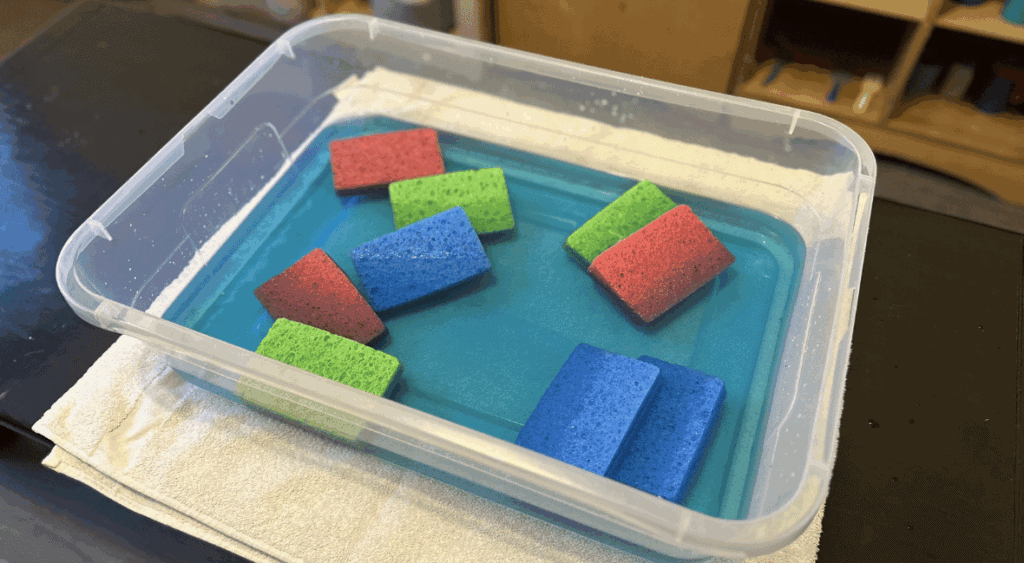
Squeezing or twisting a wet sponge uses both hands and builds hand strength. I like adding sponges to water play rather than presenting this as a separate exercise.
37. Set the Table
Setting the table gives kids a meaningful way to practice bilateral coordination while contributing to a real family task.
They’ll use both hands to carry plates and bowls, hold a stack steady while separating items, and coordinate their hands as they place utensils, napkins, and cups around the table.
38. Water Plants
Small watering cans are perfect for kids! They can use both hands to carry and tip the can or stabilize it with one hand while controlling it with the other.
It’s a simple way to practice bilateral coordination while helping kids learn what it means to care for another living thing. They’ll
39. Spread a Blanket
Making a bed, laying out a picnic blanket, or building a fort requires kids to grip, lift, pull, and adjust materials with both hands.
40. Carry a Laundry Basket
A small basket with a light load encourages kids to use both hands while coordinating their steps. Kids can also pull clothes from the basket and help load the washing machine.
Crossing-the-Midline Activities
Crossing the midline means reaching across the imaginary line dividing the left and right sides of the body. Kids naturally do this throughout play, especially when materials are spread across a large space.
41. Draw or Paint on a Vertical Surface
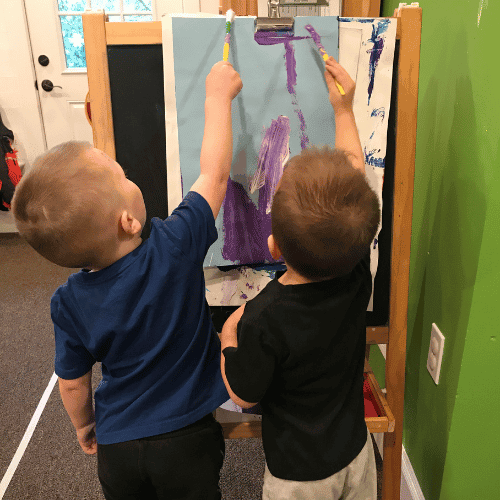
I can’t overstate the value of letting kids draw or paint on a vertical surface, such as an easel or a large piece of paper taped to the wall! In warmer weather, you can head outside and simply tape paper to a fence to help minimize indoor mess.
It encourages kids to reach across the midline while also building the shoulder strength and core stability they need for controlled hand and arm movements.
42. Wash Windows
Offer a spray bottle and a cloth, then let kids wipe the window with circular motions and sweeping motions. There’s no need to direct every movement; the large surface naturally encourages reaching.
This simple activity often keeps kids busy for hours!
43. Play with Toy Cars
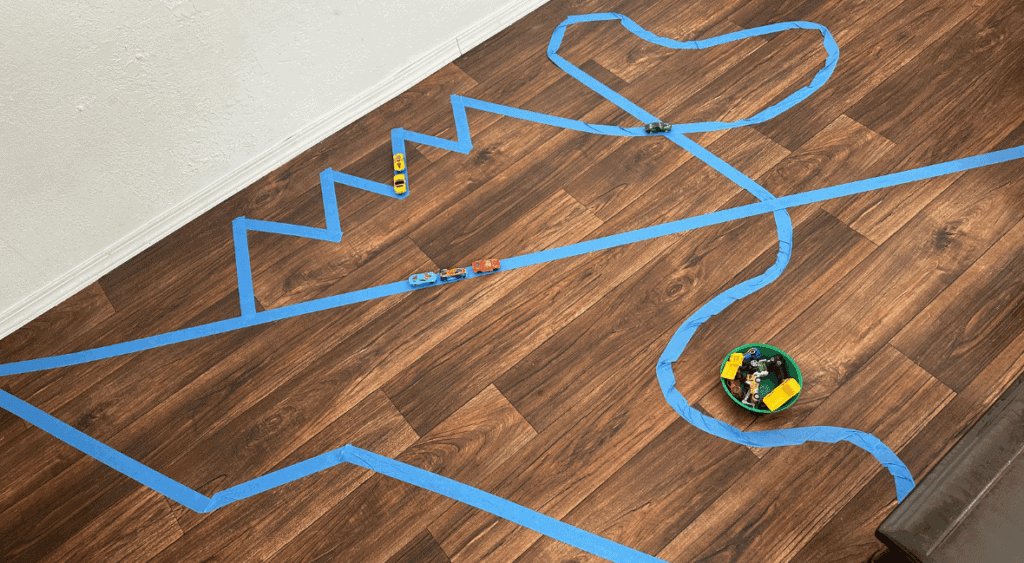
Create wide roads with chalk or painter’s tape and let kids drive toy cars along them. Curved roads, loops, and figure-eights encourage kids to reach across the midline as they move the cars from one side of their bodies to the other.
I love that this one naturally ties into the love of cars that many kids have.
44. Make Large Figure Eights
Kids can draw sideways figure eights in the air, sand, shaving cream, or with sidewalk chalk. I’d keep it playful and avoid worrying about perfect shapes.
45. Play Simon Says
Simon Says is an easy way to add bilateral movements to a familiar game. Try actions such as touching the opposite knee, tapping alternating feet, marching, crossing the arms to touch opposite shoulders, or reaching across the body.
Be sure to let kids take turns being Simon and inventing their own movements!
You Don’t Have to Turn Play Into Therapy
It’s easy to look at a list of bilateral coordination activities and feel like you should start working through them one by one. For most kids, that isn’t necessary.
Instead, look at your kid’s overall opportunities for play. Do they have time to climb, crawl, build, dig, carry, create, get dressed, help around the house, and move their body? If so, they’re likely practicing bilateral coordination in many different ways every day.
You can support that development by offering simple materials, taking kids outside, including them in real work, and protecting long stretches of uninterrupted play. You don’t have to show them exactly how to use every material. Kids are often incredibly creative about finding movement challenges on their own.
If you’re worried about your kid’s coordination, development, or ability to complete everyday tasks, talk with their pediatrician or an occupational therapist. They can help determine whether additional support would be useful.
Final Thoughts on Bilateral Coordination Activities
The best activities for bilateral coordination usually don’t feel like activities at all. They look like climbing at the playground, building an enormous block tower, pulling a wagon full of rocks, rolling playdough, making a blanket fort, or helping stir pancake batter.
Play can meet bilateral coordination goals for most kids without adults constantly directing, correcting, or turning movement into a lesson. Give kids plenty of time, space, and interesting materials, then trust them to play.
No Comments