
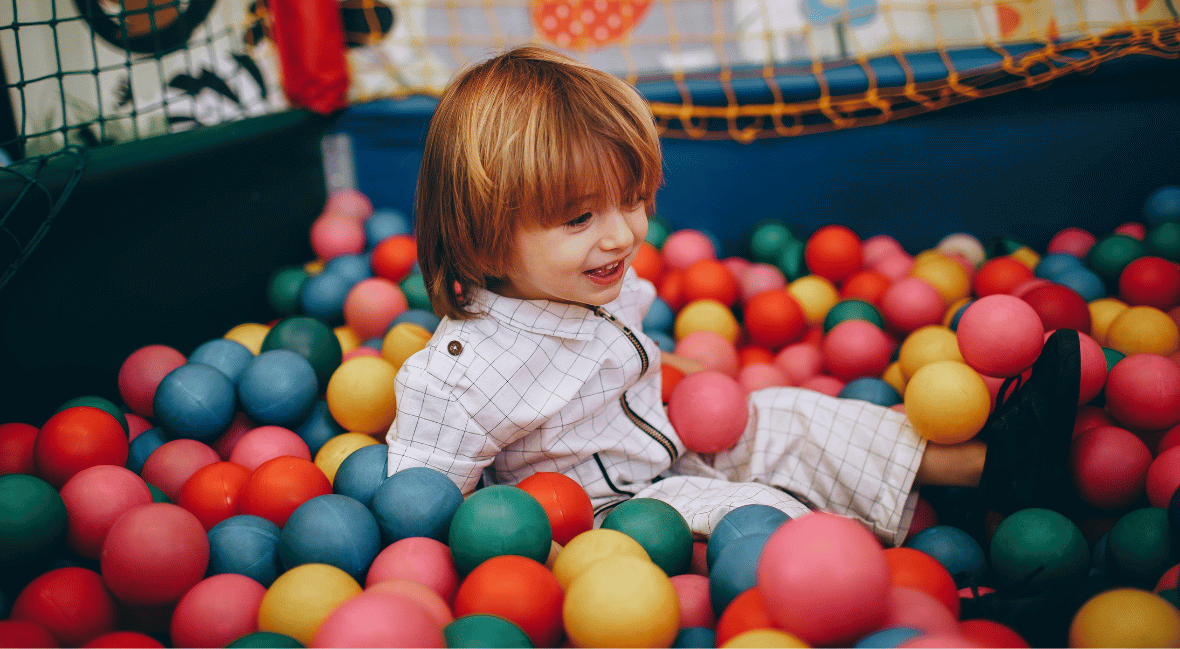
I’ve always loved ball pits. I still remember the ball pits at the McDonald’s PlayPlace when I was a kid, and honestly, they were the best. There was just something magical about sinking into a giant pile of colorful balls.
But now, as a parent, I can only imagine how dirty those balls probably were… and what things might have been lurking underneath them.
We have a small ball pit at home, and my kids love it. But we also really enjoy visiting play places with bigger ball pits because they’re just so much fun. Plus, let’s be honest, it can be a lot to constantly get all the balls back into the ball pit at home. Somehow, they end up everywhere!
- Check out some more fun indoor activities for kids!
Ball pits can be such a fun way for kids to move, climb, crawl, jump, toss, and play. Full-body gross motor play at its best! But there are a few simple things to keep in mind to make sure they are safe, clean, and actually enjoyable for everyone.
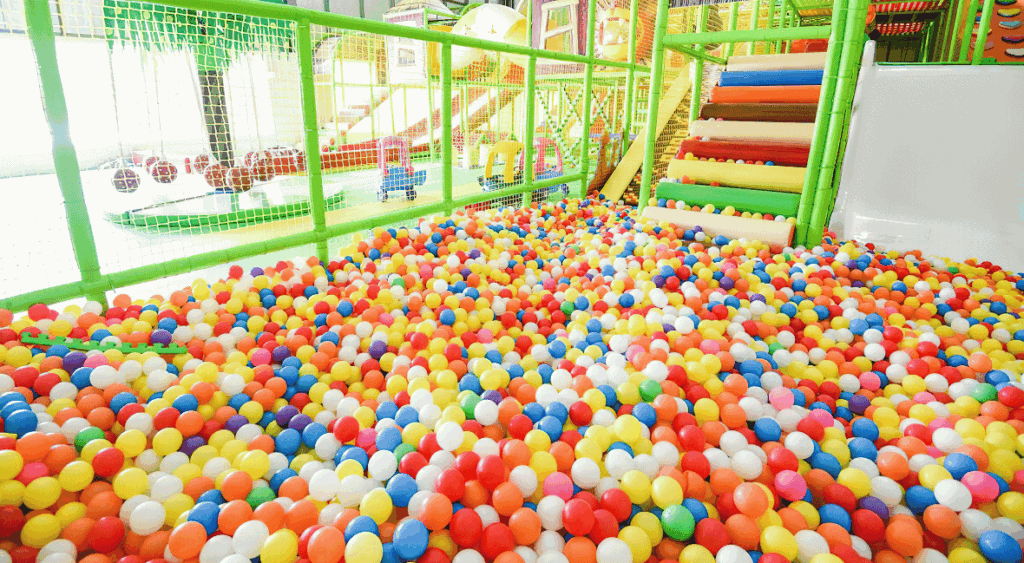
9 Ball Pit Safety Tips for Kids
1. Pick a Place That Actually Cleans the Ball Pit
This is the first thing I would look for when visiting a play place with a ball pit. Before your kids jump in, it’s totally reasonable to ask the staff about their cleaning procedures.
Ask how often they clean the balls and how often they clean the actual ball pit. The balls matter, of course, but so does the bottom of the pit, the padding, the walls, and all those little corners where crumbs, socks, mystery items, and who-knows-what can end up.
Some places suck all the balls out, run them through a cleaning machine, and fully scrub out the ball pit. Other places have never cleaned a single ball and have no idea what is hiding under there.
So ask. Then look around for yourself.
Does the play space look clean? Are there crumbs, trash, sticky spots, or broken balls? Does the ball pit smell fresh, or does it smell like feet and old snacks? A quick look around can tell you a lot.
2. Choose an Age-Appropriate Ball Pit
Not all ball pits are ideal for all ages. Babies and young toddlers usually do better in smaller, shallower ball pits with soft sides and close supervision.
Older kids can handle larger ball pits, but they also tend to move with much more force. If there are toddlers and big kids in the same space, keep an extra close eye on the little ones.
If you have a ball pit at home, make sure it is easy for your child to climb in and out safely.
3. Check the Ball Pit Before Play
Even in a clean play space, it is worth doing a quick check before your child climbs in. Look for broken balls, hard toys, food, sharp objects, or anything that does not belong in the ball pit.
At home, this is especially helpful if you have other toys nearby. Random blocks, cars, pretend food, and tiny toy pieces always seem to find their way into the ball pit.
A quick scan only takes a minute and can prevent a lot of bumps, scratches, or gross surprises.
4. Always Supervise Ball Pit Play
Ball pits feel soft and harmless, but kids can still bump heads, trip, get caught under the balls, or accidentally land on each other.
You don’t need to hover over every move, but it’s important to stay close enough to step in if things get too wild. This is especially true when kids of different ages and sizes play together.
Big kids jumping into a ball pit with toddlers can get chaotic fast.
5. Keep Rough Play in Check
Part of the fun of a ball pit is all the big movement. Kids want to jump, roll, hide, toss balls, and sink into the pile. That is exactly why ball pits are so exciting.
But rough play can quickly become unsafe, especially in a crowded ball pit.
A few simple rules can help:
No jumping onto other kids.
No throwing balls at faces.
No pushing or tackling.
No completely burying another child under the balls.
Kids can still play hard and have fun, but they need a few boundaries to keep everyone safe.
6. Watch for Overcrowding
Ball pits are much more fun when kids usually have space to move. If the pit is packed with kids, it’s easier for someone to get stepped on, bumped, or hidden underneath the balls.
If it feels too crowded, wait a few minutes or have your child come back when there is more room. This is especially important for toddlers and younger preschoolers who may not be able to move through the balls as easily.
7. Wash Hands Before and After
Ball pits are very hands-on. Kids touch the balls, crawl through them, toss them, and sometimes little ones still put them near their mouths.
Having kids wash their hands before and after playing is a simple way to reduce the spread of germs. If you are at a public play place, hand sanitizer can be helpful too, especially before snacks.
At home, I also try to keep our snacks and drinks away from the ball pit because sticky balls aren’t something I want to deal with.
8. Keep Shoes Out
Shoes bring in dirt, germs, and little bits of debris. They also make it more likely that a child could get hurt if someone steps on them.
A socks-only rule is a simple way to keep the ball pit cleaner and safer. At public play places, grippy socks are usually the best option because they help kids move without slipping.
I’d avoid any ball pit that didn’t require kids to remove their shoes.
9. Make Sure the Edges Are Soft and Safe
At play places, take a quick look at the padding around and under the ball pit, too. The edges should be well-padded, and the floor beneath should feel cushioned, not hard. If kids are jumping in and out, climbing over the sides, or accidentally falling, that padding makes a big difference in preventing bumps and injuries.
For home ball pits, look for soft, padded bottom, and no hard corners or exposed poles. If you’re using a pop-up or playpen-style ball pit, make sure the frame is sturdy and not collapsing inward while kids play.
The area around the ball pit matters too. If your child is climbing in and out, it helps to have a soft rug, foam mat, or carpet underneath.
Bonus Tip: Clean Your Home Ball Pit Regularly
Here’s a bonus tip for those who have a home ball pit: the balls need to be cleaned from time to time! It doesn’t have to be complicated.
I like washing them in the bathtub with a little gentle soap and water. You can swish them around, rinse them well, and then spread them out to dry completely.
Another easy option is to put the balls into a large mesh laundry bag and hose them off outside. This helps keep them contained so you’re not chasing balls all over the yard.
Just make sure the balls are fully dry before putting them back into the ball pit so you do not end up with mildew.
Final Thoughts on Ball Pit Safety Tips for Kids
Ball pits are one of those play spaces that kids are naturally drawn to, and I totally get it. I loved them as a kid, and I still love watching my own kids play in them now.
The most important ball pit safety tips for kids are to choose a clean ball pit, supervise play, avoid overcrowding, keep shoes out, and clean your own ball pit regularly at home.
And when you find a play place that actually cleans the balls and the pit itself? That’s the kind of place worth going back to.



No Comments